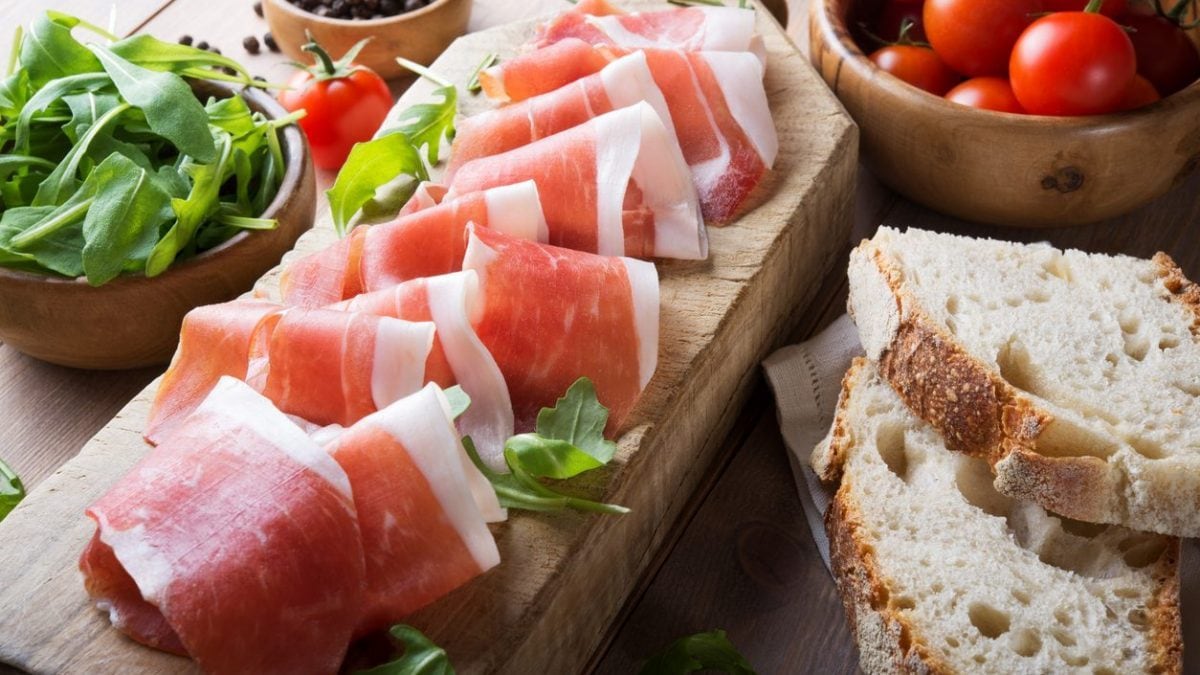
We tend to believe that a type of meat or cured meat is better if it's low in fat, but this isn't always true: when it comes to prosciutto, the king of cured meats and a prime example of Italian excellence, fat is actually a fundamental component that you should never remove. Our primary instinct, in fact, might be to remove the fatty part of the slice to make it healthier, but this is a mistaken practice that actually depletes the product: fat, in fact, is where most of the nutritional properties of prosciutto are concentrated, as well as being essential for flavor and an indicator of the product's high quality (fat, in fact, is one of the elements to pay attention to when buying a good prosciutto crudo).
Why You Should Never Remove the Fat From Prosciutto
Prosciutto, like any meat, is composed of a lean part and a fatty part, but what you may not know is that most of the substances and nutrients that make this food beneficial for our body are found precisely in fat. In medium- to high-quality products such as a good-quality ham, the fat contains essential fatty acids, such as linoleic and arachidonic acid, or omega-3 and omega-6, similar to those found, for example, in fish and vegetable oils: consider that 50 grams of fully fat prosciutto contains an amount of linoleic acid equal to that contained in 100 grams of salmon.

Precisely for this reason, ham fat has a high nutritional value and a particularly positive effect on health, always with a view to balanced consumption: removing it would mean removing all the elements our body needs and can obtain from prosciutto. It's no coincidence that omega-3 and omega-6 are called "essential" fats: it is from these elements that the body derives all the other fatty acids it needs, which play a fundamental role in the development of the nervous and immune systems, for growth, and in preventing the onset of even serious diseases.
Experts have also highlighted that the fat in prosciutto, in addition to being rich in essential fats, is low in "bad" cholesterol and actually helps regulate its levels in the blood, thus also promoting heart health, because it contains oleic acid, or "good" cholesterol.
Fat Also Helps the Flavor and Quality of the Ham
When we talk about fat that shouldn't be removed from cured meats like prosciutto, we're referring to a specific type of fat: infiltration fat, or the fat present within the animal's muscle fibers that cannot be removed because it's an integral part of its composition. This is why it's found in the finished product, unlike the covering fat, which is the fat that covers the muscles and is usually removed during the initial trimming stages of cured meat processing.
The fat found in a slice of prosciutto is therefore the fat naturally present in the anatomical structure of the animal from which the raw material comes: even if leaner cuts and meats are favored for processing, a higher percentage of fat in the meat is an indicator of a high-quality product.

The nutritional profile, therefore, isn't the only reason why removing the fat from ham is a bad practice. The fat present in the product also has two other very important functions:
- as mentioned, it is an indicator of the quality of the meat, especially if it is white or light yellow in color: it is in fact based on this that the degree of marbling of the meat is established (that almost marble-like effect in the raw material) which translates into softness and flavor;
- It contributes to the flavor of the ham and can make it more or less intense depending on the seasoning, also influencing the flavor, tenderness and juiciness of the meat.
;Resize,width=767;)
