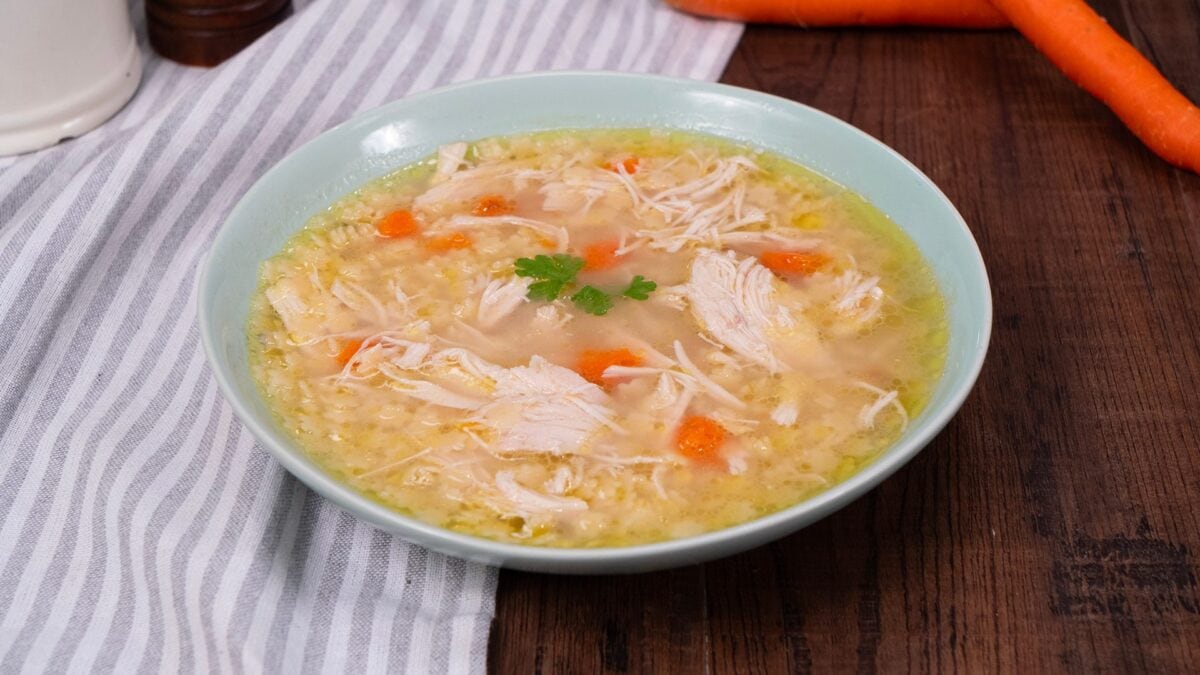
Nothing quite compares to a steaming bowl of homemade chicken broth on a cold day. Delicately flavored, golden, and wonderfully fragrant, it's one of the simplest and most comforting preparations in Italian home cooking.
Known in Italy as brodo di pollo, this traditional recipe combines a whole chicken with carrots, celery, leek, onion, bay leaves, parsley, and whole cloves.
The ingredients are covered with cold water and gently simmered for two to three hours, allowing their flavors to gradually infuse into the liquid.
Once strained, the broth can be enjoyed on its own, served with pastina and shredded chicken, or used to enrich risotto, soups, sauces, and other homemade dishes.
It's a timeless kitchen staple that requires little hands-on work and makes the most of simple ingredients.
What Is Italian Brodo di Pollo?
Brodo di pollo is a traditional Italian chicken broth made by slowly simmering chicken with vegetables, herbs, and spices in water.
A staple of Italian home cooking, it is particularly associated with comforting winter meals and simple family lunches.
One of its most familiar uses is pastina in brodo, a preparation in which tiny pasta shapes are cooked in broth and served piping hot. Many Italians associate this dish with childhood, cold winter evenings, and meals prepared by their grandparents.
Unlike some chicken stock recipes that rely primarily on bones and carcasses, this version uses a whole chicken, allowing both the meat and bones to contribute flavor.
The addition of whole cloves inserted directly into the onion is a traditional culinary technique sometimes known as onion piqué. It infuses the broth with a subtle, warm fragrance while making the cloves easier to remove after cooking.
The result is a delicate yet flavorful broth that can be served as a dish in its own right or used as a versatile cooking ingredient.
Why Everyone Will Love This Recipe
The beauty of this homemade chicken broth is that its rich flavor comes entirely from a handful of everyday ingredients.
The whole chicken provides a savory foundation, while carrots, celery, onion, and leek contribute a delicate natural sweetness. Bay leaves, parsley, and cloves give the broth an aromatic finish.
There's no need to roast the chicken or sauté the vegetables beforehand. Everything cooks together in one large pot.
Another advantage is that the cooked chicken doesn't have to go to waste. Once the broth is ready, the meat can be shredded and added to soups, sandwiches, salads, or pasta dishes.
It's also an excellent make-ahead recipe. Having homemade broth in the refrigerator or freezer makes preparing flavorful meals throughout the week much easier.
Tips for Making the Best Homemade Chicken Broth
- Always start with cold water. Gradually heating the chicken and vegetables allows their flavors to infuse into the broth and makes it easier to skim away the foam that rises to the surface.
- Avoid a vigorous boil. Once the water reaches boiling point, reduce the heat immediately. A gentle simmer helps produce a clearer broth and prevents excessive evaporation.
- Skim the broth during cooking. Use a spoon or fine-mesh skimmer to remove the foam and impurities that collect on the surface, especially during the early stages of cooking.
- Season with salt at the end. As the broth reduces, its flavors become more concentrated. Adding salt after straining gives you better control over the final seasoning.
Frequently Asked Questions
What Is the Difference Between Chicken Broth and Chicken Stock?
Chicken broth is traditionally prepared with meat, vegetables, and sometimes bones, while chicken stock relies more heavily on bones and connective tissue. Stock generally has a fuller body due to its gelatin content, whereas broth tends to have a lighter, more delicate flavor.
What Is the Best Chicken for Homemade Chicken Broth?
A whole chicken is an excellent choice because it contains both meat and bones, which contribute flavor and body. Alternatively, you can use bone-in chicken thighs, drumsticks, or a combination of different chicken parts.
Why Is My Homemade Chicken Broth Cloudy?
Cloudiness often occurs when the broth boils too vigorously, causing fat and proteins to disperse throughout the liquid. Maintaining a gentle simmer, skimming the surface, and straining the finished broth through a fine-mesh strainer will help achieve a clearer result.
Why Does Homemade Chicken Broth Turn Into Jelly?
Chicken bones, skin, and connective tissue contain collagen, which breaks down into gelatin during prolonged cooking. As the broth cools in the refrigerator, the gelatin may cause it to set. This is completely normal, and the broth will become liquid again when reheated.
How Can You Make Chicken Broth More Flavorful?
Avoid adding significantly more water than necessary to cover the ingredients. If the finished broth tastes too mild, simmer it uncovered for a little longer to concentrate its flavor before adjusting the seasoning.
What Can You Do With the Chicken After Making Broth?
The cooked chicken can be removed from the bones, shredded, and served with pastina. It's also excellent in chicken salads, sandwiches, croquettes, noodle soups, and savory pies. Adding a little broth to the shredded meat can help keep it moist.
How to Store
Once strained, divide the homemade chicken broth into smaller, shallow containers to help it cool quickly. An ice-water bath can also help speed up the cooling process.
Refrigerate within two hours of cooking and store in airtight containers for up to 3–4 days.
A layer of fat may solidify on the surface as the broth chills. Remove it with a spoon if you prefer a lighter broth, or leave it for additional richness.
When ready to use, transfer the broth to a saucepan and bring it to a rolling boil before serving.
Store the cooked chicken separately in an airtight container with a little broth to prevent it from drying out.
How to Freeze
Homemade chicken broth freezes exceptionally well, making it a convenient ingredient to prepare in advance.
Once cooled, transfer the strained broth to freezer-safe containers or bags, leaving some space at the top to accommodate expansion.
You can also freeze smaller portions in silicone molds or ice cube trays, then transfer the frozen cubes to a freezer bag. These are particularly useful for preparing sauces or adding flavor to other dishes.
Freeze for up to 3 months for the best quality.
Thaw overnight in the refrigerator or reheat directly from frozen in a saucepan.
If you plan to serve the broth with pastina, freeze it without the pasta and add freshly cooked pastina when reheating.
Ingredients
How to make Homemade Chicken Broth

Begin by preparing the whole chicken. Remove any giblets from the cavity and trim away any unwanted pieces of excess fat. There is no need to rinse the raw chicken under running water.
Next, prepare the vegetables. Wash the celery, peel the carrots, and clean the leek thoroughly to remove any dirt trapped between its layers.
Cut the celery, carrots, and leek into large pieces.
Peel the onion, cut it in half, and insert the whole cloves directly into its surface. This simple technique will allow the cloves to gradually release their fragrance into the broth.

Place the chicken in a large stockpot and add the prepared vegetables, clove-studded onion, fresh parsley, and bay leaves.
Pour in enough cold water to completely cover the chicken and vegetables.
Place the chicken in a large stockpot and add the prepared vegetables, clove-studded onion, fresh parsley, and bay leaves.
Pour in enough cold water to completely cover the chicken and vegetables.

Place the stockpot over medium heat and gradually bring the water to a boil.
As the temperature rises, you may notice a layer of pale foam forming on the surface. Use a spoon or fine-mesh skimmer to remove it.
Place the stockpot over medium heat and gradually bring the water to a boil.
As the temperature rises, you may notice a layer of pale foam forming on the surface. Use a spoon or fine-mesh skimmer to remove it.

Once the broth begins to boil, immediately reduce the heat to low and allow it to simmer gently for 2–3 hours.
The liquid should barely bubble throughout cooking. Skim away any additional foam that rises to the surface.
Once the broth begins to boil, immediately reduce the heat to low and allow it to simmer gently for 2–3 hours.
The liquid should barely bubble throughout cooking. Skim away any additional foam that rises to the surface.

Once the cooking time is complete, remove the stockpot from the heat.
Carefully lift out the cooked chicken and set it aside if you plan to serve it with the broth. remove some of the reserved chicken meat from the bones and shred it using two forks.
Once the cooking time is complete, remove the stockpot from the heat.
Carefully lift out the cooked chicken and set it aside if you plan to serve it with the broth. remove some of the reserved chicken meat from the bones and shred it using two forks.

If you want to serve it in the traditional Italian style, return a portion of the broth to the stove and bring it to a gentle boil.
Add your favorite pastina and cook according to the package instructions.
If you want to serve it in the traditional Italian style, return a portion of the broth to the stove and bring it to a gentle boil.
Add your favorite pastina and cook according to the package instructions.

Serve immediately while still steaming hot.
Alternatively, enjoy your homemade chicken broth on its own or use it as a flavorful base for risotto, tortellini, soups, and other comforting homemade dishes.
Serve immediately while still steaming hot.
Alternatively, enjoy your homemade chicken broth on its own or use it as a flavorful base for risotto, tortellini, soups, and other comforting homemade dishes.


