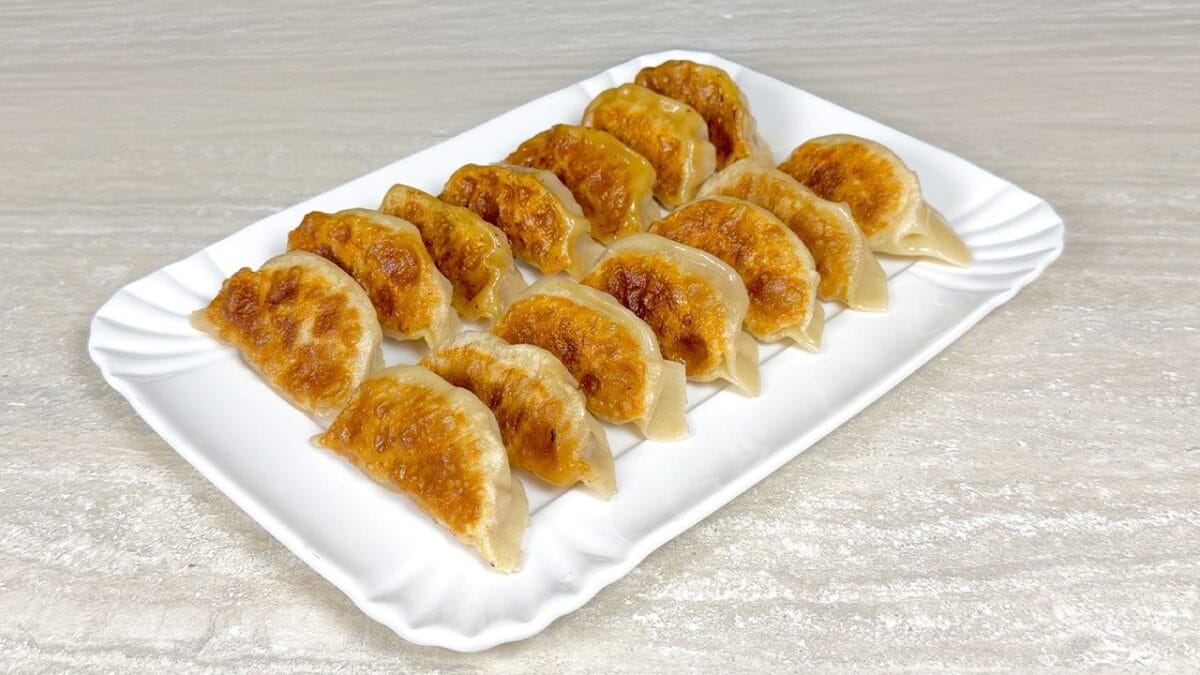
Crispy on the bottom, tender on top, and filled with juicy, flavorful pork, these homemade gyoza are the ultimate Japanese-style dumplings.
This gyoza recipe includes everything needed to prepare them from scratch: homemade wrappers, a savory pork and cabbage filling, and a simple dipping sauce made with rice vinegar and soy sauce.
The secret to their irresistible texture is the cooking method. The dumplings are first pan-fried until their bottoms turn golden, then steamed briefly to cook the filling and soften the wrappers. A final uncovered cooking stage restores that delicious crispness.
Filled with ground pork, Chinese cabbage, ginger, garlic, and spring onions, these Japanese pork dumplings are packed with flavor.
They're perfect as an appetizer, a party snack, or the centerpiece of a Japanese-inspired dinner.
What Are Gyoza?
Gyoza are Japanese dumplings inspired by Chinese jiaozi. They typically consist of thin wheat-based wrappers filled with ground meat, vegetables, and seasonings.
Pork and cabbage are among the most popular fillings, often combined with garlic, ginger, and green onions.
The most familiar version is yaki gyoza, or pan-fried gyoza. These dumplings are cooked using a combination of frying and steaming, which gives them their signature golden bottoms and tender upper surfaces.
Gyoza can also be boiled or deep-fried, but the pan-fried version is particularly popular in Japanese restaurants and home kitchens.
They're commonly served with a dipping sauce made from soy sauce and rice vinegar, sometimes with a little chili oil for heat.
This recipe follows the classic pan-fried approach, with homemade wrappers and a juicy pork filling.
Why Everyone Will Love This Recipe
The combination of textures makes gyoza especially satisfying. Each dumpling has a lightly crisp base, a tender wrapper, and a juicy, aromatic filling.
Making the wrappers at home also gives the dumplings a fresh, delicate texture. The dough uses just a few ingredients, and it can be rolled with either a pasta machine or a rolling pin.
The filling is wonderfully savory, thanks to soy sauce, sake, oyster sauce, sesame oil, and fresh aromatics.
Another advantage is that gyoza can be prepared in batches. Once assembled, the dumplings can be cooked immediately or frozen for another day.
And the dipping sauce couldn't be simpler: just rice vinegar, soy sauce, and optional chili oil.
Tips for Perfect Homemade Gyoza
- Squeeze the cabbage thoroughly. Removing excess moisture prevents the filling from becoming watery and helps keep the wrappers from turning soggy.
- Keep the wrappers covered. Homemade dumpling dough dries out quickly, so cover unused wrappers and dough with a slightly damp kitchen towel.
- Don't overfill the dumplings. A small amount of filling makes pleating easier and helps the edges seal properly.
- Cook in batches and check the filling. Leave space between the dumplings and make sure the pork reaches an internal temperature of 160°F (71°C) before serving.
Frequently Asked Questions
What Is the Difference Between Gyoza and Chinese Dumplings?
Japanese gyoza developed from Chinese jiaozi, and the two share many similarities.
Gyoza are often made with relatively thin wrappers and are commonly pan-fried to create a crispy bottom. Chinese dumplings come in many varieties and may be boiled, steamed, or pan-fried.
Fillings and seasonings also vary depending on the recipe and regional tradition.
Can Gyoza Be Made Without a Pasta Machine?
Yes. The recipe includes a dough specifically suited to rolling by hand.
Use a rolling pin to flatten the dough into thin sheets or individual rounds, aiming for wrappers approximately 1mm thick.
The edges can be rolled slightly thinner than the centers to make pleating easier.
Why Is My Gyoza Filling Watery?
The most common cause is excess moisture in the cabbage.
Salting the chopped cabbage draws out water, but it must then be squeezed thoroughly before being added to the pork.
A filling that's too wet can soften the wrappers and make sealing difficult.
Can Ground Chicken Replace Ground Pork?
Yes. Ground chicken can be used instead of pork, although the filling may be slightly less rich.
Choose ground chicken with some fat for better texture, and cook the dumplings until the filling reaches 165°F (74°C).
How Do You Keep Gyoza From Sticking to the Pan?
Use a good-quality nonstick skillet and add a thin layer of vegetable oil before arranging the dumplings.
Allow the bottoms to brown before adding water, and avoid moving the dumplings unnecessarily during cooking.
Once the water has evaporated, the bottoms should become crisp and release more easily.
What Can You Serve With Gyoza?
Gyoza are delicious with soy-vinegar dipping sauce and optional chili oil.
They also pair well with steamed rice, miso soup, cucumber salad, sautéed vegetables, or a simple bowl of noodles.
How to Store
Cooked gyoza can be stored in an airtight container in the refrigerator for up to 3 days.
Allow them to cool slightly, then refrigerate promptly rather than leaving them at room temperature for extended periods.
To reheat, place the dumplings in a lightly oiled skillet over medium heat. Add a small splash of water, cover briefly to warm them through, then uncover and let the bottoms become crisp again.
Uncooked pork gyoza should be cooked promptly or frozen rather than kept assembled in the refrigerator for long periods, since the filling can make the wrappers soggy.
How to Freeze
Homemade gyoza are excellent for freezing, especially before cooking.
Arrange the assembled dumplings in a single layer on a tray lined with parchment paper, making sure they don't touch.
Freeze until firm, then transfer them to a freezer-safe bag or airtight container. They can be stored for up to 2 months for the best quality.
There's no need to thaw frozen gyoza before cooking. Place them directly into a lightly oiled skillet, brown the bottoms, then add water and steam until the filling is fully cooked.
Frozen dumplings will need a little longer than fresh ones, so check that the pork reaches 160°F (71°C) in the center.
Ingredients
How to make Homemade Gyoza

Begin by preparing the homemade gyoza dough.
Place the flour, and cornstarch if using, in a large mixing bowl. Add the fine salt and stir to combine.
Begin by preparing the homemade gyoza dough.
Place the flour, and cornstarch if using, in a large mixing bowl. Add the fine salt and stir to combine.

Carefully pour in the boiling water a little at a time, stirring with a spoon or spatula as you go. The mixture will initially look crumbly.
Carefully pour in the boiling water a little at a time, stirring with a spoon or spatula as you go. The mixture will initially look crumbly.

Once the dough is cool enough to handle safely, knead it until it comes together into a smooth, firm, homogeneous ball. This may take several minutes.
Once the dough is cool enough to handle safely, knead it until it comes together into a smooth, firm, homogeneous ball. This may take several minutes.

Cover the dough tightly with plastic wrap or place it in a covered bowl and let it rest at room temperature for at least 1 hour. This resting period allows the dough to relax, making it easier to roll out thinly.
Cover the dough tightly with plastic wrap or place it in a covered bowl and let it rest at room temperature for at least 1 hour. This resting period allows the dough to relax, making it easier to roll out thinly.

Meanwhile, prepare the pork and cabbage filling.
Finely chop the Chinese cabbage and transfer it to a bowl. Sprinkle with 4g of salt, mix thoroughly, and let it rest for 10–15 minutes.
During this time, the salt will draw moisture out of the cabbage.
Meanwhile, prepare the pork and cabbage filling.
Finely chop the Chinese cabbage and transfer it to a bowl. Sprinkle with 4g of salt, mix thoroughly, and let it rest for 10–15 minutes.
During this time, the salt will draw moisture out of the cabbage.

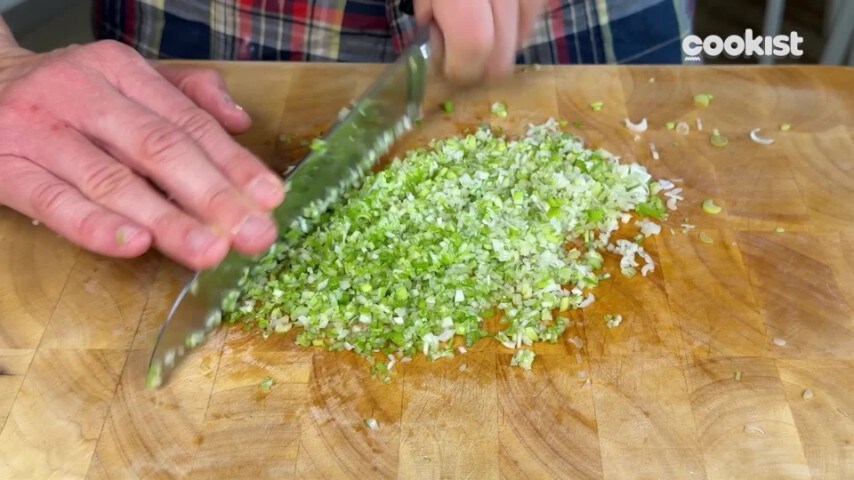
Finely slice the spring onions, grate the fresh ginger, and mince the garlic cloves.
Finely slice the spring onions, grate the fresh ginger, and mince the garlic cloves.

Transfer the salted cabbage to a clean kitchen towel or fine-mesh strainer and squeeze firmly to remove as much liquid as possible. This step is essential for a juicy filling that isn't watery.
Transfer the salted cabbage to a clean kitchen towel or fine-mesh strainer and squeeze firmly to remove as much liquid as possible. This step is essential for a juicy filling that isn't watery.

Place the ground pork in a large bowl and add the squeezed cabbage, spring onions, ginger, and garlic.
Place the ground pork in a large bowl and add the squeezed cabbage, spring onions, ginger, and garlic.

Pour in the soy sauce, sake, oyster sauce, and sesame oil. Add the sugar, remaining 5g of salt, and white pepper.
Mix vigorously with a spoon or chopsticks, stirring consistently in the same direction until the filling becomes well combined and slightly sticky.
Pour in the soy sauce, sake, oyster sauce, and sesame oil. Add the sugar, remaining 5g of salt, and white pepper.
Mix vigorously with a spoon or chopsticks, stirring consistently in the same direction until the filling becomes well combined and slightly sticky.

Cover and refrigerate the filling while preparing the wrappers.
Cover and refrigerate the filling while preparing the wrappers.

Once the dough has rested, divide it into smaller portions and keep the unused pieces covered.
Once the dough has rested, divide it into smaller portions and keep the unused pieces covered.

If using a pasta machine, flatten one portion of dough and pass it through the rollers, gradually reducing the thickness until the sheet is approximately 1mm thick.
If using a rolling pin, roll the dough on a lightly dusted work surface until similarly thin.
If using a pasta machine, flatten one portion of dough and pass it through the rollers, gradually reducing the thickness until the sheet is approximately 1mm thick.
If using a rolling pin, roll the dough on a lightly dusted work surface until similarly thin.

Using a round cutter, cut out circles approximately 3¼–3½ inches (8–9cm) in diameter.
Using a round cutter, cut out circles approximately 3¼–3½ inches (8–9cm) in diameter.

To assemble the gyoza, place one wrapper in the palm of your hand.
Add a small spoonful of pork filling to the center, leaving enough space around the edges to seal the dumpling.
To assemble the gyoza, place one wrapper in the palm of your hand.
Add a small spoonful of pork filling to the center, leaving enough space around the edges to seal the dumpling.

Lightly moisten the edge of the wrapper with water. Fold the wrapper in half over the filling to form a half-moon shape. Pinch one end closed, then create small pleats along the front edge, pressing each pleat firmly against the back edge. Continue until the dumpling is completely sealed.
Lightly moisten the edge of the wrapper with water. Fold the wrapper in half over the filling to form a half-moon shape. Pinch one end closed, then create small pleats along the front edge, pressing each pleat firmly against the back edge. Continue until the dumpling is completely sealed.

Place the finished gyoza on a lightly cornstarch-dusted tray and repeat with the remaining wrappers and filling. Keep the assembled dumplings covered to prevent drying.
Place the finished gyoza on a lightly cornstarch-dusted tray and repeat with the remaining wrappers and filling. Keep the assembled dumplings covered to prevent drying.

To cook the gyoza, heat a thin layer of vegetable oil in a large nonstick skillet over medium heat.
To cook the gyoza, heat a thin layer of vegetable oil in a large nonstick skillet over medium heat.

Arrange the dumplings flat-side down, leaving a little space between them.
Cook undisturbed for approximately 2–3 minutes, until the bottoms become golden and crisp.
Arrange the dumplings flat-side down, leaving a little space between them.
Cook undisturbed for approximately 2–3 minutes, until the bottoms become golden and crisp.

Carefully pour water into the skillet until it reaches approximately one-third of the way up the dumplings. The water may splatter when it hits the hot pan, so pour slowly and keep your hands clear of the steam.
Carefully pour water into the skillet until it reaches approximately one-third of the way up the dumplings. The water may splatter when it hits the hot pan, so pour slowly and keep your hands clear of the steam.

Immediately cover the skillet with a lid and let the gyoza steam for approximately 3–4 minutes, or until the wrappers are tender and the filling is cooked through. Larger dumplings may need additional steaming time; verify that the pork reaches 160°F (71°C).
Immediately cover the skillet with a lid and let the gyoza steam for approximately 3–4 minutes, or until the wrappers are tender and the filling is cooked through. Larger dumplings may need additional steaming time; verify that the pork reaches 160°F (71°C).

Remove the lid and continue cooking until the remaining water has evaporated completely.
Remove the lid and continue cooking until the remaining water has evaporated completely.

Let the dumplings fry briefly in the residual oil until the bottoms become crisp again. If desired, finish with a small drizzle of sesame oil for extra aroma.
Let the dumplings fry briefly in the residual oil until the bottoms become crisp again. If desired, finish with a small drizzle of sesame oil for extra aroma.

Meanwhile, prepare the gyoza dipping sauce by combining the rice vinegar and soy sauce in a small bowl.
Stir until mixed, maintaining the traditional 2:1 ratio of rice vinegar to soy sauce used in this recipe.
Add a few drops of chili oil if a spicy dipping sauce is preferred.
Meanwhile, prepare the gyoza dipping sauce by combining the rice vinegar and soy sauce in a small bowl.
Stir until mixed, maintaining the traditional 2:1 ratio of rice vinegar to soy sauce used in this recipe.
Add a few drops of chili oil if a spicy dipping sauce is preferred.

Carefully transfer the crispy homemade pork gyoza to a serving plate, keeping the golden bottoms facing upward so they stay crisp.
Serve immediately with the soy-vinegar dipping sauce while the dumplings are hot, tender, and deliciously juicy inside.
Carefully transfer the crispy homemade pork gyoza to a serving plate, keeping the golden bottoms facing upward so they stay crisp.
Serve immediately with the soy-vinegar dipping sauce while the dumplings are hot, tender, and deliciously juicy inside.


