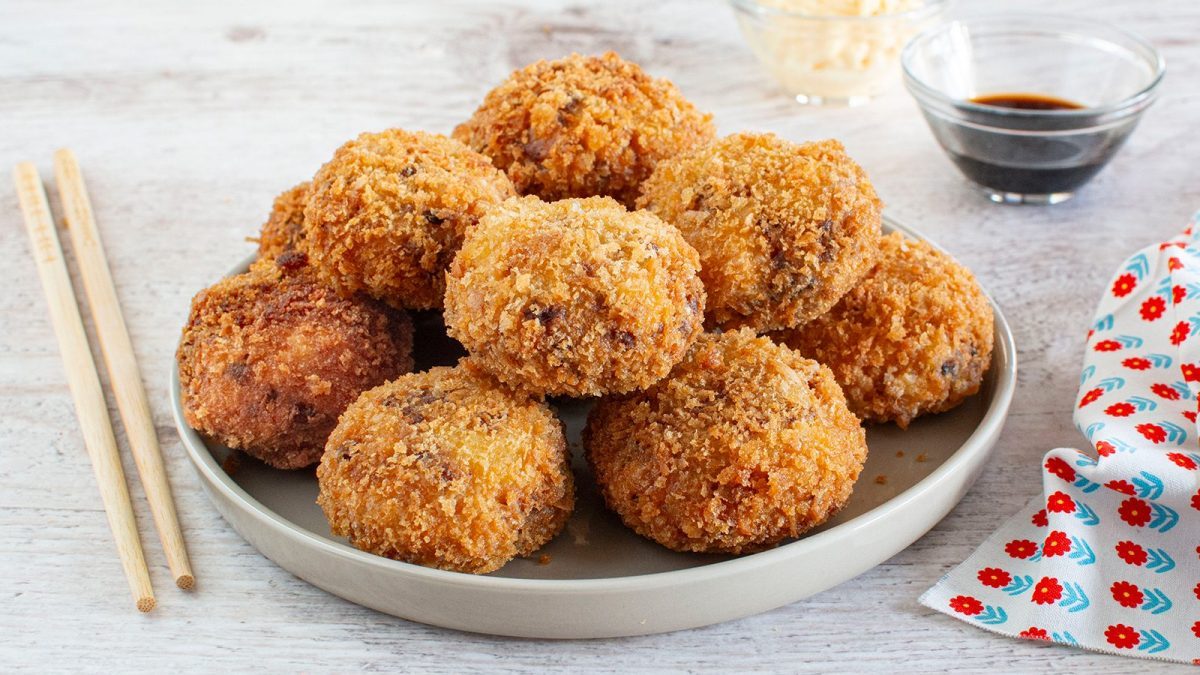
Korokke (pronounced in English as koh-ROH-keh) are typical Japanese croquettes made with minced meat, mirin, soy sauce and mashed boiled potatoes.
Coated in a double coating of flour, beaten eggs and panko, and then fried in plenty of boiling seed oil, these delicious meatballs will win everyone over with their crunchy on the outside and soft and tasty on the inside.
Korokke's History in Japan
Korokke arrived in Japan in the late 19th century, during the Meiji era (1868–1912), a period when Western cuisine was beginning to influence Japanese cooking. The dish was inspired by the French croquette, which European chefs had introduced to Japan as part of the growing interest in Western-style food, known locally as yōshoku. Because dairy products like béchamel sauce were expensive and not widely available at the time, Japanese cooks adapted the recipe by using mashed potatoes instead of the traditional cream-based filling. The mixture was shaped into patties, coated in breadcrumbs, and deep-fried, creating the crispy, comforting version now known as korokke.
Often sold at kiosks as tasty street food or included in traditional bento boxes, korokke can be served either plated, accompanied by chopped cabbage and tonkatsu sauce, or in a soft bun, for a complete and nutritious meal.
What Sauce Goes Well With Korokke?
The most traditional option in Japan is tonkatsu sauce, a thick, sweet-savory condiment made from fruits, vegetables, and spices. It has a flavor somewhat similar to a richer Worcestershire sauce and is the classic pairing for croquettes and breaded fried foods.
Another popular choice is Japanese mayonnaise, such as Kewpie, which adds creaminess and a mild tang that balances the crunchy texture. Some people combine the two, drizzling tonkatsu sauce and mayo together for a fuller flavor.
Beyond the traditional options, korokke also works well with ponzu sauce for a citrusy kick, teriyaki glaze for a sweeter profile, or even a simple soy sauce and grated daikon mixture. In casual settings, it’s not uncommon to see korokke served with ketchup or tucked into a sandwich with shredded cabbage and sauce.
Can You Bake or Air Fry Korokke?
Yes, although the texture will be slightly different from the traditional deep-fried version. To bake korokke, place the breaded patties on a parchment-lined baking sheet, lightly brush or spray them with oil, and cook at 400°F (about 200°C) for 20–25 minutes, turning them halfway through. The coating will crisp up, though it may be a bit less golden than when fried.
For an air fryer, cook the patties at 375–400°F for about 10–15 minutes, again lightly spraying them with oil and flipping them halfway through. The circulating heat helps the panko coating become nicely crisp with much less oil.
Can You Make Korokke Vegetarian or Vegan?
Of course! One of the most common types, potato korokke, is made primarily with mashed potatoes, onions, and seasonings, then coated in breadcrumbs and fried. This version is naturally vegetarian and can be made vegan by avoiding dairy and using plant-based ingredients.
To keep korokke fully vegan, cooks typically replace the egg used in the breading with alternatives such as plant-based milk, aquafaba (the liquid from canned chickpeas), or a simple flour slurry to help the breadcrumbs stick. The filling can also be adapted with ingredients like mushrooms, carrots, corn, tofu, or lentils for added flavor and texture.
Ingredients
How to Make Korokke
;Resize,width=712;)
To prepare the korokke, first boil the potatoes in a pressure cooker for 15 minutes from the moment the whistle sounds; then drain them, peel them while still hot and reduce them to a puree with a potato masher.
To prepare the korokke, first boil the potatoes in a pressure cooker for 15 minutes from the moment the whistle sounds; then drain them, peel them while still hot and reduce them to a puree with a potato masher.
;Resize,width=712;)
In a non-stick pan, sauté the chopped onion with a drizzle of seed oil.
In a non-stick pan, sauté the chopped onion with a drizzle of seed oil.
;Resize,width=712;)
Add the minced meat pulp to the soffritto and let it brown over medium heat, stirring occasionally with a pair of chopsticks or with a wooden ladle.
Add the minced meat pulp to the soffritto and let it brown over medium heat, stirring occasionally with a pair of chopsticks or with a wooden ladle.
;Resize,width=712;)
Then blend with the soy sauce and with mirin.
Then blend with the soy sauce and with mirin.
;Resize,width=712;)
Once ready, transfer the meat to the bowl with the potatoes, then season with salt and pepper and mix everything well until you obtain a soft but malleable mixture.
Once ready, transfer the meat to the bowl with the potatoes, then season with salt and pepper and mix everything well until you obtain a soft but malleable mixture.
;Resize,width=712;)
Shape lots of meatballs with your hands: you can make them round or slightly elongated.
Shape lots of meatballs with your hands: you can make them round or slightly elongated.
;Resize,width=712;)
First pass the korokke in the flour, then in the eggs, lightly beaten with a pinch of salt and, finally, in the panko.
First pass the korokke in the flour, then in the eggs, lightly beaten with a pinch of salt and, finally, in the panko.

Dip the meatballs into the beaten eggs again.
Dip the meatballs into the beaten eggs again.
;Resize,width=712;)
Bread them a second time in panko and continue this way until you have used up all the ingredients.
Bread them a second time in panko and continue this way until you have used up all the ingredients.
;Resize,width=712;)
Arrange the breaded korokke on a plate and let them rest in the fridge for about 20 minutes.
Arrange the breaded korokke on a plate and let them rest in the fridge for about 20 minutes.
;Resize,width=712;)
Once the resting time has elapsed, fry 3-4 croquettes at a time in plenty of boiling seed oil brought to a temperature of 340°F/170°C.
Once the resting time has elapsed, fry 3-4 croquettes at a time in plenty of boiling seed oil brought to a temperature of 340°F/170°C.
;Resize,width=712;)
When they are golden and fragrant, remove them with a slotted spoon and leave them to drain on a sheet of kitchen paper.
When they are golden and fragrant, remove them with a slotted spoon and leave them to drain on a sheet of kitchen paper.

Arrange the korokke on a serving plate, bring to the table and serve. Enjoy!
Arrange the korokke on a serving plate, bring to the table and serve. Enjoy!
Storage Instructions
Korokke are delicious when eaten piping hot and immediately. Alternatively, they can be stored in the refrigerator, in an airtight container, for up to 1 day.
;Resize,width=767;)
