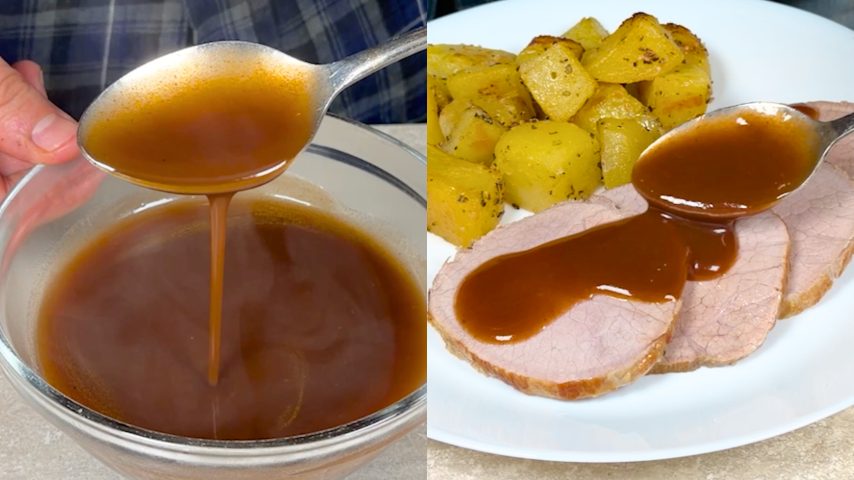
A beautifully roasted piece of meat deserves an equally delicious sauce. And sometimes, it's the gravy that turns a simple Sunday roast into a meal everyone remembers.
This homemade roast gravy combines beef broth, red wine, carrots, celery, onion, and a little tomato paste to create a deeply savory sauce with a smooth, glossy finish.
Unlike gravies made entirely from meat drippings, this version can be prepared separately, making it especially useful when the roast doesn't produce enough cooking juices.
The vegetables build flavor, the wine adds depth, and a small amount of cornstarch gives the finished gravy just enough body to coat each slice of meat.
What Is Roast Gravy?
Roast gravy is a savory sauce traditionally served with roasted meat. It's often prepared using the cooking juices and browned bits left in a roasting pan, combined with stock and a thickening ingredient.
However, gravy can also be made separately using broth, aromatic vegetables, and other flavor-building ingredients.
This version is a red wine beef gravy made with carrots, celery, onion, tomato paste, and beef broth.
The vegetables are cooked to develop flavor, then simmered with wine and broth. After straining, the liquid is thickened with cornstarch to create a smooth sauce.
Although gravy doesn't replace proper roasting techniques, it adds richness and moisture when served over cooked meat.
Why Everyone Will Love This Recipe
The biggest advantage of this roast gravy recipe is its rich flavor without an overly complicated ingredient list.
Carrots and onions contribute natural sweetness, celery adds an aromatic note, and tomato paste gives the sauce a deeper, more rounded taste.
Red wine brings complexity, while beef broth forms the savory foundation.
It's also versatile. This gravy is delicious with roast beef, pot roast, mashed potatoes, and other hearty dishes.
And because the sauce is strained before serving, it has a smooth consistency that looks elegant on the plate.
Tips for Making the Best Homemade Roast Gravy
- Cook the vegetables until lightly golden. Allowing the onion, carrot, and celery to develop some color adds depth to the finished sauce.
- Reduce the wine before adding the broth. Simmering the wine helps mellow its sharpness and concentrate its flavor.
- Mix cornstarch with cold liquid first. A slurry prevents lumps and makes it easier to control the thickness of the gravy.
- Adjust the consistency gradually. The gravy should coat the back of a spoon without becoming overly thick. Add a little extra broth if it reduces too much.
Frequently Asked Questions
What Is the Difference Between Gravy and Sauce?
Gravy is a type of savory sauce commonly associated with meat juices, stock, and thickening ingredients. The term sauce is broader and includes many preparations that don't necessarily contain meat-based liquids.
Can You Make Roast Gravy Without Meat Drippings?
Yes. This recipe uses beef broth, red wine, and aromatic vegetables, so it doesn't require pan drippings. If you have flavorful drippings from a roast, they can be incorporated after removing excess fat.
What Kind of Red Wine Is Best for Beef Gravy?
A dry red wine such as Merlot, Cabernet Sauvignon, or Pinot Noir works well. Choose a wine with a flavor you enjoy, avoiding very sweet varieties.
How Do You Thicken Roast Gravy Without Flour?
Cornstarch is an easy alternative to flour. Mix it with a small amount of cold water or broth, then stir the slurry into simmering gravy until the desired consistency is reached.
Why Is My Homemade Gravy Too Thin?
The broth may not have reduced enough, or the gravy may need slightly more thickening. Allow it to simmer gently, then add a little additional cornstarch slurry if necessary.
How Do You Fix Gravy That Is Too Thick?
Whisk in a small amount of warm beef broth until the gravy reaches your preferred consistency. Add the liquid gradually so the sauce doesn't become too thin.
How to Store
Allow the roast gravy to cool slightly, then transfer it to a shallow airtight container and refrigerate promptly.
Store in the refrigerator for up to 3–4 days.
To reheat, pour the gravy into a saucepan and warm over medium-low heat, stirring frequently until thoroughly hot. Reheat leftovers to 165°F (74°C).
If the gravy has thickened during refrigeration, add a splash of beef broth or water while reheating.
How to Freeze
Homemade roast gravy can be frozen, making it convenient for preparing ahead of a special meal.
Allow the gravy to cool, then divide it into freezer-safe containers, leaving a little room for expansion.
Freeze for up to 3 months for the best quality.
Thaw overnight in the refrigerator before reheating gently in a saucepan.
Cornstarch-thickened gravy may change texture slightly after freezing. Whisk it thoroughly as it reheats, adding a little broth if necessary to restore a smooth consistency.
Ingredients
How to make Homemade Roast Gravy

Start by preparing the aromatic vegetables. Peel the onion and carrots, then wash the celery thoroughly. Cut everything into small, roughly even pieces so the vegetables cook at a similar rate.
Start by preparing the aromatic vegetables. Peel the onion and carrots, then wash the celery thoroughly. Cut everything into small, roughly even pieces so the vegetables cook at a similar rate.

Heat a drizzle of extra virgin olive oil in a large saucepan over medium heat. Add the chopped onion, carrot, and celery, stirring to coat them evenly with the oil.
Heat a drizzle of extra virgin olive oil in a large saucepan over medium heat. Add the chopped onion, carrot, and celery, stirring to coat them evenly with the oil.

Cook the vegetables for approximately 8–10 minutes, stirring occasionally, until they begin to soften and develop a little golden color. Avoid burning them, as this can give the finished gravy a bitter taste. Add the tomato paste and stir it into the vegetables. Cook for another minute, allowing the paste to darken slightly and develop a richer flavor.
Cook the vegetables for approximately 8–10 minutes, stirring occasionally, until they begin to soften and develop a little golden color. Avoid burning them, as this can give the finished gravy a bitter taste. Add the tomato paste and stir it into the vegetables. Cook for another minute, allowing the paste to darken slightly and develop a richer flavor.

Pour in the red wine, stirring well and scraping the bottom of the saucepan to release any flavorful browned bits.
Allow the wine to simmer for several minutes, until it has reduced noticeably and its aroma becomes less sharp.
Pour in the red wine, stirring well and scraping the bottom of the saucepan to release any flavorful browned bits.
Allow the wine to simmer for several minutes, until it has reduced noticeably and its aroma becomes less sharp.

Gradually pour in the beef broth, stirring to combine it with the vegetables and wine.
Gradually pour in the beef broth, stirring to combine it with the vegetables and wine.

Bring the mixture to a gentle simmer, then reduce the heat and let it cook uncovered for approximately 30–40 minutes. During this time, the vegetables will release their flavor into the liquid, while some of the broth evaporates and concentrates the sauce.
Stir occasionally and monitor the liquid level to prevent excessive reduction.

Once the gravy has developed a rich flavor, remove the saucepan from the heat.
Place a fine-mesh strainer over a clean saucepan or heatproof bowl, then carefully pour the mixture through it to separate the vegetables from the liquid.
Once the gravy has developed a rich flavor, remove the saucepan from the heat.
Place a fine-mesh strainer over a clean saucepan or heatproof bowl, then carefully pour the mixture through it to separate the vegetables from the liquid.

Press the vegetables gently with the back of a spoon to extract some of their flavorful juices, without forcing too much pulp through the strainer.
Press the vegetables gently with the back of a spoon to extract some of their flavorful juices, without forcing too much pulp through the strainer.

Return the strained liquid to the saucepan and bring it to a gentle simmer.
Return the strained liquid to the saucepan and bring it to a gentle simmer.

In a small bowl, mix the cornstarch with a little cold water until completely smooth. The mixture should be fluid and free of lumps.
Slowly pour the cornstarch slurry into the simmering gravy while whisking continuously.
Continue cooking for approximately 1–2 minutes, stirring until the sauce thickens and develops a smooth, glossy consistency.

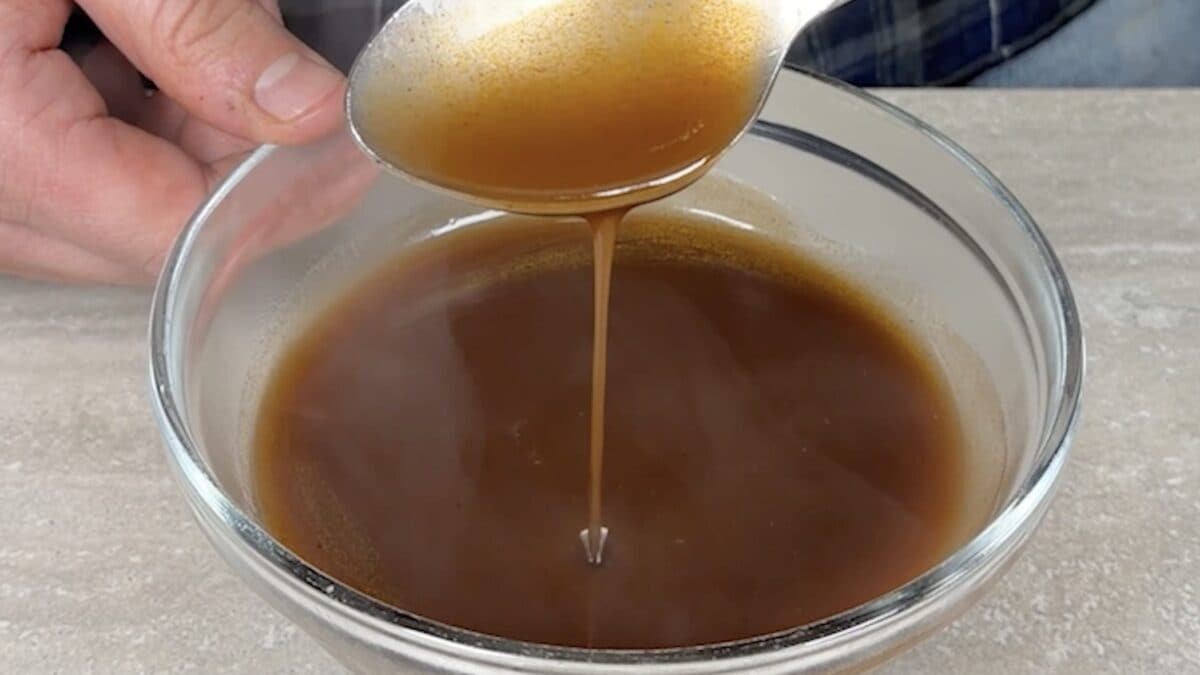
The finished roast gravy should be thick enough to lightly coat the back of a spoon but still pour easily.
If the gravy seems too thick, add a little more beef broth and stir until smooth. If it's too thin, allow it to simmer briefly or add a small additional amount of cornstarch slurry.
The finished roast gravy should be thick enough to lightly coat the back of a spoon but still pour easily.
If the gravy seems too thick, add a little more beef broth and stir until smooth. If it's too thin, allow it to simmer briefly or add a small additional amount of cornstarch slurry.

Taste the sauce and adjust the seasoning only if necessary.
Serve the homemade roast gravy warm, spooned generously over sliced roast beef or alongside other roasted meats.
Taste the sauce and adjust the seasoning only if necessary.
Serve the homemade roast gravy warm, spooned generously over sliced roast beef or alongside other roasted meats.


