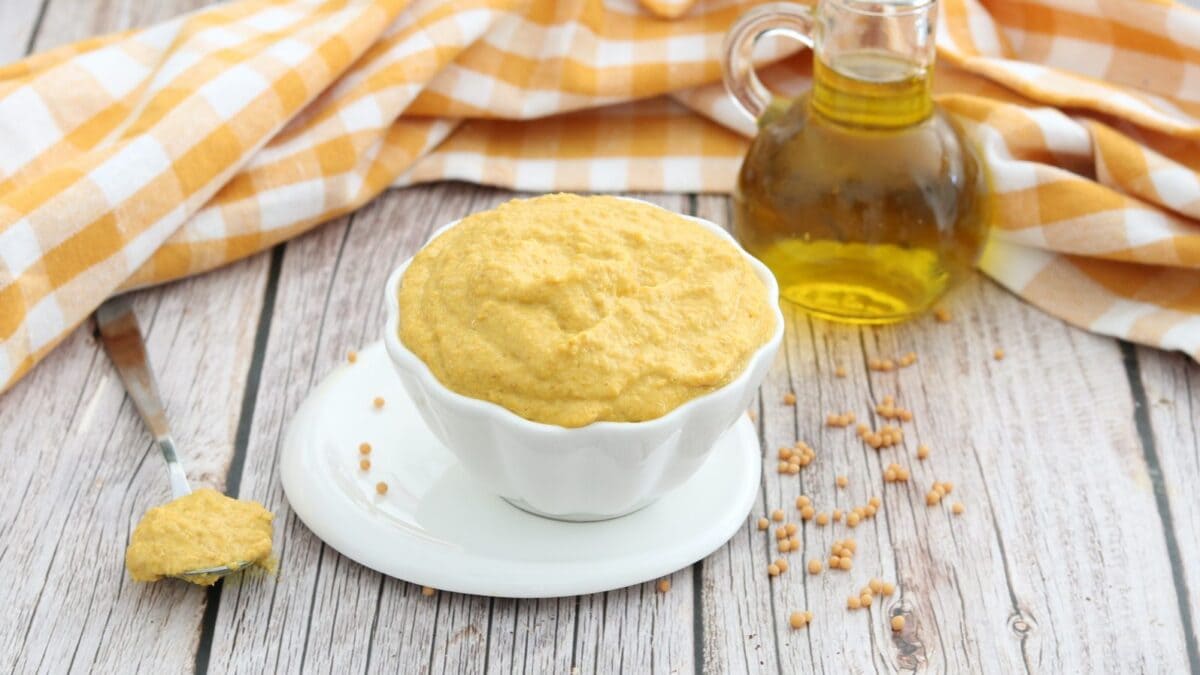
Homemade Yellow Mustard is a creamy, aromatic condiment with a distinctively pungent flavor. Making it at home is much easier than you think: all you need is mustard seeds, water, apple cider vinegar, sugar, salt, extra virgin olive oil, an immersion blender, and a pinch of patience. In just a few steps, you'll have a perfect sauce for flavoring chicken and boiled meat, dressing salads, stir-fries, garnishing sandwiches, or using as an ingredient in vinaigrettes and other preparations.
To make it, it's essential to cover the sesame seeds with apple cider vinegar and let them soak for at least 12 hours: this will allow them to absorb all the liquid and visibly swell. Then, simply mix them with water, previously mixed with brown sugar and a pinch of salt, then blend everything together, gradually adding the oil: the result will be a smooth and velvety sauce, free of preservatives and additives, much more authentic than the store-bought one.
What is Yellow Mustard?
Yellow mustard is one of the most recognizable condiments in the United States, known for its bright color, mild flavor, and smooth texture. Unlike stronger European mustards, it is typically made with yellow mustard seeds (Sinapis alba), vinegar, water, salt, and turmeric, which gives it its signature golden hue. While mustard itself has ancient roots, dating back to Roman times when crushed mustard seeds were mixed with liquids to create a pungent sauce, the American yellow style emerged in the late 19th and early 20th centuries. It became especially popular through hot dog stands, baseball stadiums, diners, and barbecue culture, eventually becoming a staple of American cuisine. In recent years, the rise of homemade mustard has brought renewed interest in the condiment, with home cooks experimenting with different mustard seeds, vinegars, spices, and sweeteners to create more artisanal versions.
Homemade Yellow Mustard Variations
If desired, you can customize it with a pinch of spices and herbs, such as turmeric, garlic powder, and paprika (both sweet and smoked), adjusting the amount to your liking for a more or less spicy final result.
Why Is My Homemade Mustard so Bitter?
Because the natural compounds in mustard seeds are still very intense when freshly ground. When mustard seeds are crushed and mixed with liquid, they release glucosinolates, which break down into pungent compounds responsible for mustard’s sharp flavor. Commercial mustards are often aged, balanced with ingredients like vinegar, sugar, or salt, and processed to create a smoother taste, while homemade versions may need time to mellow. Letting the mustard rest in the refrigerator for a few days to a couple of weeks allows the flavors to soften and the bitterness to decrease. Choosing yellow mustard seeds instead of stronger brown or black seeds can also produce a milder result.
Can I Made Homemade Mustard Ahead of Time?
You can package it in advance, cover it with plastic wrap, and refrigerate it until ready to use, for up to 5 days.
Ingredients
How to Make Homemade Yellow Mustard

Collect the mustard seeds in a bowl.
Collect the mustard seeds in a bowl.

Pour the apple cider vinegar.
Pour the apple cider vinegar.

Make sure it covers them completely, then let it rest for 12 hours.
Make sure it covers them completely, then let it rest for 12 hours.

After the soaking time, the mustard seeds will have absorbed the apple cider vinegar.
After the soaking time, the mustard seeds will have absorbed the apple cider vinegar.

Combine the water and brown sugar in a bowl and a pinch of salt.
Combine the water and brown sugar in a bowl and a pinch of salt.

Mix carefully with a teaspoon to dissolve the sugar.
Mix carefully with a teaspoon to dissolve the sugar.

Combine the sugar water with the soaked mustard seeds.
Combine the sugar water with the soaked mustard seeds.

Transfer everything into the jug of an immersion blender, then blend, gradually adding the extra virgin olive oil.
Transfer everything into the jug of an immersion blender, then blend, gradually adding the extra virgin olive oil.

Continue blending the mixture until you obtain a smooth and creamy emulsion.
Continue blending the mixture until you obtain a smooth and creamy emulsion.

At this point, move the mustard into a small bowl.
At this point, move the mustard into a small bowl.

Homemade mustard is ready to enrich your dishes!
Homemade mustard is ready to enrich your dishes!


