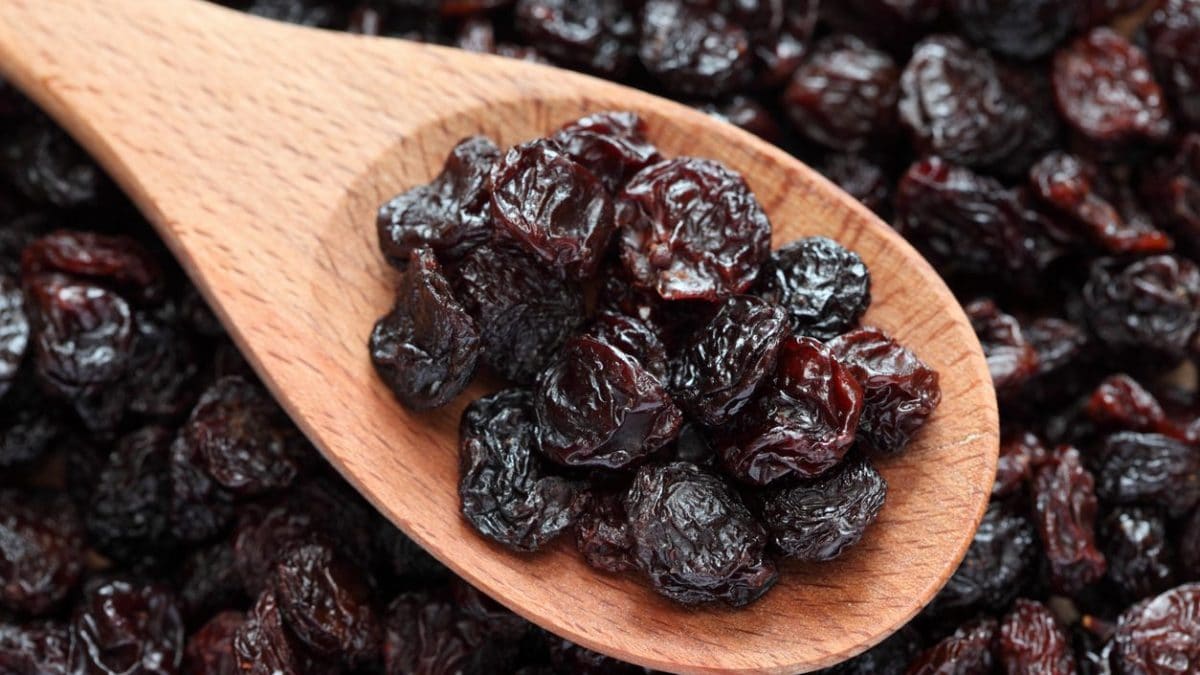
Brownish in color, sweetish in flavor, small and seedless: raisins are a truly delicious treat. They are the result of the drying process of certain grape varieties, processed to retain their flavor and health benefits even if they aren't fresh. They're often confused with sultanas —both are called "raisins" without distinction—but they're actually not the same thing because sultanas come from only one specific grape variety, while raisins are obtained from different types.
Raisins, which actually correspond to sultanas, have a delicate flavor that makes them very versatile in the kitchen. You're certainly familiar with them for sweet recipes, but they also lend themselves very well to savory dishes, adding a very distinctive flavor.
What Are Raisins?
Raisins, as a type of food, originated in the Middle East and have been known and consumed since ancient times: they are, in fact, a constant in Mediterranean cuisine, widely used in both Middle Eastern and European recipes, both sweet and savory. They are simply grapes that have been dried using a domestic or industrial process. Compared to traditional grapes, they are therefore smaller and seedless, with a color ranging from golden to dark brown. They retain all the properties of grapes, but in terms of flavor, they are much sweeter, as the hydration and drying processes deplete the grapes of water but retain all their sugars. Furthermore, in industrial production, raisins are often treated with glucose and other preservatives.
This is precisely one of the reasons why they differ from sultanas, which fall into the category of dried fruit and are obtained only from the sultana, a specific grape variety particularly common in Greece, Iran, and Turkey. Raisins, on the other hand, are obtained from various varieties, including sultanas, which is where the confusion arises.
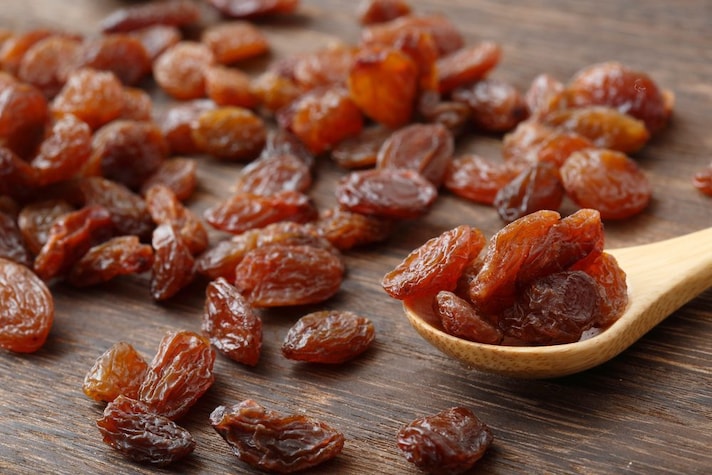
How to Make Raisins at Home
It's easy to find ready-made raisins in supermarkets and grocery stores, as they're a popular product both as a snack and as an ingredient. Alternatively, you can easily make them at home.
You can choose to dry the entire bunch or separate the individual grapes: in both cases, you'll need to wash and dry them thoroughly, making sure there are no wet or damp parts. At this point, if you dry the bunches, you can store them for a few weeks in a dry, warm place; if you dry the grapes, you'll need to expose them to the sun for a few days. Once the grapes are dried, you can store them in a glass jar or paper bag.
If you want to speed up the drying process, you can also use the oven. Simply blanch the grapes in water and baking soda for about 30 seconds. Once drained, rinsed, and dried, arrange them on baking paper and leave them in a preheated oven at 120°-150°C (250°-300°F) for at least three hours, checking the grapes frequently to avoid burning them.
Generally, the best varieties for drying, in addition to the aforementioned sultanas, include other types of oriental grapes (such as Zante or Corinth) or Sicilian grapes such as Moscato and Zibibbo.

How to Use Raisins in Cooking
Their use in desserts is certainly the first thing that comes to mind when talking about raisins: they are widely used in a wide variety of cakes and biscuits, the most famous of which are the iconic strudel and the delicious girelle. You may be surprised to discover, however, that raisins are also used in many savory recipes, for example traditional dishes like pasta with broccoli and pasta with sardines, both typical of Sicilian cuisine. Raisins also go well with main dishes: try them, for example, with turkey bites, but also in sardines in saor, the typical Venetian appetizer.
;Resize,width=767;)
