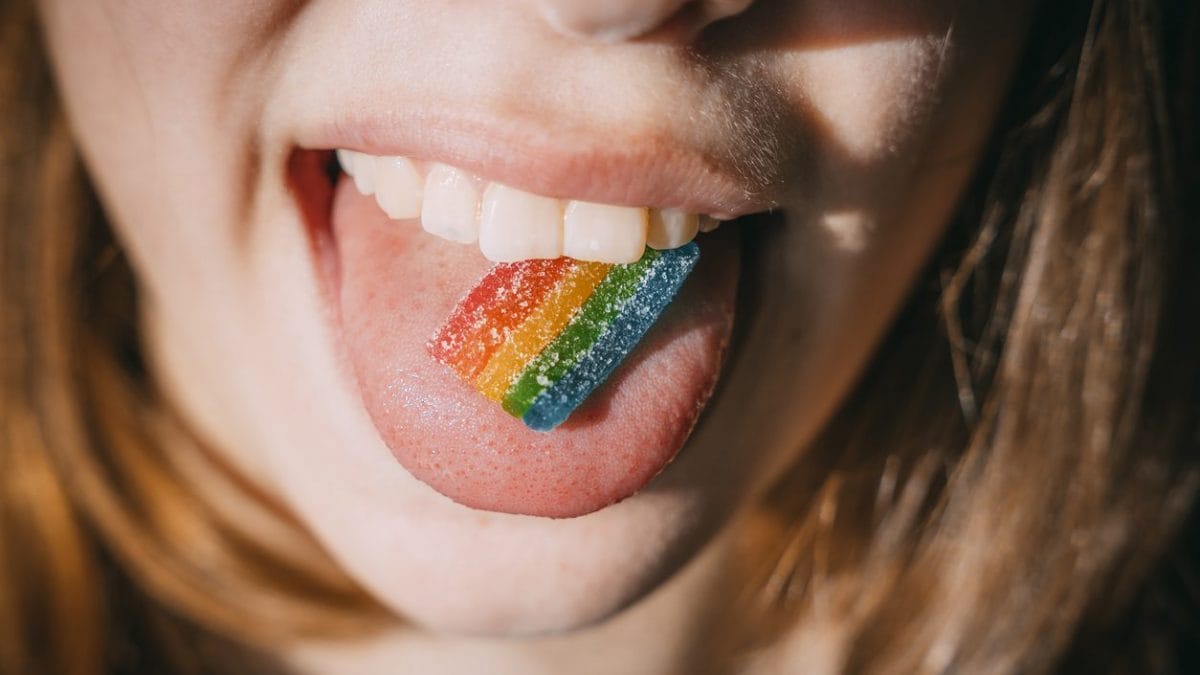
We often hear about a "multisensory experience" when we go to a restaurant, especially fine dining, but this expression may be truer than the storytelling suggests. We associate the sense of taste with mere taste buds, but in reality it is the product of a complex multisensory interaction. Charles Spence, professor of experimental psychology at the University of Oxford and director of the Crossmodal Research Laboratory, is the world's leading scholar in this field and has demonstrated with his studies that what we perceive as flavor is profoundly influenced by sensory information coming from sight, hearing, touch, and smell. His research has not only revolutionized and continues to revolutionize the way we understand food, but also product design and marketing strategies in the food industry. Let's see together how the other senses lead us to think about whether something is good or not.
The Senses of Taste Are a Question of Evolution
We've always thought that taste and smell were the primary players in flavor perception. However, science shows us that other senses play a crucial role. Sight, for example, influences our judgment of flavor before the food even touches our lips. The color of a plate or container can alter our perception of sweetness or bitterness, while the texture perceived by touch influences the quality of the food we're consuming.

Our evolutionary history has played a key role in shaping the perception of taste, as the senses are closely intertwined with the survival and adaptation needs that humans have developed over the millennia. Taste evolved primarily to help us distinguish between safe and potentially dangerous foods. Sweet flavors, associated with energy-rich foods (such as fruit), and salty ones, linked to electrolyte balance, were preferred because they were essential for survival. Conversely, bitter tastes are often linked to the presence of toxic substances, prompting our brain to reject them. Then there are the other senses: since the Paleolithic, 12,000 years ago, the ability to distinguish ripe fruit from unripe or spoiled fruit based on color ensured better food selection. Taste is the last sense to develop; previously, we relied on sight, smell (which allows us to anticipate the quality of a food before tasting it), and touch, which provides clues about its freshness or edibility. Over time these senses have "lost power" over food but are still fundamental today.
As the human brain developed, the cerebral cortex, responsible for sensory processing, began to integrate stimuli from multiple senses. This ability enabled a more complex and sophisticated eating experience. Over time, the perception of food was not limited to a biological assessment but was also influenced by social and cultural aspects. For example, rituals related to sharing food strengthened the multisensory value of eating experiences. During our evolution, adapting to new environments also required the ability to identify local foods through a multisensory experience. The discovery of spices, the use of aromatic herbs, and the combination of ingredients allowed humans to diversify their diets, enhancing their taste perception and improving survival.
How Your Other Senses Influence Taste
One of Spence's best-known studies is the "sonic chip" experiment, which demonstrates how hearing affects the perception of crispness and freshness. Using Pringles chips, identical in texture and flavor, Spence had participants listen to the sound of their bites through headphones, manipulating the sound frequencies. The results were surprising: higher-pitched sounds were associated with greater freshness, demonstrating that our brain integrates auditory information to form a global sensory judgment.

The researcher then demonstrated that sight also plays a crucial role in flavor perception. For example, strawberry mousse served on white plates tastes sweeter than that served on black plates, even though they are identical. Similarly, an Americano coffee is perceived as stronger and more intense when served in a white cup rather than a clear glass. These associations are not random: the psychology of color influences our brain at a subconscious level, shaping our expectations about the flavor before we even taste it.
Red or orange containers are often associated with greater sweetness or intensity of flavor, while blue and green evoke sensations of freshness or lightness. This principle finds direct application in food packaging design. However, the sense that has most impressed researchers is undoubtedly hearing, an often overlooked sense. The sound of a bread crust cracking or the sizzling of bacon affects how tasty food is perceived. In collaboration with celebrity chefs such as Heston Blumenthal, Spence has demonstrated that accompanying a dish with an appropriate "soundtrack" (such as the sound of waves for a fish dish) can amplify the flavor and overall experience of the meal. A study published in Frontiers in Psychology confirmed that consuming toffee sweets accompanied by low-frequency sounds reduces the perception of sweetness, while higher-pitched sounds intensify it. This demonstrates that music and sound can be used strategically in restaurants or product design to modulate taste.
All these studies have led Spence and his collaborators into the world of marketing, even without intending to (according to him). For example, research shows that touch can be widely exploited in packaging: experiments have shown that a cookie appears crispier when served on a rough rather than smooth surface. And what about the plastic bases of supermarket cookie packets? Rough. Similarly, a heavier yogurt container can make the product perceive as richer and denser, even if its chemical composition is identical. A very famous case is the case of a white Coca-Cola can, introduced in 2011 for an awareness campaign about polar bears, which was recalled after consumers perceived a change in the taste of the drink, despite the fact that it had remained unchanged. This example highlights how the color of a container can influence expectations and judgments about flavor.

Another emblematic example is represented by experiments conducted with soft drink cans: by modifying the sound produced by opening the tab, it was possible to alter the perception of the freshness and fizziness of the drink.
Criticism of This Research
Charles Spence's work has been the subject of much debate and criticism, it must be said. At the heart of the discussions are two main issues: the ethical implications of his research and the soundness of his methodological approach.
On the one hand, there is debate over the use of Spence's findings in the field of marketing. Critics argue that his studies, by providing scientific data on how to manipulate consumer perception, end up being exploited by companies to maximize profits, to the detriment of consumer health and well-being. Spence, for his part, emphasizes that his primary goal is to better understand the mechanisms of sensory perception, while acknowledging the potential applications of his research in the field of marketing. The author expresses his belief that his findings can also be used to improve public policies, for example, to combat obesity through healthier food reformulation.
On the other hand, the scientific foundations of Spence's research are being questioned. Many critics argue that his studies are too descriptive and lack a solid theoretical foundation. His research, often based on statistical correlations between different sensory variables, does not offer in-depth causal explanations of the underlying neural mechanisms. In other words, Spence simply describes associations without explaining why.
Spence defends his approach, arguing that the frequency with which certain sensory associations are observed suggests that they reflect fundamental cognitive mechanisms, rather than being simple coincidences. He also emphasizes that a complete understanding of the neural mechanisms underlying sensory perception is not yet available, and that his research contributes to a clearer picture of this complex phenomenon.
;Resize,width=767;)
