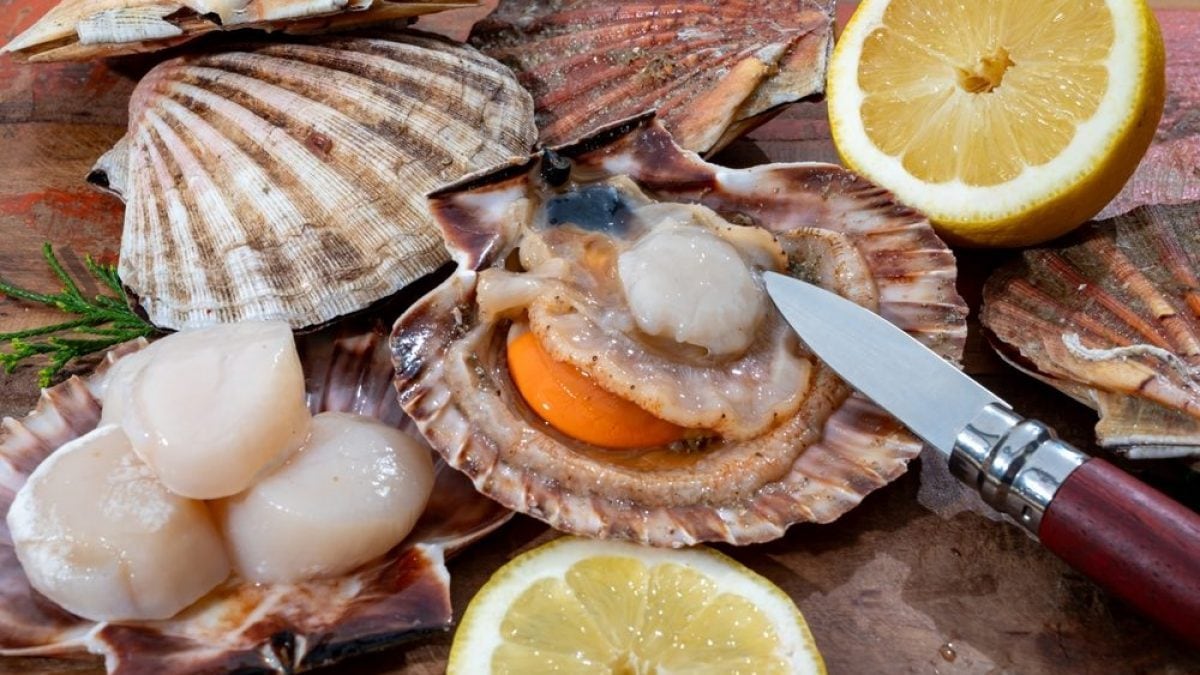
Scallops are bivalve mollusks highly prized in American and international cuisine for their tender flesh and delicate flavor. Anatomically, they consist of two hemispherical shells with clearly visible radial ribs, ranging in color from cream to reddish, through brown. Inside, there are two edible parts: the nut, which is the white, compact muscle, and the orange coral, which represents the gonads, or reproductive system. Both can be used, although the latter is eliminated in some preparations—especially the more refined ones. Nutritionally, the scallop (also known as St. James's scallop) is rich in high-quality proteins, has a moderate calorie content (about 70 kcal per 100 grams), and is a good source of minerals and B vitamins. It's a very versatile ingredient: it's excellent baked au gratin (a classic for holidays and special occasions), pan-seared, and added to risottos and other seafood main dishes, but it can also be eaten raw. Scallops are available fresh, still in their shells, partially opened, or frozen. In this short guide, we'll look at how to handle the first two, when extra care is needed when cleaning.
How to Choose Fresh Scallops
To get the best from scallops, you need to start with a quality product. If you buy them with the whole shell, it is important that it is closed: the valves must be intact, undamaged and shiny, and give off a light scent of the sea, never unpleasant or pungent odors. If you opt for partially open mollusks, however, look carefully at the color of the shell: it must be a shiny and uniform white, without yellowish streaks, while the coral will be moist, not dry, and a vivid red-orange.
In the United States, scallop harvesting is regulated by federal fisheries authorities, primarily NOAA, to ensure sustainable fishing. Instead of a single nationwide minimum shell size like the European Union’s 10 cm rule, U.S. management focuses on measures such as seasonal closures, catch limits, and restricted fishing areas that allow scallop populations time to grow and reproduce before harvest. In practice, however, many Atlantic sea scallops brought to market are still around 4 inches (about 10 cm) or larger, similar to the sizes commonly sold in Europe.
How to Clean Scallops
Once you bring scallops home, they need to be cleaned before using them in various recipes. Like mussels and clams, they are bivalve mollusks that filter seawater, absorbing impurities. If the purging process hasn't already been done by your fishmonger—which is usually done—you can do it yourself.
Run the shell under cold running water and scrub with a stiff-bristled brush to remove any encrustation and dirt from the shell. Soak the scallops in a large bowl of water and coarse salt for at least 30 minutes.
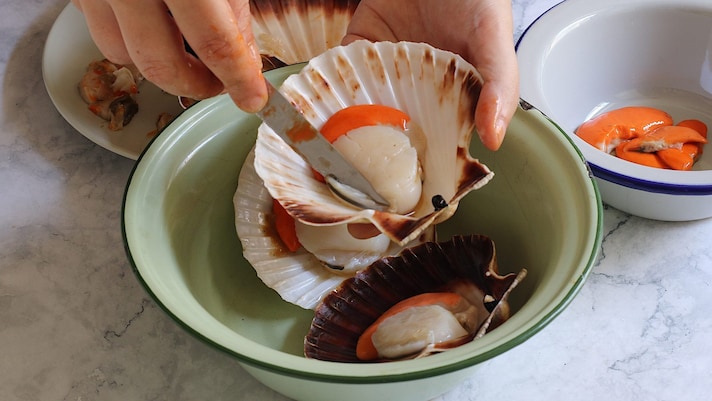
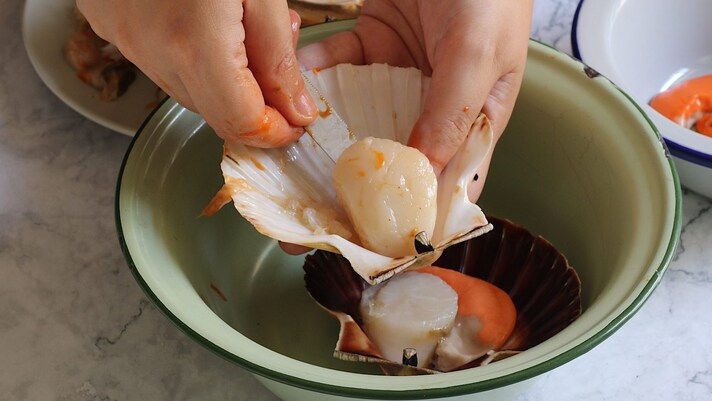
Once the time has passed, take a flat, sharp knife (like the one used for oysters) and insert it between the two shells, making an incision, so as to separate them and clean them inside.
You'll see the nut, the coral, but also gelatinous membranes and black entrails, which you can remove with your hands (you can wear gloves) and scraping them off with a knife, preferably under running water.
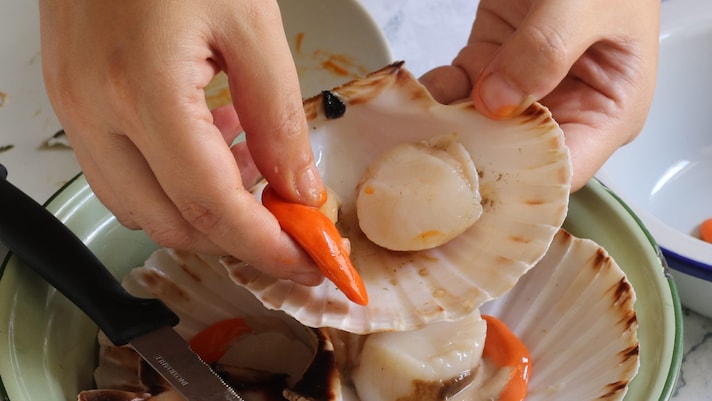
At this point, only the two edible parts will remain, which require further processing: completely trim the remaining casing around the fruit and remove the gray coral area. Finally, remove the mollusk from the bottom and rinse it, patting it gently with paper towels.
Advice
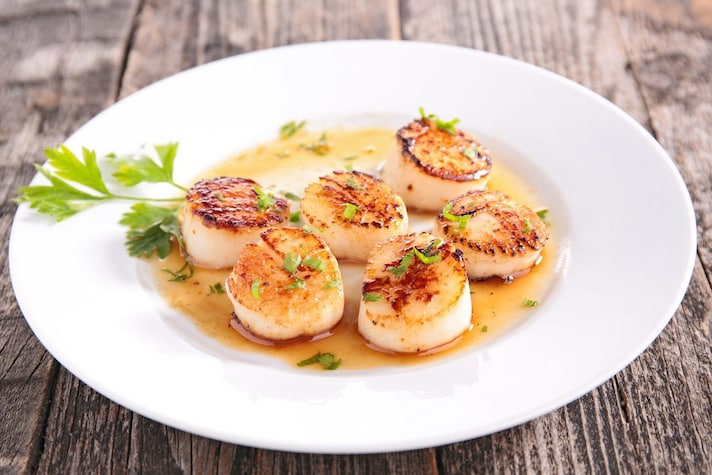
In many recipes, especially the more dramatic ones like oven-baked scallops, the shells are used as a plating base. For this reason, once you've removed the contents, clean them further with a brush, removing all marine debris. To enhance the tenderness of the mollusk, it's important that it doesn't dry out: so quick pan-frying is a great way to achieve a delicious golden exterior in just a few minutes, while the inside remains white and soft. A fatty element becomes an ally in preserving moisture and adding a distinctive flavor: it's no coincidence that scallops are often coated in melted butter, or wrapped in pancetta or bacon. For the same reason, stewed preparations are also recommended, such as quick tomato sauces for seasoning pasta with scallops. If you intend to eat the scallop raw, make sure it has first been properly frozen for food safety reasons: it is delicious in carpaccio and tartare, perhaps marinated with citrus fruits, from orange to lime, which enhance its delicacy and refined flavor.
How to Store Them in The Fridge or Freezer
Like all mollusks, fresh scallops should be consumed as soon as possible, as they are highly perishable. If purchased whole, they can be stored in the refrigerator at a temperature between 32°F/0°C and 39°F/4°C: place them in a container covered with a damp, wrung-out cloth for up to 24 hours. Once cleaned, the best way to preserve them is to freeze them. In this case, however, you must be sure you have purchased a product that has not been previously frozen and then thawed: by law, this information must be transparent to the consumer. To store them in the freezer correctly, ensuring they last up to three months, pat the shell and corals dry with absorbent paper and place them in the freezer in special freezer bags: vacuum-packing is even more recommended. When ready to use, thaw slowly in the refrigerator to maintain the cold chain and avoid bacterial growth.
;Resize,width=767;)
