When autumn and winter arrive, broccoli appears on the vegetable stalls. This vegetable belongs to the Brassicacae family, better known as cruciferous vegetables, and like its closest relatives, from cauliflower to Brussels sprouts, it is rich in beneficial properties. Although it is not synonymous with enthusiasm in the kitchen like other seasonal vegetables – just think of pumpkin or artichoke – broccoli is actually a very versatile food, becoming the protagonist of tasty dishes such as pasta, lasagna, cream soups, side dishes (excellent with potatoes or baked au gratin), meatballs and savory pies, playing with texture – crunchy or creamy – and flavor, it pairs well with sausage, as well as anchovies, dried fruit such as almonds, walnuts and hazelnuts, chili pepper, fresh and aged cheeses and béchamel sauce. How does it look? Usually a beautiful, firm, dark green head, the buds (i.e., inflorescences), leaves, and stem are edible and can be boiled, sautéed, or steamed. Let's see how to clean and cook them to best preserve their nutrients.
How to Clean Broccoli
Cleaning broccoli isn't complicated, but it does require a little care to avoid waste. It's advisable to always do a preliminary check before purchasing to see if there are any damaged, yellowed, or mushy areas, which are signs of a product that isn't completely fresh. Once you get home, proceed as follows: all you need is a knife, a cutting board, and a colander.
First, remove the leaves: don't throw them away, but keep the more tender ones, because they can be boiled and then sautéed in a pan.

Place the broccoli on a cutting board and separate the head from the stem, leaving a bunch of florets only. Use a small knife to cut the florets at the base, separating them from each other. If any are too large, you can divide them further: if necessary, trim the small stems of the florets, removing the toughest part.

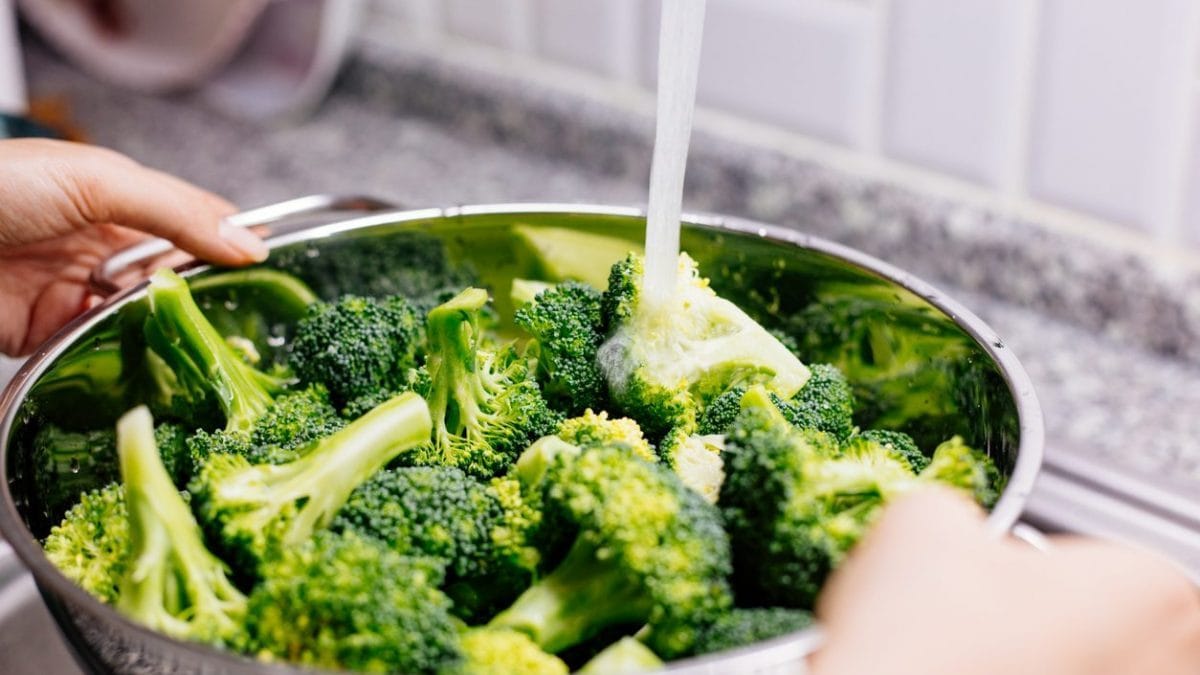
Now, take care of the central stem: remove the base and the tougher, more fibrous exterior. The result will look like a bare tree. You can cut it into small pieces and add it to the tops, or use it as a filling for omelettes, meatballs, and savory pies. Whole, it's perfect for flavoring a vegetable broth. Transfer everything to a colander and rinse well to remove any impurities and soil residue.

How to Cook Broccoli
The simplest and most common method for cooking broccoli is boiling: the starting point for using this vegetable in various recipes. It's important not to overcook it: it mustn't absorb excess water and become soft and mushy, otherwise it will not only lose its texture but also important micronutrients, such as vitamin C, which is water-soluble and heat-sensitive. The cooking time depends on the size of the florets, averaging 5-8 minutes in total. Here are the steps:
- Bring a large pot of salted water to a boil.
- If you have them, add the chopped stems first, as they require a slightly longer cooking time, and then the florets. Check for doneness with the tines of a fork: they should pierce the broccoli without falling apart.
- Drain with a slotted spoon: if you want to keep the bright green color, you can immerse the tops in ice water.
The quickest method is still boiling, but if your goal is to preserve as many nutrients as possible, steaming is the best option: this method limits contact with water and reduces the loss of vitamins and minerals. To steam broccoli, fill a pot with a little water and bring it to a boil. Arrange the florets in a steamer basket (so they don't directly touch the water), cover with a lid, and cook for about 5-7 minutes, until tender but still crunchy. This way, they will retain their flavor, color, and many of their beneficial properties.
Another alternative is to eat them raw: in many countries, broccoli is eaten this way, crunchy and fresh, precisely to preserve all the nutrients intact.
How to Store Raw and Cooked Broccoli
Fresh broccoli will keep in the refrigerator ‘s crisper drawer for 3-4 days, preferably in a paper bag or wrapped in a cotton cloth to protect it from moisture. Once cleaned and washed, it's best to place it in an airtight container lined with paper towels and use it within 24 hours. If you simply boiled it without seasoning it, always place it in a sealed container; it will last for 2-3 days. Alternatively, after blanching it for a couple of minutes, you can also freeze it by placing it in special freezer bags, making sure to let it cool completely: it will keep for a couple of months.
;Resize,width=767;)
