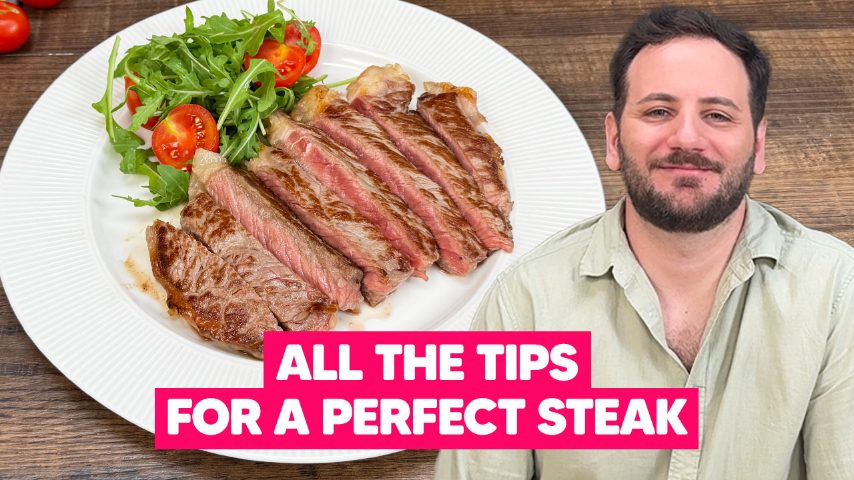
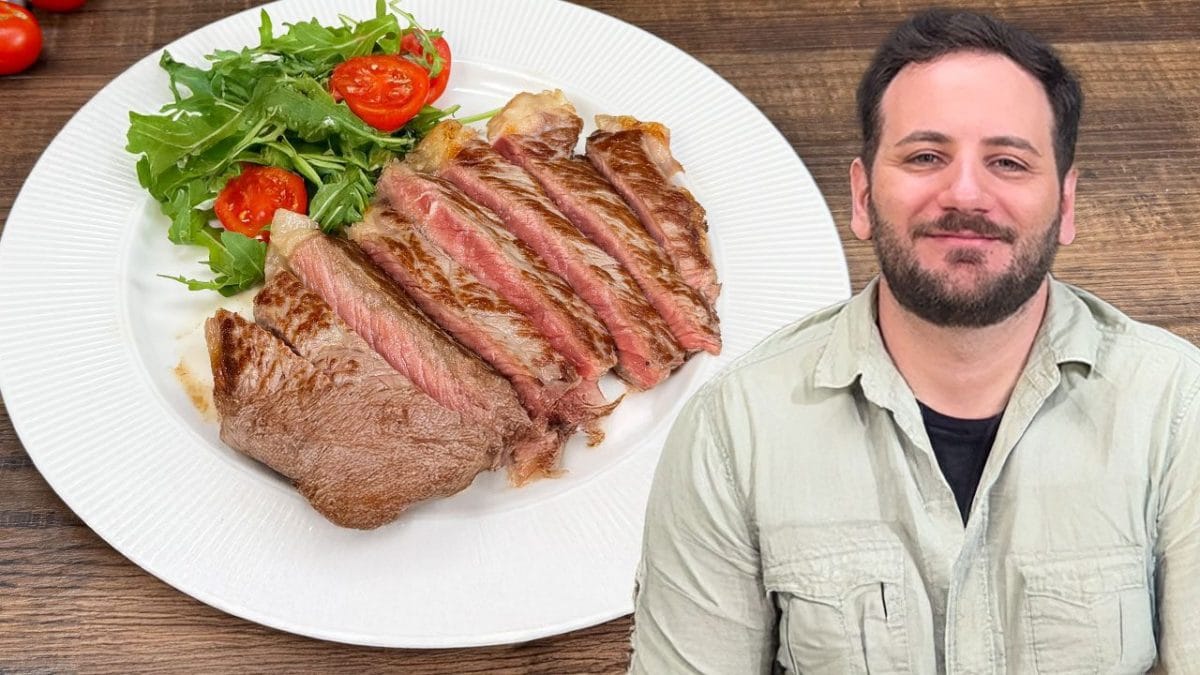
Cooking the perfect steak is all about technique, timing, and respect for the meat. When done right, a steak should be juicy on the inside, beautifully seared on the outside, and incredibly tender with every bite.
In this recipe, a professional chef shows step by step how to achieve steakhouse-quality results at home. From choosing the right cut to mastering heat and resting time, this guide will help you avoid the most common mistakes and cook steak like an Italian chef.
Choosing the Right Cut of Meat
Not all cuts are suitable for a tender steak. The best ones have natural marbling, meaning fat distributed inside the muscle, which melts during cooking and keeps the meat juicy.
- Sirloin: balanced, tender, and flavorful (used in this recipe)
- Ribeye: very juicy thanks to marbling
- Tenderloin: extremely soft but less flavorful and more expensive
Avoid very lean or tough cuts like rump, round, or shoulder, which tend to dry out and become chewy.
The Importance of Thickness
A great steak must be thick. The ideal thickness is at least 3cm, preferably 4–5cm.
Thin steaks cook too fast, dry out easily, and don’t allow proper browning. A thick cut lets you achieve a deep crust on the outside while keeping the inside pink and juicy.
Bring the Meat to Room Temperature
One of the most common mistakes is cooking steak straight from the fridge. Always remove the meat at least 30 minutes before cooking, ideally 1 hour. This avoids thermal shock and ensures even cooking, keeping the steak tender.
Before cooking, pat the meat dry with paper towels to remove excess moisture.
How to Prepare the Steak Before Cooking
Place the steaks on a cutting board and massage them lightly with olive oil. Add a few fresh rosemary needles, pressing them gently onto the surface. This step:
- Adds aroma
- Creates a protective layer
- Improves browning during cooking
- Do not season with salt yet (we’ll explain why below).
Pan or Grill: Heat Is Everything
The pan or grill must be scorching hot, not just warm. Use:
- A cast-iron pan
- Or a heavy-bottomed grill pan
- Never use lightweight non-stick pans for steak.
- Do not oil the pan. Oil the meat lightly instead.When the steak touches the surface, it should sizzle immediately — this is essential for the Maillard reaction, the chemical process that creates the crust, color, and intense steak flavor.
How Long to Cook the Steak
- Place the steak on the hot surface and do not move or pierce it.
- 3 minutes per side → medium-rare
- Cook longer only if you prefer it more done, but avoid overcooking
- Never use a fork: piercing the meat lets precious juices escape.
Slicing the Steak the Right Way
Once cooked, transfer the steak to a cutting board.
Slice it diagonally and against the grain into diamond-shaped pieces.
This technique:
- Makes each bite more tender
- Improves texture
- Allows even heat distribution
After slicing, briefly return the meat to thehot pan or grill for just a few seconds to seal the cut surfaces.
Why Resting the Steak Is Essential
Even after cooking, steak needs to rest. If sliced immediately: let it rest about 1 minute If left whole: rest 2–3 minutes, loosely covered with foil
Resting allows the juices to redistribute instead of leaking out, keeping the meat juicy and flavorful.
When Should You Add Salt?
Salt timing is crucial. When salt touches meat, it draws out moisture.
After about 15 minutes, that liquid is reabsorbed, tenderizing the meat.
- So you have two correct options:
Salt the steak at least 40–60 minutes before cooking - Or salt it after cooking
Never salt right before or during cooking, as surface moistureprevents proper browning.
How to Store
Cooked steak is best eaten immediately.
If needed, store leftovers in an airtight container in the fridge for up to 1 day.
How to Reheat
Reheat gently in a pan over low heat or enjoy cold, thinly sliced in salads or sandwiches.
Ingredients
How to Cook the Perfect Steak

Place the beef sirloin slices on a cutting board.
Pat them dry with kitchen paper, then massage the meat with a thin layer of extra virgin olive oil.
Add a few fresh rosemary needles, pressing them gently onto the surface to release their aroma.
Place the beef sirloin slices on a cutting board.
Pat them dry with kitchen paper, then massage the meat with a thin layer of extra virgin olive oil.
Add a few fresh rosemary needles, pressing them gently onto the surface to release their aroma.

Heat a cast-iron pan or grill until it becomes very hot.
The surface must be scorching: when the meat touches it, it should sizzle immediately.
Heat a cast-iron pan or grill until it becomes very hot.
The surface must be scorching: when the meat touches it, it should sizzle immediately.
Lay the steak on the hot pan or grill and cook for about 2 minutes per side, without piercing or moving it.
This allows a proper crust to form while keeping the inside juicy.

Lay the steak on the hot pan or grill and cook for about 2 minutes per side, without piercing or moving it.
This allows a proper crust to form while keeping the inside juicy.
Remove the steak from the heat and transfer it to a cutting board.
Slice it diagonally, against the grain, into diamond-shaped pieces, then fan it out slightly.

Remove the steak from the heat and transfer it to a cutting board.
Slice it diagonally, against the grain, into diamond-shaped pieces, then fan it out slightly.
Place the sliced steak back on the hot grill or pan for just a few seconds, only to seal the cuts and enhance flavor.
Remove immediately and serve.
;Resize,width=767;)
