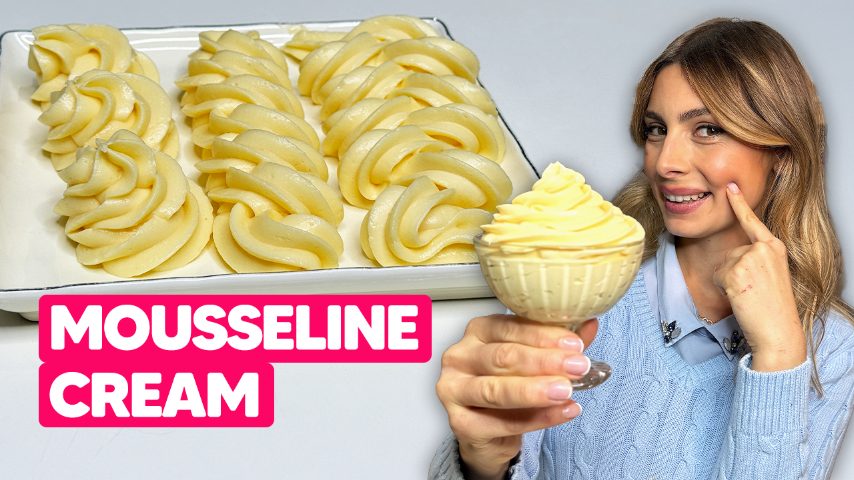
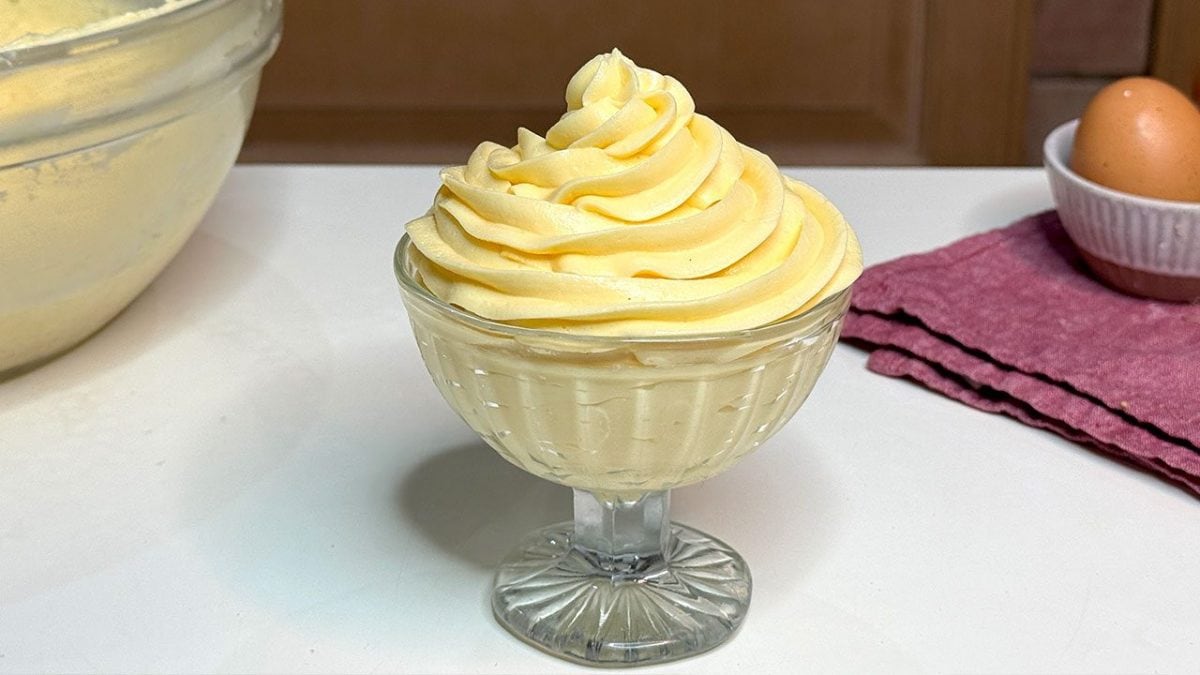
Mousseline cream, known in French pastry as crème mousseline, is a refined custard-based cream enriched with butter. Silky, structured and perfectly stable, it is one of the pillars of classic French pâtisserie.
Unlike simple pastry cream, mousseline acquires body, lightness and a smooth, pipeable texture thanks to the incorporation of softened butter into cold custard. The result is a cream that is rich yet balanced, ideal for layered cakes such as Fraisier, for mille-feuille, tarts and elegant entremets.
Understanding temperature control and emulsification is essential to achieving a flawless result.
What Is Mousseline Cream?
Crème mousseline is prepared in two stages. First, a classic pastry cream is cooked gently until thickened. Once completely cooled, softened butter is beaten into it, creating a stable emulsion.
The butter does not simply flavor the custard. It restructures it. The fat binds with the starch-thickened base, producing a cream that is more aerated, firmer and more suitable for professional pastry applications.
When properly made, mousseline cream is smooth, glossy and holds its shape beautifully when chilled.
Frequently Asked Questions
What is the difference between pastry cream and mousseline cream?
Pastry cream is a custard thickened with starch and eggs. Mousseline cream begins with pastry cream but includes a significant amount of butter, which changes both texture and structure. Mousseline is firmer, smoother and more suitable for layered cakes.
Why did my mousseline cream split?
Separation usually occurs because the butter and custard were at different temperatures. If this happens, gently warm the bowl over a bain-marie for a few seconds and beat again. The emulsion often recovers once temperatures align.
Can I flavor mousseline cream?
Yes. Once the butter is fully incorporated, you may add melted chocolate, pistachio paste, coffee extract, praliné or citrus zest. Flavorings should be added gradually and fully emulsified.
Is mousseline cream stable for decorating?
When properly chilled, mousseline cream is stable and holds its shape well. It is suitable for piping borders and filling layered cakes, but it must remain refrigerated until serving.
Can I make it in advance?
Yes. It is actually preferable to prepare it the day before use. Resting overnight improves stability and slicing precision.
Why must the cream not boil?
Boiling can break down starch structure and overcook the egg proteins, resulting in a grainy or unstable base. Gentle cooking ensures a smooth final texture.
How to Store
Mousseline cream should be stored in an airtight container in the refrigerator for up to 3 days. Before using, allow it to soften slightly at room temperature and whisk briefly to restore smoothness.
How to Freeze
Freezing is not recommended. The butter emulsion may separate upon thawing, compromising both texture and stability.
Ingredients
How to Make Mousseline Cream
;Resize,width=712;)
Begin by cutting the butter into small pieces and leaving it at room temperature. It must be soft and pliable but not greasy or melted.
Begin by cutting the butter into small pieces and leaving it at room temperature. It must be soft and pliable but not greasy or melted.
Split the vanilla bean lengthwise and scrape out the seeds. Place the milk in a saucepan together with both seeds and pod. Heat gently over low heat. The milk should become hot but must not boil.
;Resize,width=712;)
Split the vanilla bean lengthwise and scrape out the seeds. Place the milk in a saucepan together with both seeds and pod. Heat gently over low heat. The milk should become hot but must not boil.
In a separate bowl, whisk the egg yolks with the sugar for several minutes until pale and slightly thickened. Add the sifted cornstarch and continue mixing until smooth and completely free of lumps.
Gradually pour the warm milk over the egg mixture, whisking constantly to prevent curdling. Return the mixture to the saucepan.
Cook over very low heat, stirring continuously with a whisk or spatula. The cream must thicken gently and reach approximately 85°C. It should never boil, as boiling can destabilize the structure and alter the texture.
;Resize,width=712;)
In a separate bowl, whisk the egg yolks with the sugar for several minutes until pale and slightly thickened. Add the sifted cornstarch and continue mixing until smooth and completely free of lumps.
Once thickened, the cream should appear smooth and slightly softer than traditional pastry cream. Remove from the heat immediately.
Transfer to a clean bowl and cover with plastic wrap placed directly on the surface to prevent condensation and skin formation. Allow it to cool completely at room temperature, then refrigerate until fully cold.

Gradually pour the warm milk over the egg mixture, whisking constantly to prevent curdling. Return the mixture to the saucepan.
When both the pastry cream and butter are at similar cool room temperature, beat the custard briefly to loosen it.
;Resize,width=712;)
Cook over very low heat, stirring continuously with a whisk or spatula. The cream must thicken gently and reach approximately 85°C. It should never boil, as boiling can destabilize the structure and alter the texture.
Add the softened butter all at once or in two additions and beat with an electric mixer until the cream becomes smooth, light and homogeneous.

Once thickened, the cream should appear smooth and slightly softer than traditional pastry cream. Remove from the heat immediately.
Refrigerate for at least two hours before using. Resting allows the emulsion to stabilize and the texture to firm.
;Resize,width=767;)
