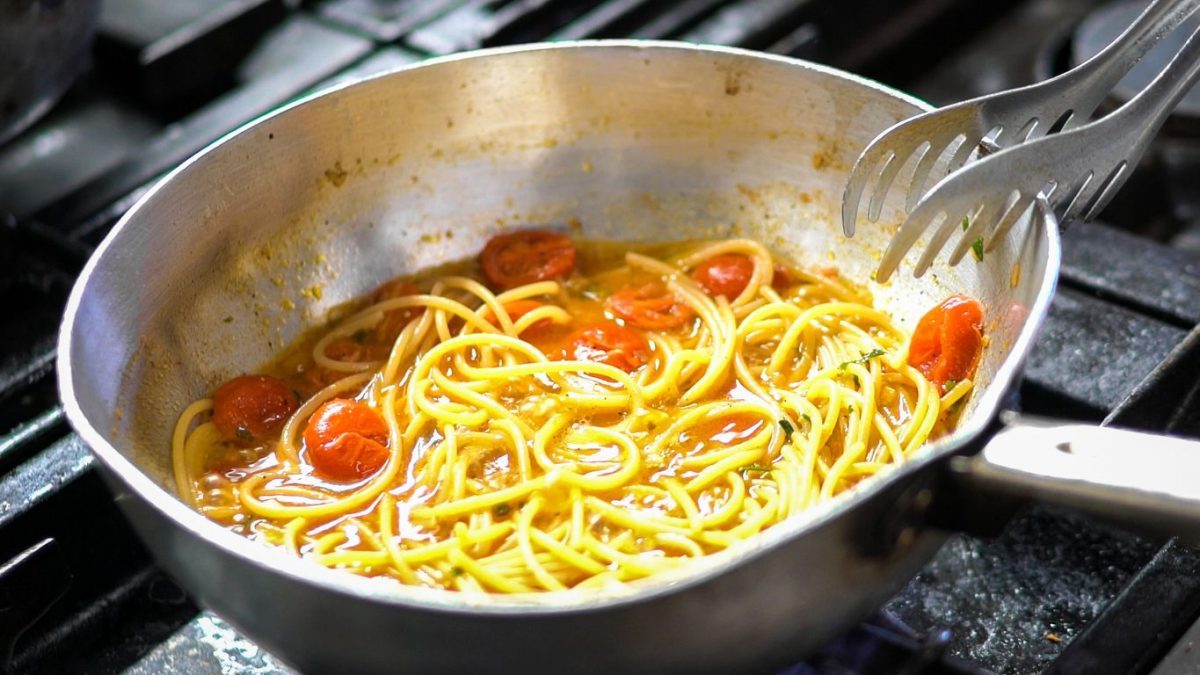
Among the steps involved in preparing a pasta dish, there's one that's crucial to ensuring the sauce blends perfectly with the pasta shape, avoiding a disjointed, dry, and unappealing result. That delicious "creaminess" that we're so passionate about is created by mantecatura, a term we immediately associate with risotto and which here refers to an emulsion created by exploiting the action of starch, heat, and fat when they're combined in the pan. It's about giving the recipe a perfect result, enhancing its flavor and texture: compared to the past, where at home it was often a matter of simply adding the sauce to the cooked pasta with a quick stir, this technique is now gaining popularity even at home, allowing a dish to be served just as if you were at a restaurant. Let's see how it's done by following a few rules and tips.
When and Where You Should Stir Pasta
Mantecatura is a process that takes place after the pasta is drained: therefore, first of all, it must be cooked as best as possible. A few tips to keep in mind: the correct proportions are 1 liter of water for every kilo of pasta, while the salt, preferably coarse, should be 10 grams per liter of water or 7 grams per 100 grams of pasta, added once boiling. The ideal time for mantecatura is to drain the pasta a few minutes before the time indicated on the package, so that the cooking can finish in the pan with the sauce. Why? This allows the starch released by the pasta into the sauce to create the emulsion in order to create the velvety texture. Choose a large pan with high edges, preferably aluminum, light and easy to handle.

Basic Steps to Whisk Pasta in a Pan
Let's see how to proceed in practice: the first step is to drain the pasta, reserving a few ladles of the cooking water, which acts as a natural binder. Transfer the pasta to the pan with the already prepared and hot sauce and turn the heat to medium, starting to stir vigorously and adding a little cooking water if necessary. The movement should be continuous for a minute, but not aggressive: just enough to incorporate air without breaking the pasta. At this point, you can add a fat that gives further creaminess, such as extra virgin olive oil or cold butter cut into pieces, which contribute to the glossy texture, but also grated cheese such as Grana, Parmesan, and Pecorino: the advice is to remove the pan from the stove and finish the creaming with these ingredients off the heat, taking advantage of the residual heat. This also allows the starch to stabilize, thickening the sauce.

The Importance of Cooking Water
We often tend to let the oil do the work that the cooking water should do, risking an overly greasy dish. The latter, however, is in most cases the "secret" to excellent creaming, as being rich in starch, it helps the fats and liquids that make up the dish emulsify. It is added a little at a time, to avoid overdoing it, checking the consistency, and hot, but not boiling to avoid thermal shock.
Stir or Skip?
In cooking videos, you may see chefs tossing pasta with quick, decisive movements: this is a gesture done toward the end of the creaming process, usually after adding some fat, so that the ingredients become one. If you're not an expert cook, simply stir with a wooden fork or tongs.

Other Types of Creaming
Among the great Italian classics, there are also dishes that require a "cold" mantecatura, meaning the sauce is mixed strictly with the heat off. We're talking about carbonara, for example, with eggs and pecorino, or cacio e pepe. The pasta doesn't continue cooking in the sauce and therefore must be drained practically al dente and mixed with the sauce immediately, while it's piping hot: since the mixtures are often very dense, a little cooking water helps make them more fluid. Finally, mantecatura can also be done with raw sauces, above all pesto alla genovese (and its many variations), which categorically rejects the heat of the flame: drain the pasta al dente and pour it into the bowl of pesto, stirring, gradually adding some cooking water to loosen and add creaminess.
;Resize,width=767;)
