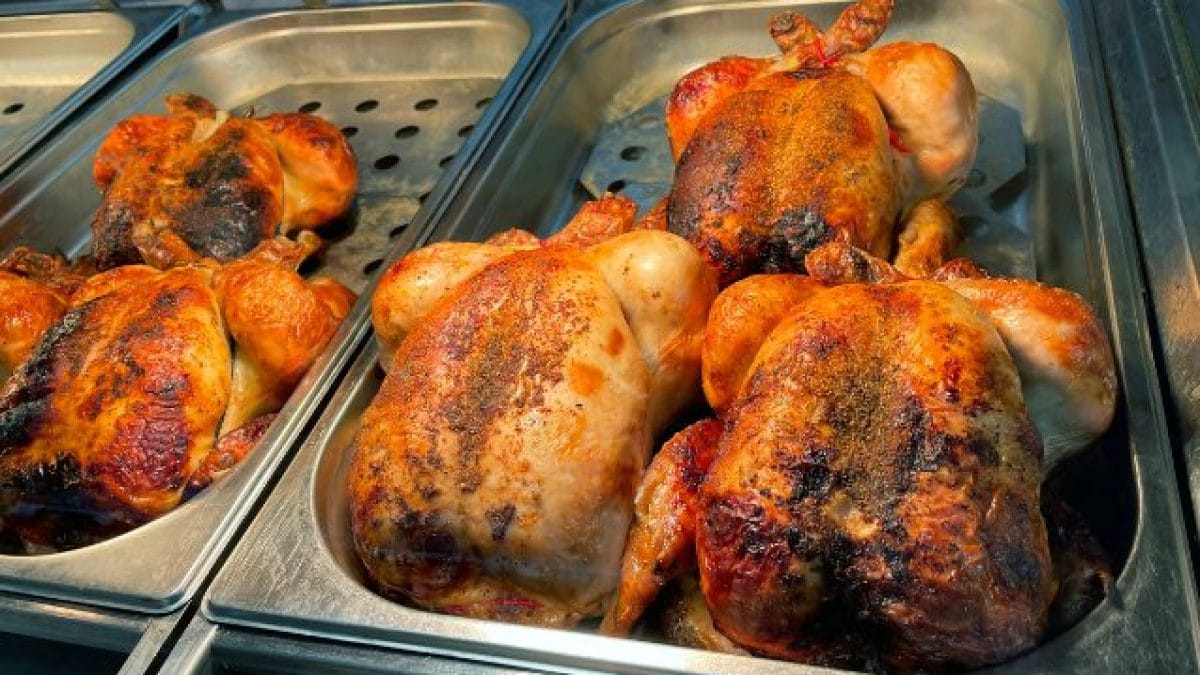
It is 5:30 PM on a Tuesday. You are exhausted, the thought of chopping vegetables or washing a mountain of pans makes you want to weep, and you still need to put dinner on the table. Enter the grocery store rotisserie chicken: the ultimate, low-cost culinary cheat code. For less than the price of a raw bird in many supermarkets, you get a fully cooked, beautifully seasoned, protein-packed centerpiece ready to be carved up or shredded into tacos, soups, and salads.
But walking up to that glowing, humid heating cabinet is a gamble. If you grab the first container your hand touches, you risk unboxing a culinary tragedy once you get home—a bird with leather-like skin, stringy breast meat, and a completely dried-out interior.
Supermarket hot cases are designed to keep food at bacteriologically safe temperatures, but those intense heating elements act like a slow-motion dehydrator. To ensure you walk away with the absolute juiciest, most flavorful bird in the pile, you need to look past the savory aroma and use a few tactical scouting tricks.
1. The Time-Stamp Audit (The Golden Rule)
Before you even look at the chicken itself, look at the sticker on the plastic dome. By law and food safety standards, grocery stores must stamp the exact time the chicken was pulled from the rotisserie oven and placed into the warming case. Most supermarkets have a strict shelf-life policy for hot foods—usually rotating chickens out every two to four hours. You want a chicken that was placed in the case within the last hour. If a bird is approaching the three-hour mark, it has been subjected to hours of intense, moisture-sapping dry heat. Even if it was perfectly juicy when it left the oven, it is now structurally compromised. Skip it.
2. The Visual "Shrivel" Check
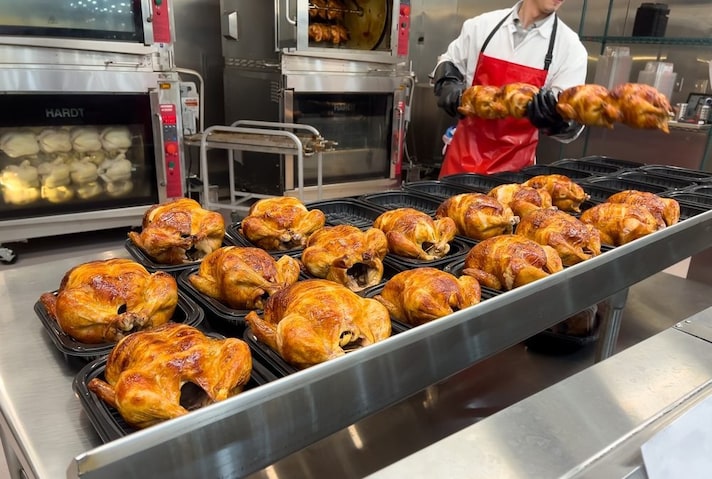
Once you have filtered by time, it’s time to perform a visual inspection through the plastic window. You want to assess the tautness of the skin and the plumpness of the breast. Look closely at the wings and the tips of the drumsticks. If the skin on the wings looks shriveled, dark brown, or paper-thin, or if the meat has pulled back drastically from the leg bones exposing dry white cartilage, that chicken is overcooked. Instead, search for a bird with a smooth, rounded, plump breast that completely fills out the frame of the container. The skin should look glossy and taut, not wrinkled like a raisin.
3. The Weight Test
Don't be shy—pick up a few containers and compare their weight. Because rotisserie chickens are sold at a flat rate rather than by the pound, they are not all created equal. A heavier chicken doesn't just mean you are getting more meat for your dollar; it means you are getting more water weight. As a chicken sits under a heat lamp, it continuously loses moisture through evaporation. A chicken that feels noticeably heavier and denser than its neighbors is actively retaining its natural juices. If a container feels remarkably light or balances precariously in your hand, it has already surrendered its juices to the atmosphere or the bottom of the plastic tray.
4. Avoid the "Juice Flood" Delusion
It is incredibly tempting to reach for the container that has a massive pool of dark, savory liquid sloshing around at the bottom of the tray. It looks juicy, right? In reality, it is the exact opposite. That liquid didn't come from the sky; it came from inside the meat. A large puddle of broth in the plastic tray means the chicken has suffered from cell wall breakdown, causing all its internal moisture to purge outward. You want that juice locked securely inside the muscle fibers of the breast and thighs, not pooled under the plastic molding. Look for a container with minimal pooled liquid.
5. Reach for the Back
Grocery store employees are trained in the classic retail strategy of FIFO (First In, First Out). They naturally push the older chickens to the front and top shelves of the heating cabinet so rushed shoppers will grab them first. Furthermore, the front of the heating case is constantly exposed to drafts from the grocery store air conditioning every time a customer opens the door or reaches inside, leading to uneven temperature drops that dry out the skin. Safely reach past the frontline. The freshest, most recently stocked chickens are almost always tucked away on the bottom shelf toward the back of the cabinet, where the ambient humidity is highest and the environment is most stable.
;Resize,width=767;)
