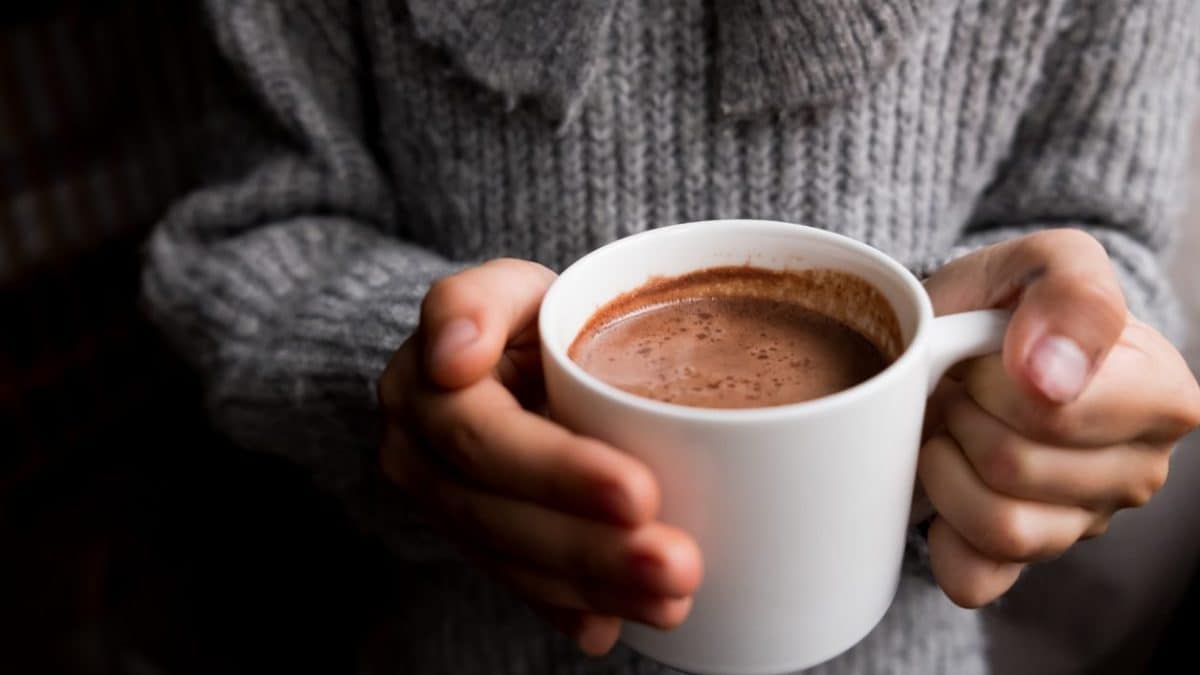
We're less serious about hot chocolate and more carefree. We're not as picky as we are with wine or coffee; we don't stick our noses in trying to figure out whether, on the day the grapes were harvested, it was sunny or rainy, giving them that earthy, moist note that makes them so distinctive and utterly unique.
But perhaps we should be a little more picky about this too, because chocolate is an incredible product, with hundreds of aromatic notes, and deserves the same status as the other beverages mentioned above. Indeed, with the exponential success of specialty coffees and the love for the most famous alcoholic grape juice, we've all become a little more knowledgeable—seeing amateur sommeliers popping up everywhere—chocolate is becoming less and less talked about. However, hot chocolate is one of those things that everyone —literally everyone—drinks at least once a year, and it's important to know when we're drinking quality chocolate and when we're not. To do so, we couldn't help but ask the "king of chocolate": we're talking, of course, about chef and master chocolatier Ernst Knam, who gave us a few tips for enjoying this fantastic beverage to the fullest.
It's All (or Almost All) a Matter of Personal Taste
There's nothing more beautiful in the kitchen than freedom of thought and expression, because it's one of those places where we can truly be ourselves and do what we love, without feeling judged. Even when it comes to hot chocolate, we start from the same rule that says "if you like it, it's fine": Ernst Knam, too, believes a lot depends on personal taste. And that's why we'd like to give you just a few tips on what a good hot chocolate should be like —and also a few small mistakes to avoid.
Sweet, Bitter, Sour or Fruity: What Should It Taste Like?
Let's start with one of the first things we notice when we drink hot chocolate: the flavor. Much like coffee and wine, chocolate also has a broad and varied aromatic profile, in which we can perceive hundreds of aromatic notes. "When you smell it, it should have an enveloping, persistent bouquet, enriched by a soft texture and where you can perceive aromas of cinnamon, vanilla, cardamom, star anise, dried fruit, and caramel," and all of this depends "on the type of cocoa or chocolate and obviously its origin," says Knam. Therefore, a good hot chocolate should contain various aromatic notes, which will not always be the same and will depend on the variety of chocolate.
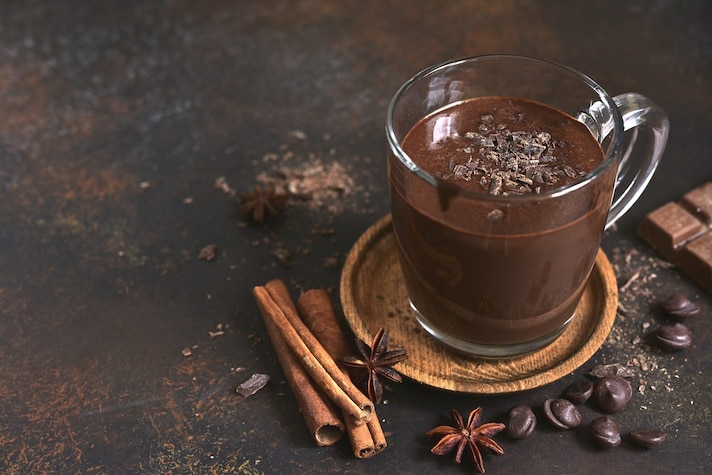
To fully appreciate them, it's recommended not to add a sweetener because, as Knam reminds us, "sugar kills the flavor" and, therefore, it should be avoided if you want to experience the intense flavor of chocolate or cocoa. The key, however, is always the perfect balance, so "it should be slightly bitter and not very sweet," so, depending on the type of base chocolate I have, I can decide whether to sweeten it lightly or not. For example, the Criollo variety —considered one of the most prized in the world and originating from Latin America—has a softer and fruitier flavor, while the Forastero variety, which comes from Africa, is more bitter and will most likely need a little sugar. Or, again, Trinitario cocoa, born from the meeting of the previous two, has a fairly balanced profile and is perfect for those who want a hot chocolate that's neither too sweet nor too bitter. In any case, however, "it depends on personal taste" and everyone can consume it as they wish.
Cocoa or Chocolate? Milk or Water? The Basic Ingredients
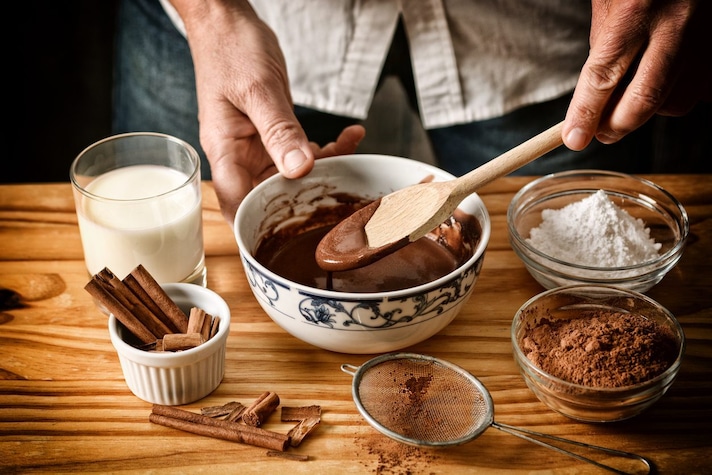
If you've ever tried making hot chocolate, you'll know there's no single way to make it: in fact, "some people use milk, water, or even cream." And we don't want to start a debate about which ingredient is best because, quite simply, it doesn't exist. There are just different results, and our master chocolatier tells us that, in his opinion, "fresh whole milk gives a truly exceptional flavor." Using water as a liquid base, on the other hand, isn't wrong, but Knam explains that this way you get a chocolate that's "much more liquid and in which you can taste the bitterness of the cocoa much more," unlike milk, which "has the fat, which tones down that flavor a bit and makes it much more enveloping."
Now we come to perhaps the most perennial question: cocoa, chocolate, or both? Before anyone gets too excited, let's get this straight: both are good, even in combination, and only your palate will guide you in one direction or another. It goes without saying, however, that whatever you choose, you always need a high-quality product: "In my hot chocolate, I only use quality chocolate with 70% cocoa mass, but I don't add cocoa powder because I don't like the taste."
The Perfect Consistency? It Doesn't Exist
It's worth taking a moment here, because we've all been inundated, over the years, with those commercials showing hot chocolate of the perfect, almost surreal consistency: we'd spend minutes, which seemed like days, standing over the saucepan waiting for it to reach just that consistency. And as the weather changed and the seasons passed, all we could get was a hot chocolate that had that burnt taste —the same one our now-faded hopes had—and even a few lumps, and it was one of the first moments we realized that television can't always be trusted. And it's right here that we'd like to give you the definitive answer, to put your weary soul at ease, but, sadly, we have to tell you: the perfect consistency doesn't exist. "There are various opinions: I don't like hot chocolate where you put a spoon and it stands up, like pudding, but many people think that's how hot chocolate should be" (guilty, your honor).
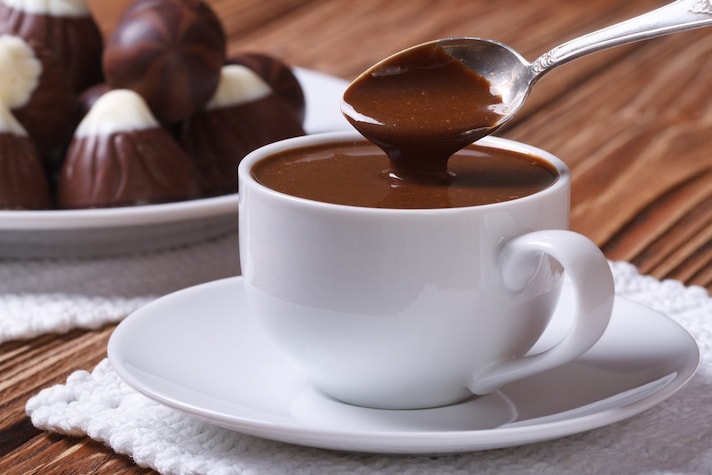
So, what should it be like, according to the master chocolatier? "For me, it should be an almost velvety drink , not too liquid but not too dense either," concludes Knam, who leaves us with an image that perfectly explains how to understand his preferred consistency: "When we drink it, the whiskers should remain." So, no shame: when you drink your hot chocolate, Knam authorizes you to have a cute little whisker.
The Right Temperature is Halfway
"Here too, it's a personal choice," says Knam. "Some people like it piping hot like coffee, and some like it lukewarm." But, as our wise Latin ancestors used to say, "in medio stat virtus," or "virtue lies in the middle." This means that the perfect balance, in this case, is exactly halfway between the flames of hell and the icy waters of Iceland. For the chef, the ideal choice "is around 150-160°F/65-70°C," as the temperature also affects the flavor, "because if it's too hot, I lose some particular notes and, above all, you risk burning yourself. If it's too cold, however, the chocolate isn't as enveloping." After all, we're still talking about a hot drink.
Artisanal and Industrial Compared
Sometimes it's difficult, especially if you're not an expert, to tell whether the hot chocolate you're drinking is the result of a careful selection of ingredients or a very simple preparation that you could have made at home. One of the most unmistakable signs that you're drinking an industrial product is a "pudding effect," as the mixture is prepared with a lot of starches. These, of course, can also be present in a homemade preparation, but in this case, "I can adjust the amount myself, leaving more room for the flavor of a quality chocolate." Furthermore, industrial preparations often taste "too sweet," whereas in a homemade hot chocolate, I can decide the amount of sugar to add.
A Final Recap
Let's recap, then, everything you need to do when you're faced with a nice cup of hot chocolate. The first thing to pay attention to is "the aroma, which shouldn't be too acidic but not burnt or too sweet either, and these are characteristics that are already noticeable by the nose" (so yes, dig your nose into the hot chocolate too). As for the consistency, however, it's up to the person making it and also the person drinking it: some prefer it more liquid, others thicker, but in any case, "it absolutely must not have lumps." If it's very liquid, it means that water was used in the preparation, while if it's more velvety, milk or cream was used. However, if it takes on the consistency of a pudding or is too sweet, most likely—but not always—it's a commercial product.
To conclude, as we said before, we've all had chocolate at some point in our lives, and it's one of those things we start drinking from a young age. For this reason, its flavor and texture are also linked to our habits and how we've consumed it throughout our lives. "There are people who've never had artisanal hot chocolate and say the commercial one is perfect, and vice versa. It's a very personal thing, and rating the taste is the hardest thing in the world." The important thing, however, is that it always makes us happy.
;Resize,width=767;)
