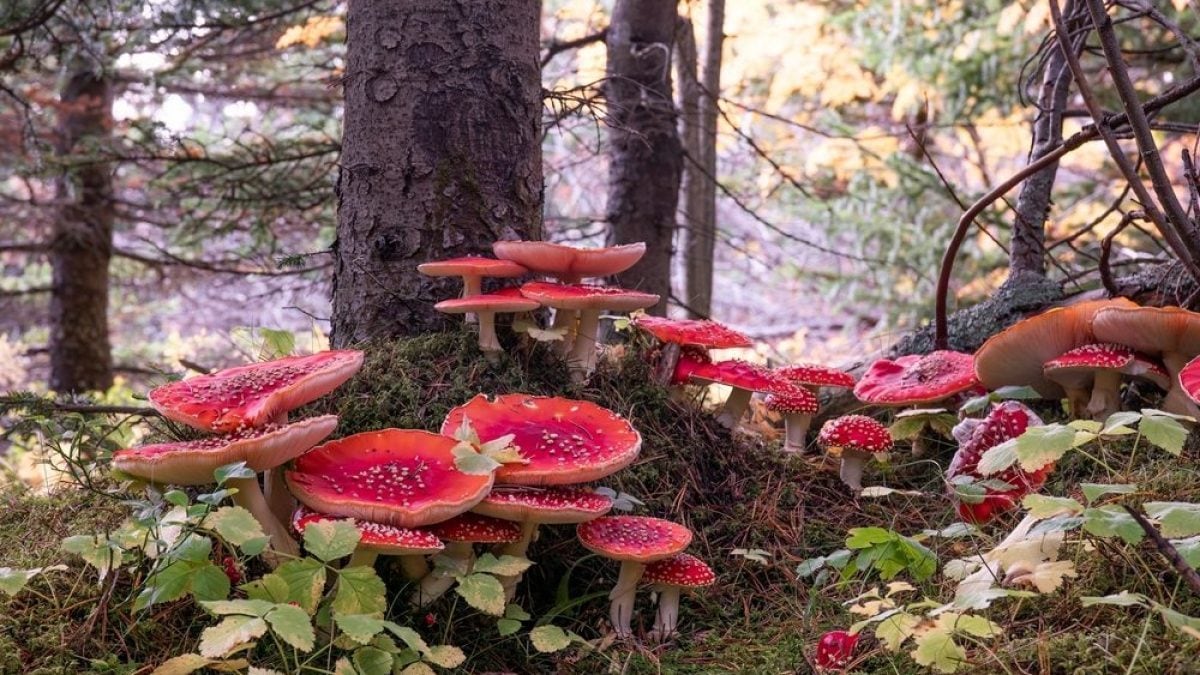
Vomiting, cramps, diarrhea, but also hallucinations, fever, convulsions, and even death. The consequences of eating poisonous mushrooms —those containing substances that are more or less harmful to the body —are not to be underestimated, which is why every year, especially during the prime harvest season between late summer and autumn, there are never enough recommendations. Poisoning can occur immediately or days later: the key is to avoid improvisation and to know the characteristics of what you're putting on your plate inside out. Even an edible mushroom, if cooked poorly (or not at all), can cause serious problems.
How to Recognize a Poisonous Mushroom
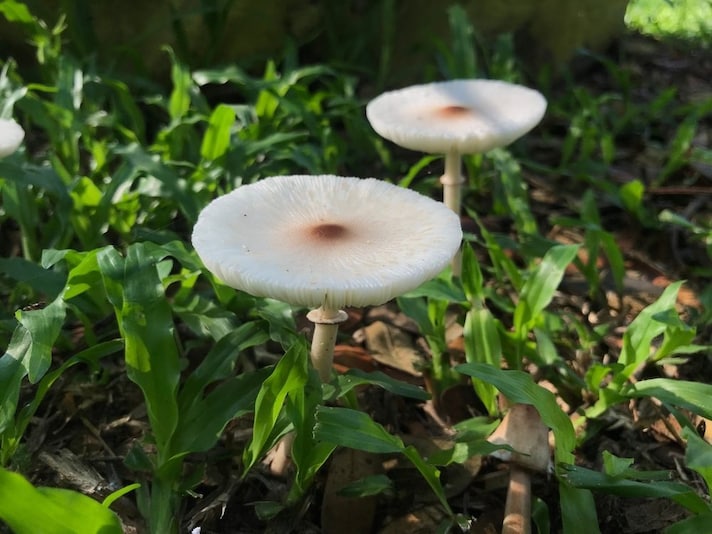
Contacting the experts at the local health authority's mycological inspectorates or relying on the specialists at poison control centers are the surest ways to avoid potentially serious or fatal poisoning caused by eating poisonous mushrooms. There are no general criteria that distinguish edible mushrooms from non-edible ones, so much so that in many cases their appearance can even be confusing, mistaking an edible species for its dangerous lookalike, such as the golden agaric (Amanita caesarea) for the muscaria agaric and the phalloides agaric, or the common drumstick (Macrolepiota procera) for the so-called false drumstick (Lepiota cristata).
There are also several myths to dispel: it is not true that mushrooms can be eaten if they do not change color when cut, that those that grow on trees are harmless, just as if they have been "eaten" by parasites, snails or insects then they are not harmful to us either.
Also pay attention to culinary beliefs: garlic, onion, or parsley, when cooked with a poisonous mushroom, do not blacken in the presence of toxic substances and therefore cannot be considered indicators, while boiling is not a solution to eliminate the toxicity of inedible mushrooms (useful and necessary, however, in the honey mushrooms and pioppini that are brought to the table), as they resist the high cooking temperatures.
What Are The Main Poisonous Mushrooms?
Mushrooms should be collected with the utmost care: if you don't know the type, it's best to leave them where they are. Encountering poisonous species is not uncommon, with reports of poisonings, unfortunately even fatal, due to naivety and inexperience. If you have any doubts, the advice is to pick a couple and bring them to be checked, without "plundering" the forest or meadow: below, here are the main mushrooms that should be included on the prohibited list.
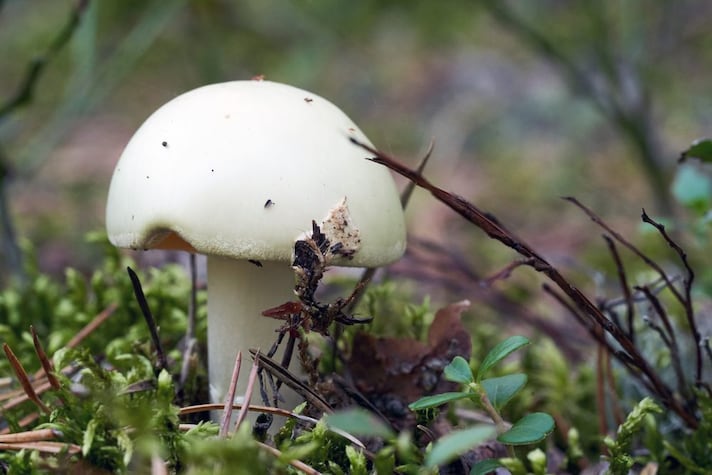
1. Amanita Phalloide (or Phalloides), Amanita Verna, Amanita Virosa
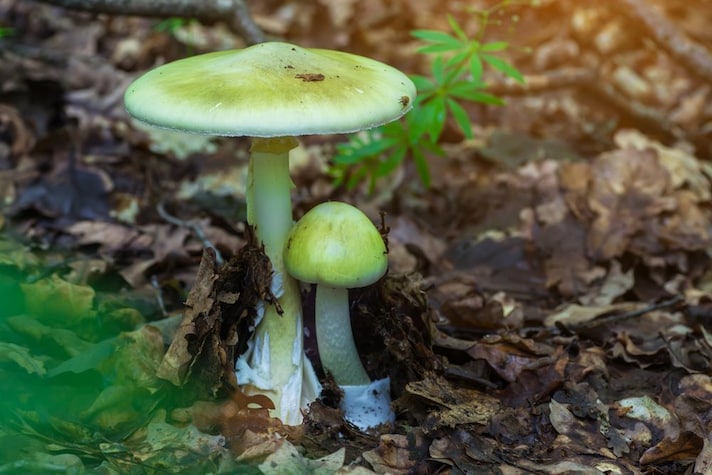
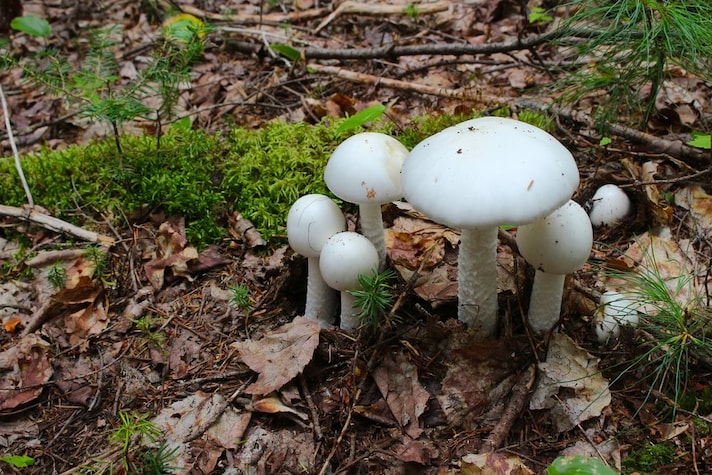
These are three of the deadly amanitas found in our area. They differ in appearance, habitat, and seasonality, with colors ranging from greenish to pure white. The first is considered the most dangerous mushroom in the world, as it is widespread in both deciduous and coniferous forests and can be confused with edible mushrooms. It has a smooth cap that varies in shades of yellowish-gray, greenish-gray, or even white. It has white gills and a cylindrical, pale-colored stem, and is equipped with a ring and volva.
2. Amanita Muscaria
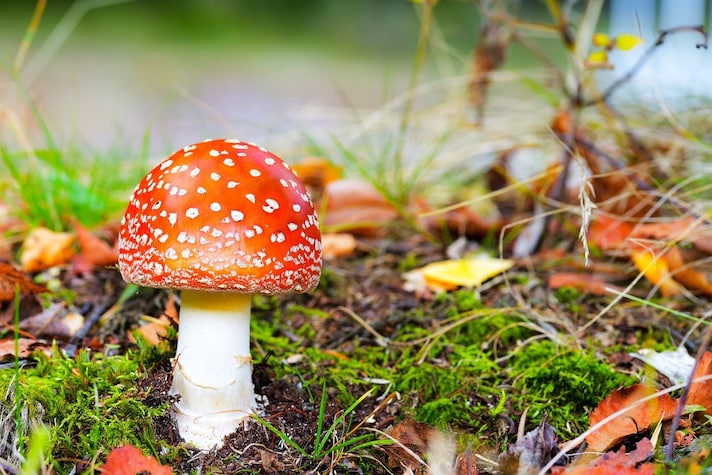
Here is a poisonous mushroom that has become “iconic”, as it represents the classic Snow White mushroom, but also that of the Smurfs. It has a bright red cap dotted with whitish warts, decidedly eye-catching. It is not lethal, but if ingested it produces psychoactive effects that alter the cognitive system: it can be confused with the good agaric, hence the nickname “evil agaric”.
3. Rubroboletus Satanas
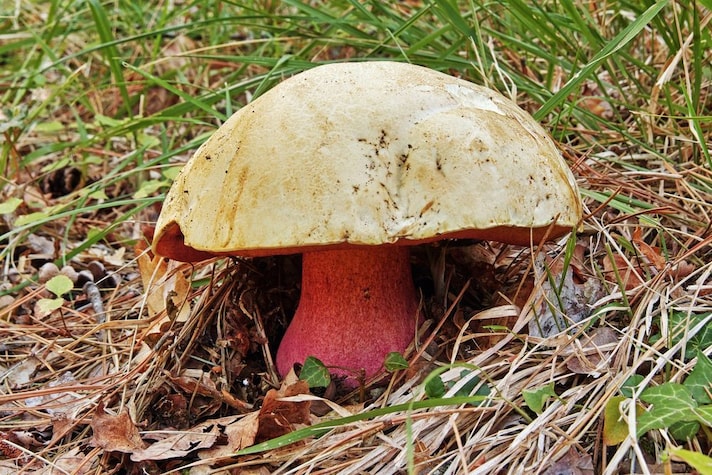
Formerly known as Boletus satanas, the evil porcini is a toxic mushroom belonging to the Boletaceae family, the same as the tasty Boletus edulis. It differs mainly in the reddish hues of its fruiting body and an unpleasant odor when ripe. Furthermore, once cut, the flesh turns purple, while edible porcini mushrooms do not change color.
4. Omphalotus Olearius
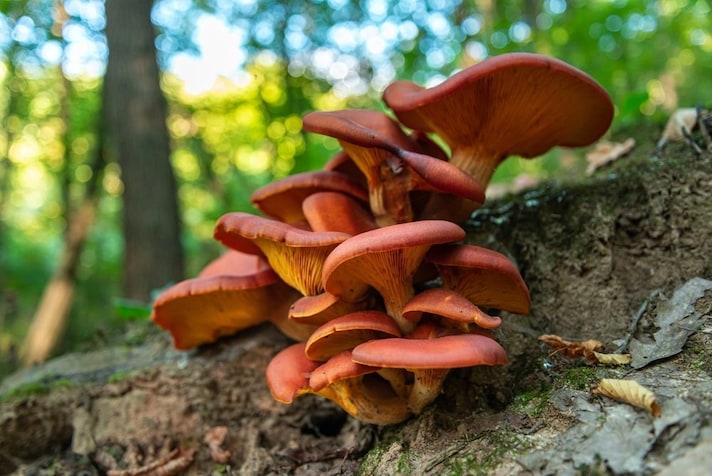
Known as the olive mushroom, if eaten it causes constant vomiting and regular hunters stay away. Less experienced, however, might mistake these mushrooms, which grow in clusters at the base of old trees and stumps, for the more prized chanterelles, given that their orange color, the irregular shape of the cap, and the gills resemble the typical "crests" of Cantharellus cibarius.
5. Lepiota Cristata
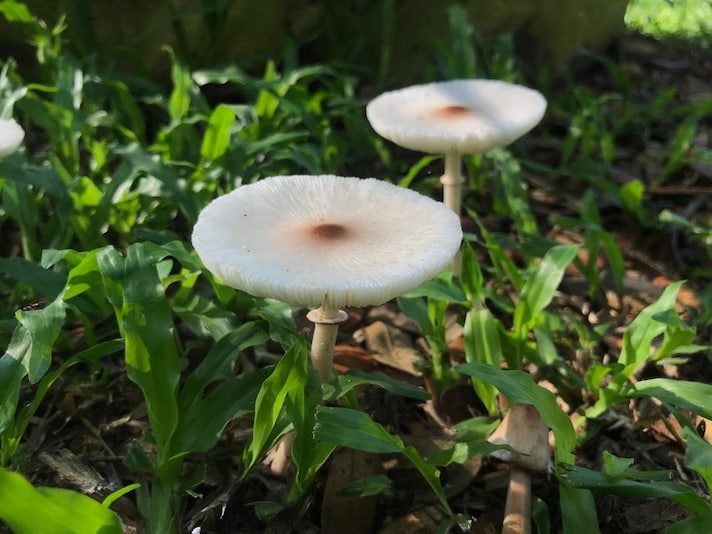
Already mentioned, it is the quintessential look-alike of the drumstick, not surprisingly nicknamed the False Drumstick, and causes severe gastrointestinal symptoms if ingested. Compared to the original, the mushroom is small, with a white cap that may have darker streaks in the advanced stages of development, and a barely visible ring. The odor also makes a difference, as it is unpleasant.
6. Paxillus Involutus
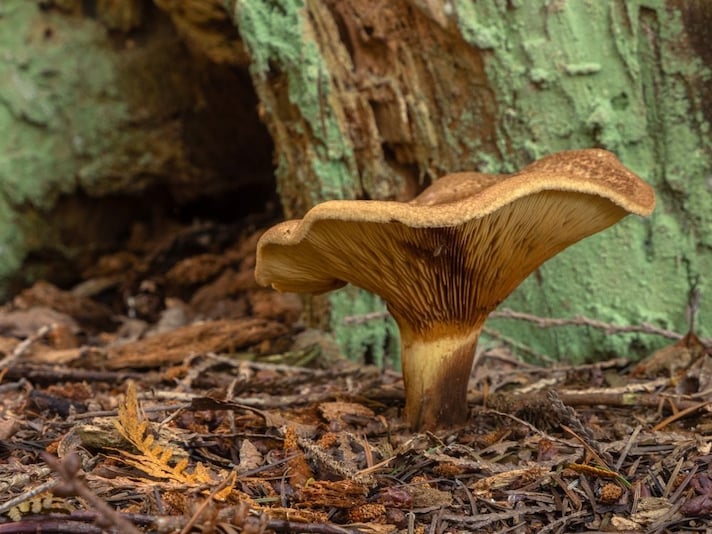
Brownish in color and with firm, compact flesh, this mushroom is found in woods, meadows, and even parks. Until recently, it was considered edible, but repeated cases of poisoning from accumulation have made its dangerous nature clear.
7. Gyromitra Esculenta
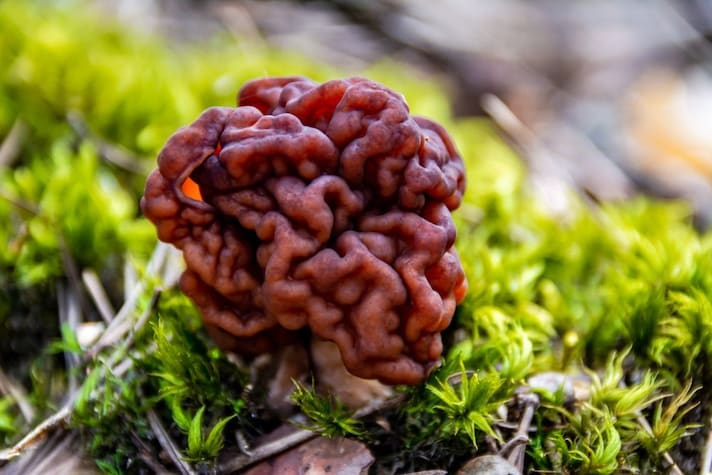
It is the scientific name of a mushroom commonly known as the false morel, which already gives us an idea of what the danger could be, that is, considering it a Morchella esculenta, free to be used in cooking. Both are spring mushrooms, with the poisonous version characterized by a rounded, irregular cap that resembles a brain due to its ribs, and is reddish brown in color. Poisoning particularly affects the liver and kidneys.
;Resize,width=767;)
