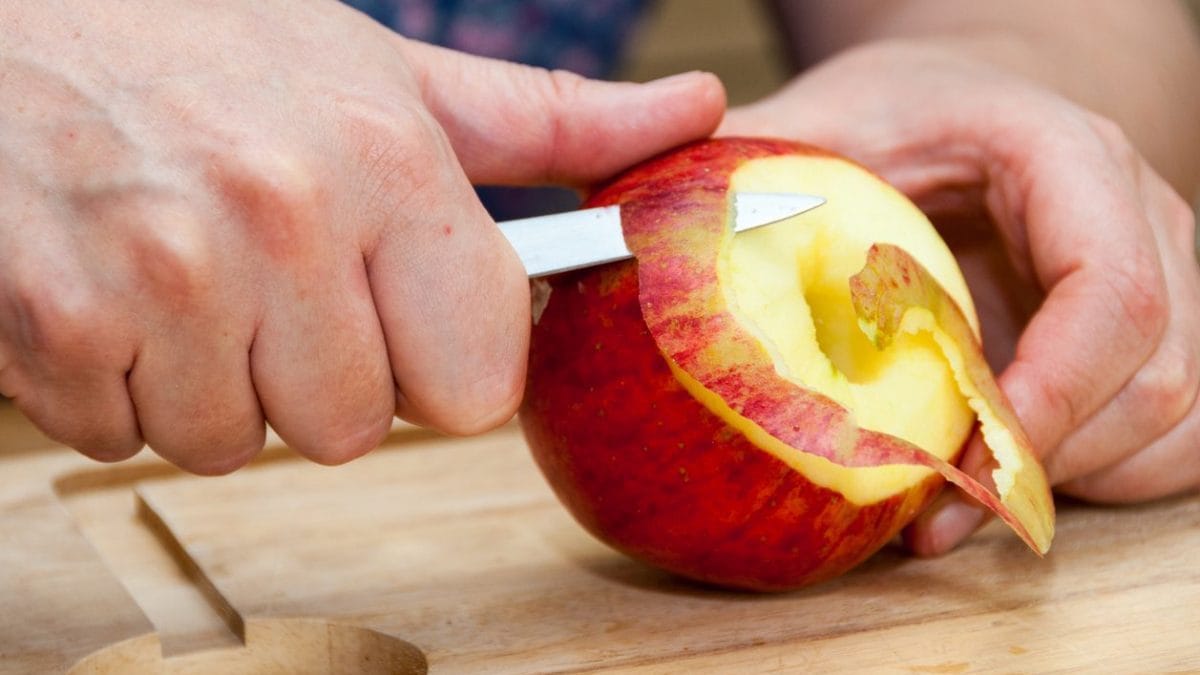
Keeping food waste at bay has become an important practice not only in restaurant kitchens but also in home kitchens, giving new life to leftovers, given that it is precisely within the home that waste is created that, in reality, is not waste. In particular, it is with fruit and vegetables that recycling, in addition to having a virtuous value, also takes on a creative aspect, thus combining the useful and the enjoyable: this happens when we discover alternative uses for the stems and leaves of vegetables, such as broccoli and artichokes, or the peel, such as that of onions, because it is precisely in these parts that tend to be thrown in the bin that many of the nutritional and therapeutic properties are concentrated. From this point of view, apples are no exception, a fruit that arrives on our tables 365 days a year in a variety of guises, from after-meal refreshment to hunger-busting snack, by way of an ingredient in desserts, jams and compotes. When using them, don't throw away the peel: it's rich in fiber, antioxidants, pectin, and flavorings, making it an ally in the kitchen and beyond. Let's see how.
Some Preliminary Advices
When using apple peels, make sure they're organic, meaning they haven't been treated with chemicals or industrial waxes —which, for example, increase their shine—so they're safe to eat. Also, make sure they're intact and free of dents and dark spots, to avoid using a raw material that's already deteriorating. Don't worry, however, if the apple has an irregular shape or some imperfection: these so-called ugly vegetables are just as good as any other and shouldn't be thrown away just because of their aesthetic "defects." The peel can be used immediately, fresh, or after drying. You can do this either in the oven or in a dehydrator. In the oven, spread the peels out on a baking sheet lined with parchment paper, without overlapping them, and bake them at 160-175°F/70-80°C for 2-3 hours. The time and temperature depend on several factors; this is a general guideline. The higher the temperature, the shorter the time, or you risk burning them. Dried peels, losing their moisture, can be stored for weeks in airtight containers.
1. Infusion

Let's start with a very simple way to reuse apple peels, especially in the fall and winter. This infusion is an easy preparation that also takes advantage of the benefits of this fruit, creating a relaxing, digestive, antioxidant, and decongestant drink. First, sprinkle the apple peels with lemon juice to prevent them from yellowing. Once the water has come to a boil, add the peels along with a cinnamon stick (you can also use a piece of ginger, enriched with cloves) and reduce the heat to low for 5 minutes. Turn off the heat and let it steep for a few minutes. You can sweeten to taste with honey or brown sugar. Alternatively, you can use dried apple peels: when the water boils, pour it into a teapot and add the peels, cinnamon or other spices, herbs or flowers of your choice (chamomile flowers go well, for example) and wait about 7-10 minutes before drinking.
2. Chips

Here's one of the tastiest anti-waste ideas, a great way to avoid throwing away vegetable peels, including beets, carrots, and potatoes, including sweet potatoes. The principle with apple peels is the same: season the peels of 2 or 3 apples with sugar and cinnamon, spread them on a baking sheet lined with parchment paper, and then bake them for 30 minutes at 300°F/150°C: the result is a crunchy, very tasty snack.
3. Cookies

Apple biscuits are a classic, but you can also use the peel in addition to the pulp. How? Cut it into strips and caramelize it in a saucepan with 50 grams of sugar (we calculated 2 apples) and then combine it with a mixture prepared as follows: break two eggs and beat them with an electric whisk, then gradually add 100 grams of sugar. Add 100 grams of softened butter and mix until smooth. Gradually incorporate 350 grams of sifted all-purpose flour and the sifted instant baking powder. At this point, add the apples and mix well. Shape the mixture into balls with your hands and flatten them slightly. Place them on a baking sheet lined with baking paper and bake for 20 minutes at 350°F/180°C.
4. Porridge

A hearty and healthy breakfast recipe is porridge, a popular oatmeal porridge made by cooking oat flakes in milk, water, or both, until they reach a creamy consistency. If you have apple peels, you can add them, finely chopped, during cooking, to give them a fruity aroma and flavor. All you have to do is customize the dish by adding apple pulp chunks, a sprinkling of cinnamon, honey, and dark chocolate shavings.
5. Apple Powder

The scent of apple is warm and enveloping, and thanks to the peels, you can create a powder that works as a natural flavoring, to be used in place of industrial ones: it can be mixed with yogurt, cake mixes, biscuits, bread, and muffins, giving off the pleasant sweet notes of the fruit when cooked. The process is very simple: put the peels in the oven or in a special dehydrator until they dry. Once they have become rigid because they have lost their water, let them dry completely and then blend until you have a fine powder, perfect for storing in an airtight glass jar and using whenever you want.
6. Homemade Pectin

A recipe everyone can use to make pectin at home, the gelling agent used to thicken jams and marmalades, which is naturally found in large quantities, especially in the peel and core of apples —so don't throw them away. Simply cut the apples into pieces without removing these parts, commonly considered waste. Transfer them to a saucepan with water and lemon juice and cook gently for about 40 minutes, then strain the juice. You can boil it for 20 minutes or let it rest in the refrigerator for 12 hours, then store it in classic sterilized jars.
7. Not Just in The Kitchen

Apple peels prove to be circular economy friendly even outside of cooking. For example, when combined with other organic waste, they can become a natural fertilizer for gardening, while in the dried version, you can combine them with other herbs, buds, spices, roots, and dried petals to create a fragrant potpourri to store in drawers and cupboards.
;Resize,width=767;)
