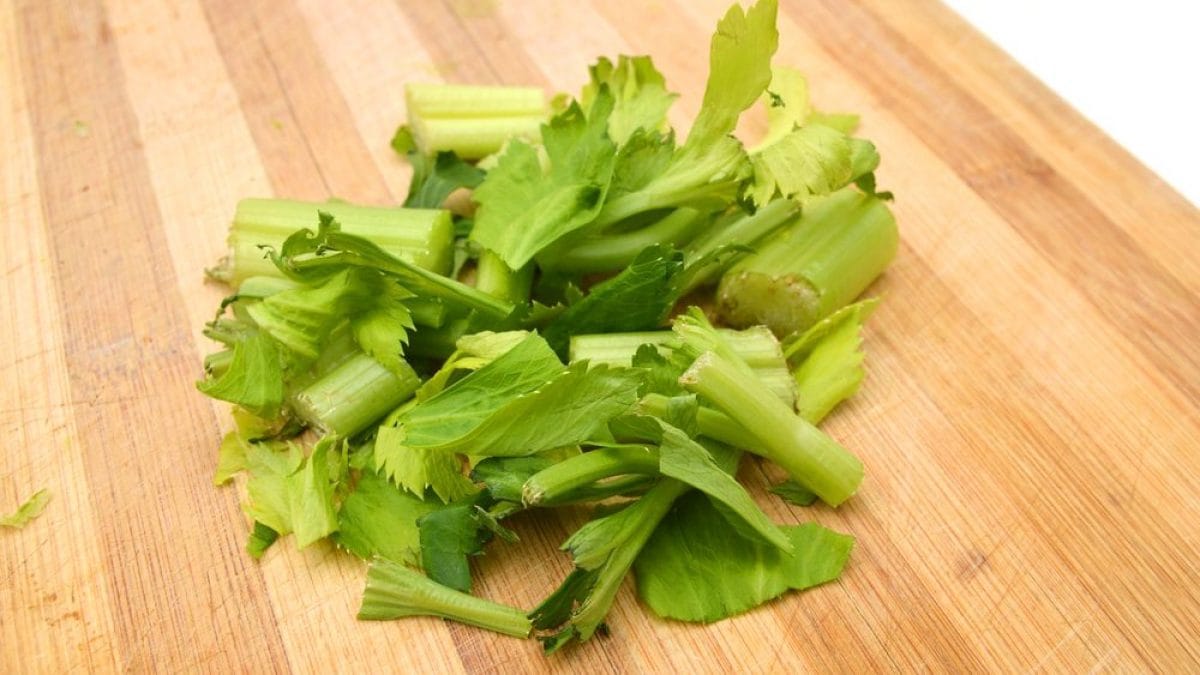
Crisp, fresh, and incredibly versatile, celery is one of those often overlooked foods in the kitchen, used more as a base for sautéed vegetables than as a main ingredient, despite being incredibly versatile and perfect for a multitude of recipes. Furthermore, this boldly flavored vegetable conceals a veritable powerhouse of beneficial substances: rich in water, fiber, and minerals, celery is highly prized nutritionally for its purifying, diuretic, and anti-inflammatory properties. It's no coincidence that it's often included in cleansing diets, low-calorie diets, and functional drinks like smoothies. Celery stalks, the most flavorful part of the vegetable, are typically used, while the remaining parts are considered scraps and often end up in the organic waste bin. In reality, even these parts can be useful, and instead of being thrown away, they can be transformed into new recipes: they're incredibly rich in nutrients and easy to recycle, reducing waste and getting the most out of the purchased food. How can you do it? Here are all the ways to reuse leftover celery in the kitchen.
Which Parts of Celery Are Discarded But Can Be Reused?
Celery is one of the vegetables most subject to food waste due to the tendency to discard all the parts considered less noble or less culinaryally appealing. In fact, people tend to use only the stalks, while everything else is removed and thrown away: the final part of the head is considered waste due to its woody texture and bitter taste, the outer filaments of the ribs, often tougher and less palatable to eat, and the leaves at the top of the stalks. However, throwing away all these parts is a bad habit, first and foremost from an anti-waste perspective, because learning to reduce food waste as much as possible means protecting the environment, saving money, and acting ethically.

Furthermore, in the case of celery, throwing away the scraps is also a real waste of its benefits. From a scientific standpoint, in fact, all these parts considered of little value retain a highly interesting nutritional profile, just like that of the stems: the leaves, for example, are particularly rich in phenolic compounds, flavonoids, and vitamins (such as vitamin C and vitamin K), while the fibrous parts of the stems contain high amounts of insoluble fiber beneficial for intestinal health. Even the base of celery, often discarded because it is tough and less tender, is made up of plant tissue rich in micronutrients and can be enhanced through aromatic extraction processes or prolonged cooking. The perception of "waste" is therefore predominantly cultural and linked to criteria of texture and practicality, rather than a real loss of nutritional value, making these parts fully suitable for recovery and reuse. Here's how you can recycle them.
1. Celery Leaves Pesto

Celery leaves, often discarded because they're considered too bitter or not very versatile, can actually be transformed into an excellent pesto: pesto with celery leaves is an excellent alternative to classic pesto, perfect for obtaining an aromatic and slightly fresher and more vegetal condiment. To prepare it at its best, it's important to start with well-washed and dried celery leaves, preferably the most tender and green ones, and then blend them together with a fatty base like extra virgin olive oil, which helps bind the mixture and enhance the aromas, adding dried fruit (like almonds or walnuts) to provide a creamy texture and a slightly sweet note that balances the herbaceous flavor of the celery. The final touch is the grated Parmesan cheese, then all that remains is to blend everything until you obtain the desired consistency.
2. Celery Leaves as Flavorings

Aromatically, celery leaves contain essential oils similar to those of parsley, but with more intense and slightly spicy notes, making them excellent natural flavor enhancers. They are highly versatile and can add a fresh, slightly bitter note to many dishes. They can be used both fresh and dried: raw, finely chopped, they are ideal for enriching salads, sauces, soups, and legume-based dishes, where they add a pleasant aroma. Added at the end of cooking to meat, fish, or sautéed vegetables, they help enhance the flavors without overpowering them. Another interesting use is in soffritto: chopped together with onion and carrot, they contribute to an even richer aromatic base.
3. Salt Flavored With Celery Leaves

Dried celery leaves can also be used to make an excellent flavored salt, a simple yet highly effective condiment for naturally enhancing the flavor of dishes. To make it, use well-washed and completely dry celery leaves, which can be finely chopped and then air-dried or oven-dried at a low temperature until crumbly. Once ready, mix them with coarse or fine salt (in varying proportions depending on the desired intensity, but generally about one part leaves to two parts salt) and blend lightly to achieve a smoother consistency. The result is a fragrant salt with a herbaceous and slightly savory note, perfect for flavoring meat, fish, potatoes, roasted vegetables, or even plain eggs.
4. Flavor Broth With Stems and More Fibrous Pieces

Broth is the perfect way to recycle vegetable scraps, including celery. These lesser-quality parts may not be tasty enough to eat, but they contain intense aromas that are gradually released into the water during cooking, transforming the broth into a veritable explosion of flavors and an extremely nutritious dish. In the case of celery, parts like the stalk ends and the more fibrous parts are perfect for broth, chopped into large pieces to increase the contact surface and facilitate the extraction of aromas. They should be cooked at a low temperature, with slow cooking, which yields a flavorful and balanced broth.
5. Homemade Vegetable Stock Cubes Made With Celery Scraps

Homemade vegetable stock cube made with celery scraps is a practical and sustainable solution for always having a flavorful base on hand and avoiding wasting leftovers. To make it, use celery stalks, leaves, and the more fibrous parts, combining them with other vegetable scraps like carrot, onion, and zucchini peels, all thoroughly washed and dried. Finely chop this scrap mix and then cook it over low heat with a generous amount of coarse salt, which acts as a natural preservative, until you obtain a smooth, concentrated mixture. You can also blend it again to make it more smooth. Cook until thoroughly dry, then you have two options: you can store it as is, in the refrigerator or freezer, in small sterilized jars or ice cube trays, or you can dry the mixture in the oven and grind it into a granular stock cube. The result is a genuine flavoring, free from additives, perfect for broths, risottos and soups.
6. Smoothies With The Toughest Filaments

Extracting and centrifuging celery scraps is a smart way to reuse often-overlooked parts, such as fibrous stalks and less tender leaves, and transform them into refreshing beverages packed with nutrients. After thoroughly washing the scraps, cut them into smaller pieces to facilitate extraction and combine them with sweeter, juicier ingredients, such as apple, carrot, or cucumber, to balance the celery's intense, slightly bitter flavor. At this point, you can proceed in two ways, depending on the type of appliance you have: using a juicer will yield a more concentrated, nutrient-rich juice, while using a centrifuge will yield a lighter, more immediate drink. In both cases, however, you'll obtain a tasty and, above all, beneficial beverage.
7. Celery Powder

Celery powder is one of the most interesting ways to fully exploit celery scraps, transforming them into a concentrated, versatile, and long-lasting ingredient. It can be obtained using mainly leaves, fibrous stem parts, and less tender portions, provided they are thoroughly washed and dried. The process involves completely drying the plant parts, which can be done in the open air in a dry environment, in a dehydrator, or in a low-temperature oven (around 122-140°F/50–60°C), until almost all moisture is eliminated; this step is essential to ensure good shelf life and prevent microbial growth. Once dried, the scraps are blended into a fine powder, possibly sieved for a more uniform grain size. The result is a natural spice with a bold, slightly herbaceous, and savory flavor, ideal for flavoring soups, creamed soups, broths, meat, fish, and vegetables, or as a base for aromatic mixes and dry condiments. Furthermore, it represents an interesting alternative to flavored salt, allowing you to reduce your sodium intake without sacrificing flavor. Stored in an airtight container, away from light and humidity, celery powder can maintain its properties for several months.
Home Composting and Celery Regrowth
Finally, beyond its many culinary uses, celery scraps can also be useful for gardening. First of all, all discarded parts are ideal for home composting: being organic materials rich in water and nutrients, they contribute to the formation of compost that is useful for fertilizing the soil, closing the material cycle in an environmentally friendly way and reducing the overall environmental impact. The base of the stalk, however, usually discarded because it is hard and compact, can be used for celery regrowth: if immersed in water and then transplanted into soil, it is able to generate new shoots thanks to the presence of still-active meristematic tissue, thus offering a sustainable and circular solution.
How to Store Celery to Avoid Waste and Always Have It Available
Reducing waste doesn't just mean knowing how to reuse celery scraps without throwing them away, but also knowing how to store them properly so they don't spoil before you can use them, ultimately going to waste. Celery is a vegetable made up mostly of water and tends to spoil quite quickly. For this reason, it should be stored in the refrigerator, in the crisper drawer, thoroughly cleaned and wrapped first in a damp paper towel and then in foil. This will help retain the celery's moisture, which is essential for its preservation.
If you've already cut your celery, you can preserve it in water. This method may seem unusual, but we assure you, it's very effective: using this trick, it can last up to four weeks. After removing the base and leaves and thoroughly washing all the stalks, cut them into strips and place them in a large bowl filled with fresh water, which you then cover with plastic wrap. You can also fill a glass jar with water, place the cut stalks in it, and close the lid. This preservation technique is especially perfect if you enjoy celery as a snack, or if you generally need it nice and crunchy.

To preserve celery for as long as possible, the best method is to freeze it. If you want to freeze it fresh and raw, you can wash it, cut it into the desired shape, and place it in a food storage bag, where it will last about three months. If you want to extend the shelf life to 12 months, you won't just have to clean the vegetable, you'll also need to blanch it: simply cut it into the desired shape, boil it for about three minutes, and then place it in ice water to stop the cooking process. Preserving celery in oil is also a good option for preserving it: simply follow the standard oil-preserving process, which applies to all vegetables, and store it in a previously sterilized, airtight jar. Close the jar with the lid and store in a cool, dry place, where it will last about three months.
;Resize,width=767;)
