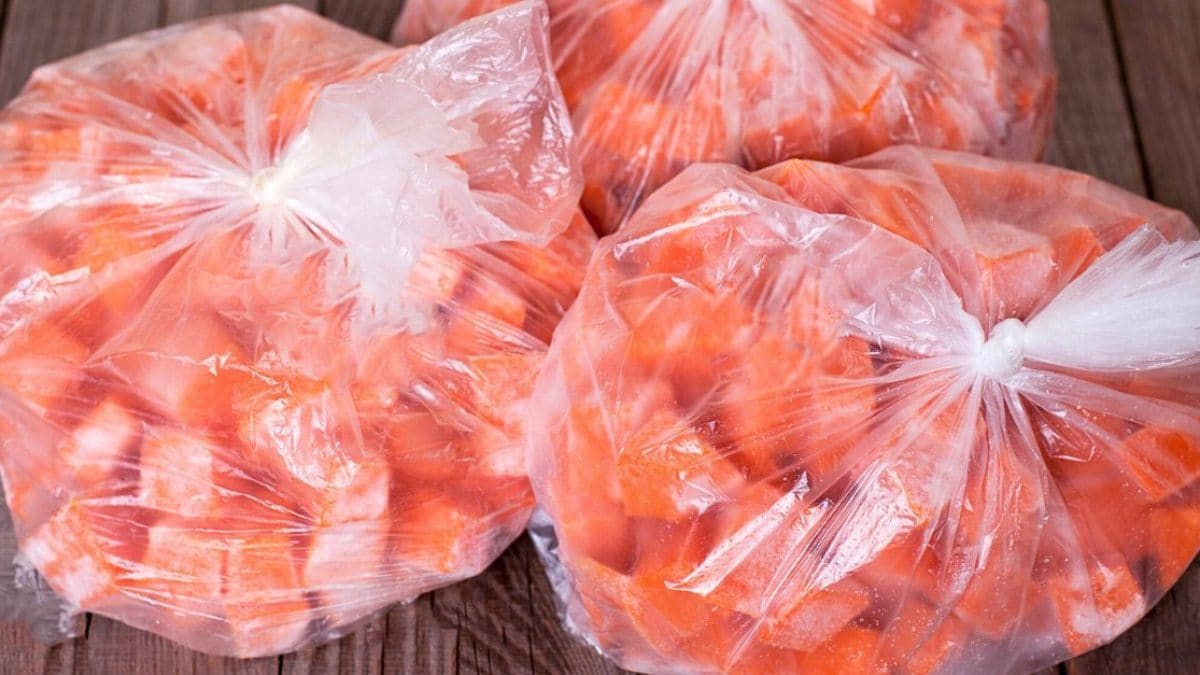
Pumpkin is one of the most beloved autumn vegetables. Besides being extremely versatile in the kitchen, with its varieties that can be used in countless savory and sweet recipes, it is also rich in vitamins, minerals, essential amino acids, and fiber. However, once purchased, storing it correctly is essential to avoid waste and maintain its properties, including flavor and texture. Here's how to best preserve pumpkin, both raw and cooked, so you always have it available.
How to Store Raw Pumpkin
Let's start by looking at how to make a raw pumpkin last longer: the situation changes completely depending on whether it's whole or already cut. Below, we'll explain how to proceed in both cases.
How to Store a Whole Pumpkin

If you've bought a whole pumpkin and don't want to use it right away, the good news is that it's a hardy vegetable. As long as it's whole and not yet fully ripe, you can store it for several weeks, or even all winter. Store it in a cool, dry, well-ventilated place, away from heat and direct light: usually, a cellar or closet is the best option. Make sure it's not too humid, as it could cause rot. We recommend not abandoning it, but checking its condition periodically for any dark, soft spots on the skin or discoloration, which are signs that it absolutely needs to be used, otherwise it will spoil. Whole pumpkins tend to take up a lot of space in the refrigerator, but you can still keep them in the crisper for up to three days.
How to Store Already Cut Pumpkin

Once the pumpkin is cut, it should be kept in the refrigerator for no more than 2-3 days: since it is mainly composed of water, it is particularly prone to mold formation. If you only use half of it for a recipe, then keep the other half without cutting it into portions, removing the seeds (which you can recycle) and the filaments (for practicality, not conservation reasons), then wrapping it in cling film: this way, the pulp comes into contact with the air and the rest is preserved better. If, however, you have already cut it into slices or cubes (with or without peel), then transfer them to an airtight container or a special well-sealed plastic bag. One method to make it last longer is to vacuum-pack the raw pumpkin pieces, inside bags deprived of oxygen, so as to slow down oxidation and make them last in the refrigerator for up to 10 days.
How to Store Cooked Pumpkin
Once cooked, pumpkin can be preserved in different ways, with varying lengths of time. Some methods can be used to make ready-to-eat delicacies, perfect as a side dish, appetizer, or dessert.
1. How to Store Cooked Pumpkin in The Refrigerator

Once cooked, pumpkin can be stored in the refrigerator for up to 2-3 days to prevent it from losing its flavor. If you baked, steamed, or boiled it, let it cool completely and store it in an airtight container. The same applies if you seasoned it, perhaps after pan-frying it or puréeing it to make soups or creams.
2. Canned in Oil

One way to extend the life of pumpkin is to preserve it. One of the most classic is in oil, where the vegetable is first cooked in small pieces in a solution of water, vinegar, and bay leaves, then placed in sterilized jars with extra virgin olive oil, herbs, and spices to taste. If you want a sweet and sour flavor, simply add sugar to the initial mixture. Prepared this way, pumpkin will last for 3-4 months in the pantry, and once opened, it should be refrigerated and consumed within 3 days.
3. Pumpkin Jam

The second option is equally popular: pumpkin jam, which is made like a common marmalade with just a few basic ingredients like water, lemon, sugar, and a pinch of cinnamon, which can be customized, for example, with ginger, orange, or the addition of apples. It can be used to fill tarts and other desserts, but also as an accompaniment to cured meats and cheeses. How long does it keep? 4 to 6 months in a cool, dry place, while like the previous one, once opened, it should be eaten within a few days.
4. Dried Pumpkin

Draining pumpkin is an excellent way to preserve it for a long time. If you have a dehydrator, simply follow the instructions on the model; otherwise, you can use the oven, which, however, will need to be turned on for a considerable number of hours, as it involves low-temperature cooking. How do you do it? Start by cutting the pumpkin into thin slices of about 5 mm, placing them on a baking sheet lined with parchment paper, making sure they don't overlap. Preheat the oven to 40°C (104°F) convection mode and let it dry for about 5 hours, turning the slices occasionally to prevent them from burning. Once done, increase the temperature to 80°C (176°F) and let it dry for another 30 minutes. Let it cool completely before transferring it to jars with lids or airtight bags: it will keep for 12 months.
How to Freeze Pumpkin
Most fruits and vegetables can be frozen, and pumpkin is no exception, both raw and cooked. Here are some tips for doing so.
How to Freeze Raw Pumpkin

Let's start by saying that raw pumpkin can be frozen easily: cut it to the size you prefer after cleaning and peeling it and place it in freezer bags. We recommend dividing it into portions for one or two people, so you only use the amount you need. It will last 6-8 months in the freezer. If you want to preserve it even longer, you can use the vacuum-sealing technique and freeze the appropriate bags: in this case, the pumpkin can last up to 10-12 months. Remember, however, that the consistency tends to change, becoming more yielding and the flavor to mellow: don't use it for sautéing, but enhance it as a puree, in soups, creams, or as a filling for savory pies.
How to Freeze Cooked Pumpkin

Cooked pumpkin can also be frozen: it keeps for the same amount of time as raw pumpkin when unseasoned, but it lasts a little less (3-4 months) when seasoned in creams and soups. Especially if you've used yogurt or cream to enrich it, it's best to limit it to 2 months. Don't freeze it sliced or diced, but mash it with a fork, puree it, or pass it through a food mill —removing seeds, fibers, and peel—so as to remove as much of the cooking liquid as possible. Again, opt for freezer bags or airtight single-serving containers.
How to Properly Thaw Pumpkin
As with most foods, including meat and fish, thawing raw pumpkin requires maintaining the cold chain: when you know you'll be using it, leave it in the refrigerator for a few hours, preferably overnight, to avoid thermal shock. Cooked pumpkin, on the other hand, can be thawed right before you use it by placing it in a pan or in the microwave's defrost cycle. Once removed from the freezer, consume the pumpkin within 24 hours, keeping it in the refrigerator: refreezing is absolutely forbidden.
;Resize,width=767;)
