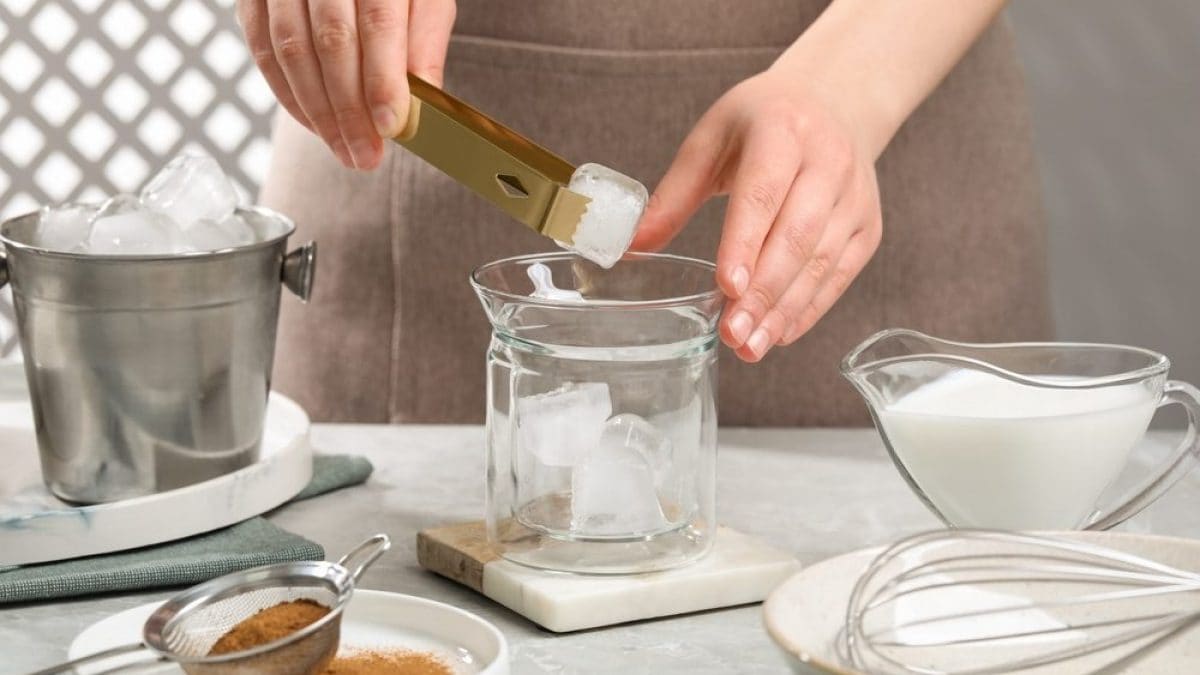
Ice isn't one of the elements we think of as essential in cooking, especially home cooking: we keep it in the freezer because "it might be useful," even if we're probably not sure what purpose it serves (other than therapeutic purposes). Sure, it's a must-have in cocktails, in some bitter-digestive liqueurs that strictly call for it, or it's used to chill various beverages, from herbal teas to soft drinks. Yet, it can also be a valuable ally in preparations, used in techniques and tricks that tend to improve the final result of a recipe. Below, here are 5 reasons why you really won't be able to do without ice cubes in the freezer.
1. Keep Vegetables Crisp and Bright

One of the most common uses of ice in the kitchen is immersing it in ice water to preserve the freshness and texture of both cooked and raw vegetables. When boiling blanched vegetables (such as asparagus, green beans, broccoli, or spinach), immersing them immediately after the brief cooking process stops the process and helps maintain their crispness and shine (classic blanching). For raw vegetables, this technique not only keeps them plump, but also curls them, perfect for creating scenic compositions, such as using carrots cut into ribbons. A traditional recipe that uses this trick is the famous Roman puntarelle salad, in which the vegetable is sliced into strips, placed in a bowl of ice water, and left to soak for an hour, until it takes shape.
2. Slow Down the Oxidation of Fruits and Vegetables in a Blender

As we've just seen, once exposed to air, vegetables risk quickly darkening due to oxidation. The same thing happens with fruit: if these foods, from apples (for a smoothie) to arugula (for pesto), need to be blended, a popular trick is to add an ice cube. Furthermore, if you want to make gazpacho or smoothies, this combination also becomes useful for improving the texture, resulting in a smooth, non-grainy liquid. The final preparation will thus be very pleasing to the eye and to the palate.
3. Cool Creams Quickly

Those who often try their hand at making cream-based desserts know this: cooked egg-based creams must be completely cooled before being used. Professionals use professional blast chillers, while at home, for example, pastry cream is spread in a pan covered with plastic wrap to speed up the process. A method that further optimizes the time is to remove the saucepan from the heat and place it in a bain-marie in a bowl of ice (it will begin to melt on contact) and stir for a few minutes to quickly reach the right temperature. The creams are immediately ready to be folded into cream or whipped egg whites, ensuring a mixture that won't tear.
4. Extract Flavors From Bisques, Fish Stocks, Broths and Stocks

Ice isn't just a cooling agent, but can also be used as a flavor enhancer to deepen the flavor. It may seem strange to think of it in this role, given that it's solid water, but its effectiveness has been proven when making bisques, stocks, broths, and stocks. What does it do? It facilitates (and therefore improves) the extraction of juices through thermal shock with the hot ingredients. In the pot, you've already browned the vegetables and shellfish scraps and deglazed with white wine, then it's time to add the water, which you can replace partially or totally with ice cubes. A pleasant aroma will be released, and the final color will also benefit.
5. Prepare Variations of Cold Coffee

We conclude with a divertissement: combining ice with coffee. When the first warm weather arrives, cappuccinos and the like often give way to their summer versions, where ice is practically a major player. And while there's many interpretations of iced coffee, there are also other specialties that are enjoyed throughout the rest of the world as well: just think of the shaken coffee, the coffee granita, or the superstar of recent summers, the caffè leccese, with almond milk, ice cubes, and moka pot coffee.
;Resize,width=767;)
