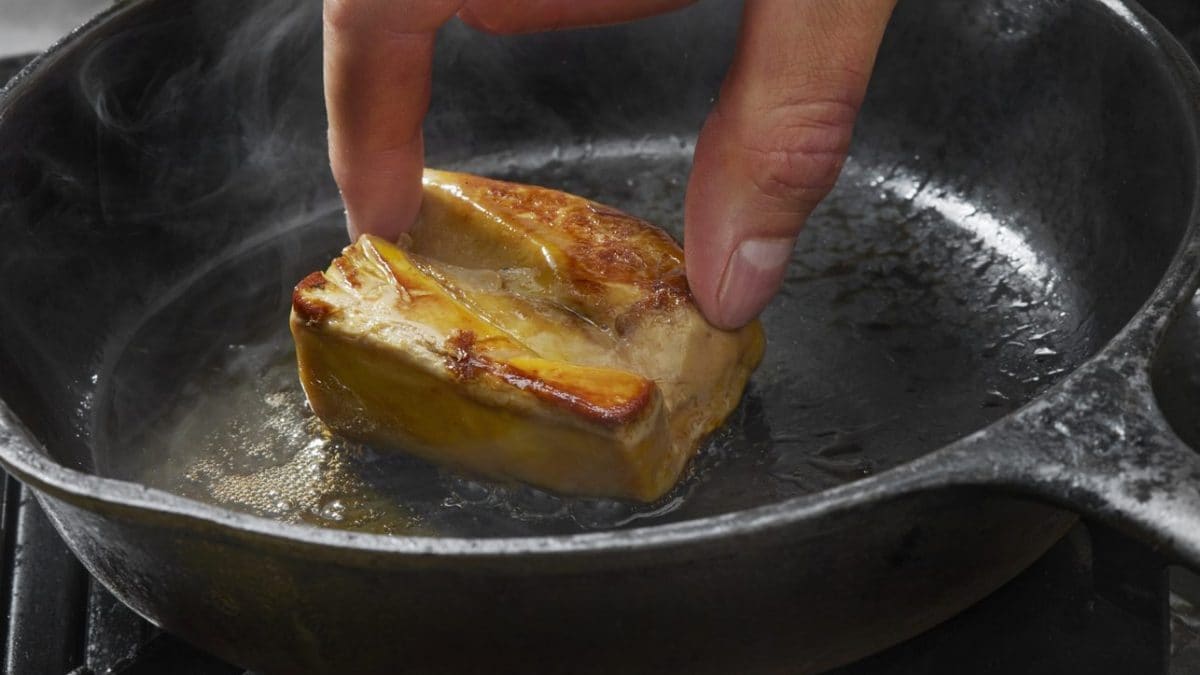
Foie gras is increasingly a gastronomic taboo because so many people enjoy its buttery flavor, but the technique used to produce it is objectively ignoble, and in fact, many countries ban it. A group of German researchers has found a way to reproduce the unique texture of foie gras without having to force-feed ducks and geese. A gastronomic and ethical revolution that could rewrite the future of one of the most controversial products of French cuisine.
Foie Gras Without Force-Feeding
The idea was born in the laboratories of the Max Planck Institute for Polymer Research in Mainz, Germany, where a research team led by physicist Thomas Vilgis decided to tackle one of the most complex challenges in molecular cuisine: reproducing the texture and sensory experience of foie gras without causing suffering to the animals.
You may not know it, but foie gras is a pâté made from the hypertrophic (i.e., enlarged) livers of ducks or geese. Traditional production involves a practice called gavage, or force-feeding the animals. For about two or three weeks before slaughter, the animals are fed two or three times a day through a tube inserted directly into their throats. They receive large quantities of boiled corn or other energy-dense foods. This process causes their livers to swell up to 10 times their normal size, developing the typical buttery consistency and rich flavor that characterize foie gras. This practice is highly controversial for ethical reasons because the geese are almost always immobilized during these weeks and suffer enormous pain.
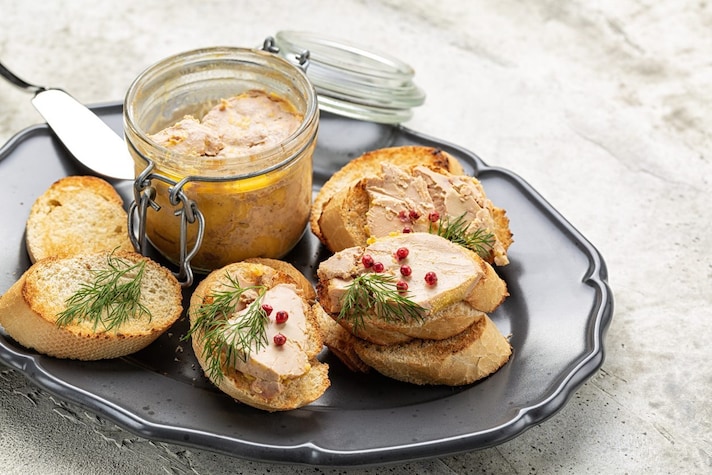
The German researchers' starting point was simple yet ambitious: to understand what makes foie gras so different from all other pâtés. It's not just about taste, but about its molecular structure, its sensations on the palate, that velvety creaminess that melts in the mouth, leaving a lingering aftertaste. Initial experiments didn't yield the desired results. Recreating the same ratio of liver to fat wasn't enough. Adding collagen made things worse, resulting in a compound that was too rubbery. The breakthrough came when the team focused on an often overlooked detail: the role of natural enzymes that act in the animals' livers during the fat storage process. This is where lipase comes in, an enzyme derived from Candida rugosa, a natural yeast that allows them to mimic the typical biochemical behavior of foie gras. Lipase breaks down fat before it is incorporated into the tissues, restoring the final product's sought-after creaminess.
According to Vilgis, the difference compared to traditional foie gras is now imperceptible. The formula, which has already been patented, was developed to offer a concrete and sustainable alternative to producers and restaurateurs. The goal now is to quickly reach the shelves and, perhaps, the menus of restaurants that are more attentive to ethics and sustainability. This is not a sort of vegan foie gras; it still contains goose liver, but in this case the animal is not subjected to the horrendous practice of gavage.
;Resize,width=767;)
