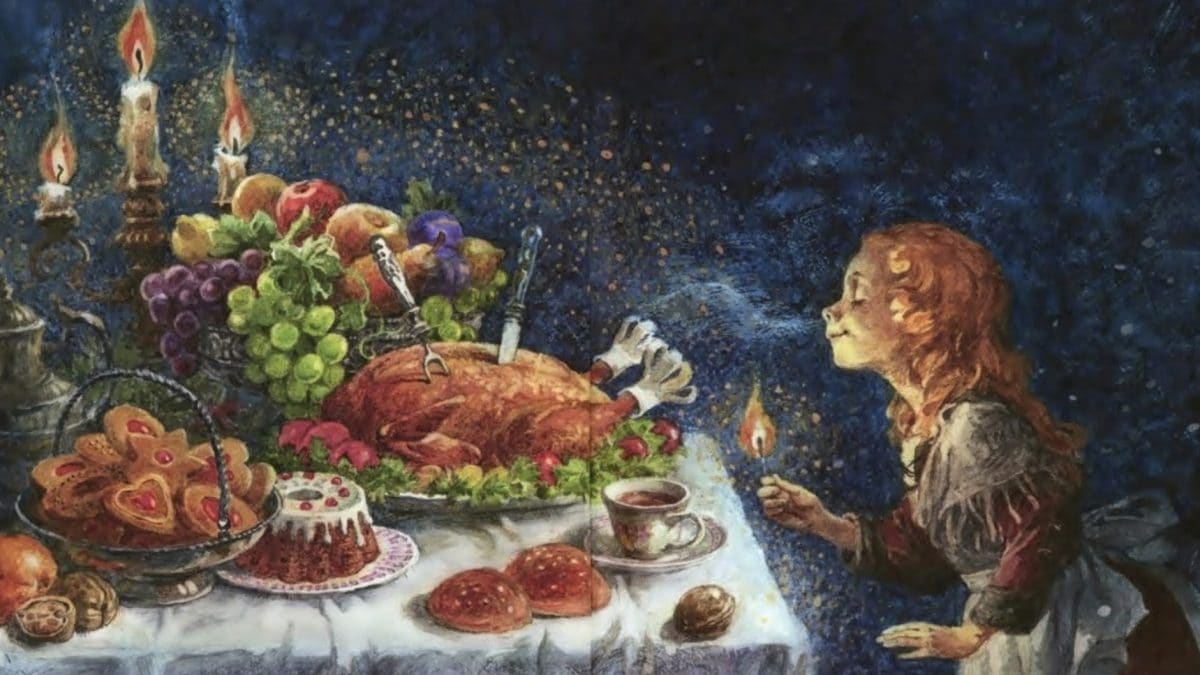
There's a Christmas that isn't cooked or set, but rather read. A Christmas made of tables that exist only within books, where food is a narrative device: a promise, an illusion, a symbol. In this journey, we explore dishes that have never touched a real meal, yet have left an indelible mark on winter literature.
Andersen's Mirage Banquet
In the icy heart of Hans Christian Andersen's fairy tale "The Little Match Girl," hunger is never directly served. Instead, imagined food invades the protagonist's visions: steaming roasts, lavish tables, glistening desserts. These aren't real dishes; they're mirages. They appear every time the little girl lights a match, transforming a piece of wood into a portal to an impossible happiness.
The banquet is entirely symbolic: it does not satisfy the hunger, but it fires the reader's imagination more than any real dish could.
Dickens and The Ghost of Plenty
In "A Christmas Carol," Charles Dickens doesn't describe magical foods in the strict sense, but rather invents their meaning. The famous scene at the Cratchits' table is a narrative rather than a gastronomic dish: the goose, the Christmas pudding, and the roasted apples become a language of hope. The meal is tiny, but its representation is gigantic.
And then there's the famous "Ghost of Christmas Present," surrounded by impossible, almost mythical mountains of food: enormous turkeys, abundant loaves of bread, glistening fruit, an abundance no real Victorian family could have afforded. It's imaginary food in the most theatrical sense: it serves to show what the world should be, not what it is.

The Fantasy Christmas From Louisa May Alcott's Little Women
In the opening chapter, set on Christmas Eve, the banquet the March girls imagine is far more lavish than the real meal that awaits them. They speak of sweets, roasts, and abundance they will never see. It's a Christmas projected in their minds, a way to give shape to their desires even before the dinner itself. The imagined food becomes their luxury, the only one they are allowed.
O. Henry's "Ghost" Lunch in The Gift of The Magi
The famous tale revolves around gifts, but in the background looms the Christmas dinner that the two protagonists will never be able to afford. The story vibrates with barely hinted dishes, as if they exist only in a bubble of possibility. The food isn't described, it's evoked. And it is precisely this meaningless absence that transforms Christmas into a table set with sacrifice and love.
Beatrix Potter's Winter Feast That Never Happens
Set at Christmas, the story suggests a festive atmosphere and preparations, but the food remains more imagined than consumed. The ailing tailor dreams of a hot table, comforting broths, a lunch that would celebrate the completion of his work. But that banquet remains on the fringes of reality, suspended between fever and fantasy. An imaginary dish that represents the comfort he has missed.
;Resize,width=767;)
