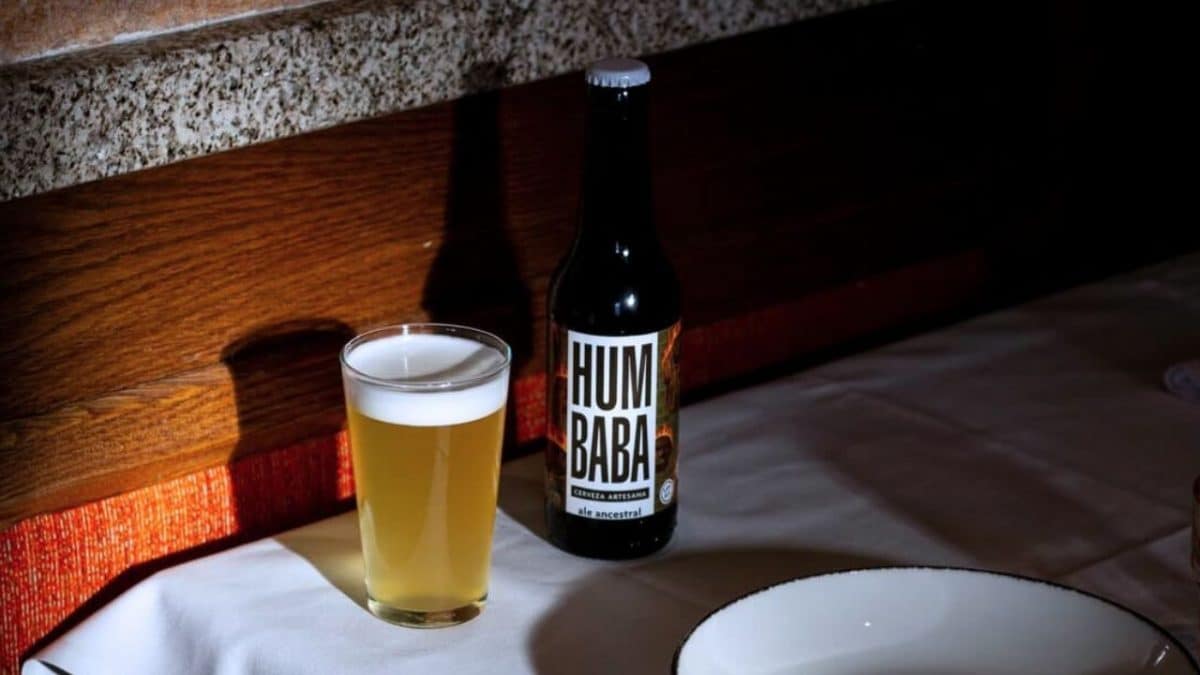
There are recipes that were born hundreds of years ago, passed down from generation to generation, orally or written down in some jealously guarded notebook. But today there is a beer, in Spain, that comes from far away, very far away: it was born 5,000 years ago and comes directly from the Sumerians. It's called Humbaba and, don't worry, it's not the same, it's just been recreated.
How Sumerian Beer Was Reborn
It all began when Barbara Böck, historian and researcher, identified a fermentation process used to produce beer in an ancient poetic text. It was the Hymn to Ninkasi, the Sumerian goddess of beer, which describes all the ingredients used to make this beverage. It would all be wonderful if it weren't for two small problems: first, some of the ingredients used at the time didn't exist or have been replaced by more modern ones; second, it doesn't specify the proportions, let alone the order, of which they were mixed. And this is where the expertise of the La Caníbal brewery in Madrid comes in . Together with the Higher Council for Scientific Research —of which Böck is a member—they developed a recipe that adheres as closely as possible to the original, while also complying with modern techniques and regulations.
No Hops and No Yeast: How It Was Made
One of the first problems encountered was identifying and interpreting the plants used in the process, which are mentioned throughout the Hymn. According to El País, Dr. Böck managed to "identify some of these plants through other texts" and identified three of them: juniper berries, coriander seeds, and sweet calamus, which—luckily enough— are now discouraged because they are considered potentially harmful due to the presence of beta-asarone, a natural substance that is toxic if consumed in high doses. Therefore, a suitable substitute had to be found: ginger, cinnamon, rosemary, angelica, and lemon balm seemed to be able to fulfill the same role, recalling the flavor of sweet calamus.
The second problem, no small one, was the lack of hops in Sumerian times, an essential ingredient for us today. To remedy this, pale barley malt was combined with spelt grains and other unmalted cereals, creating a malted base that was as close to the original as possible. And finally, fermentation: while we are fortunate today to have specific yeasts for beer, in Mesopotamia, needless to say, they weren't so fortunate. Also in El País, Luis Vida, master brewer at La Caníbal, explained that the Sumerians used "a naturally leavened bread, bappir, made with raw barley to start the fermentation process, so," he continues, "we recreated it using Belgian agricultural yeasts, the most rustic we could find." And from this long research, experimentation and, above all, from historical knowledge combined with the art of brewing, Humbaba was born, a "neo-Sumerian" beer – as Luis defines it – because it is an interpretation of what was done back then.

What Does It Taste Like and Why Is It Called That?
The beer—presented during a tasting during Science Week 2025—has fruity and citrus notes and is very light (3.8% alcohol by volume) because, as Barbara explains, "in Sumerian culture, it was drunk by men, women, children, and pregnant women, which is why we believe it was a low-alcohol beverage." Furthermore, it was most likely often consumed in place of water, drinking it from a bowl, diluted with water, and sipped through a straw. As for the name, it is a tribute to Sumerian culture: Humbaba was the guardian of the Cedar Forest, located in the "Life-Giving Mountain," a place that was also the seat of the gods in the Epic of Gilgamesh, where bread and beer are mentioned as elements of civilization.
;Resize,width=767;)
