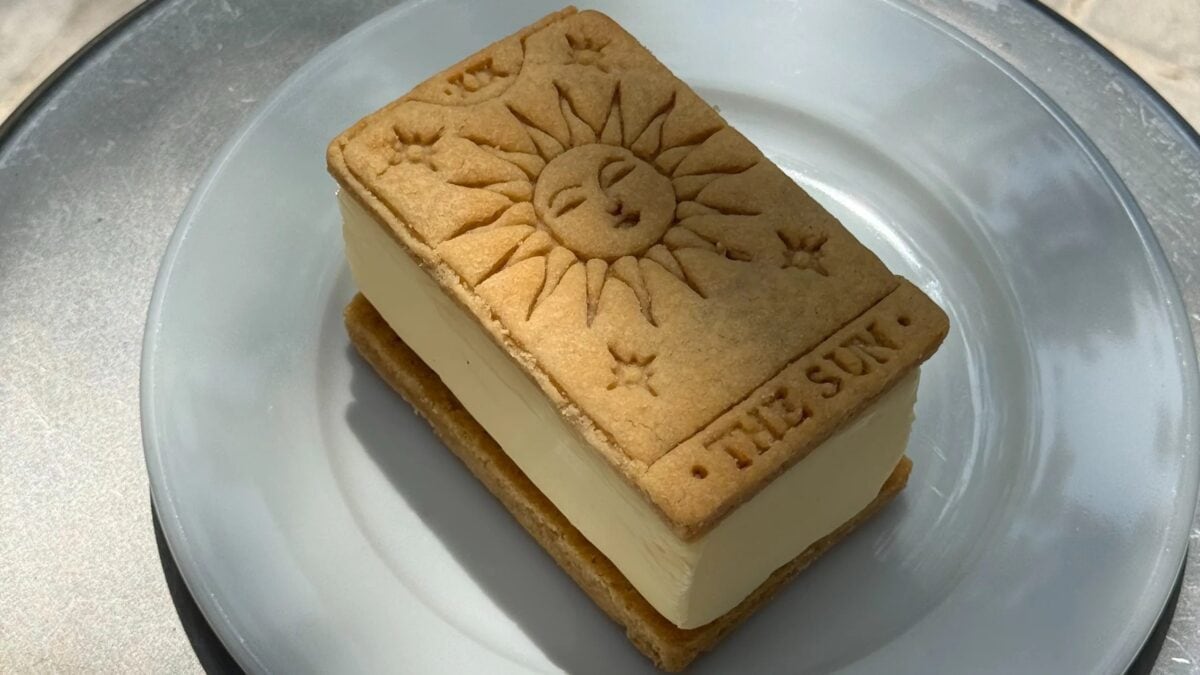
For weeks, an image of a rectangular ice cream biscuit decorated with a rare aesthetic in pastry making has been circulating on social media: it reproduces the Sun, the arcana that in tarot cards is read as a promise of clarity and good luck.
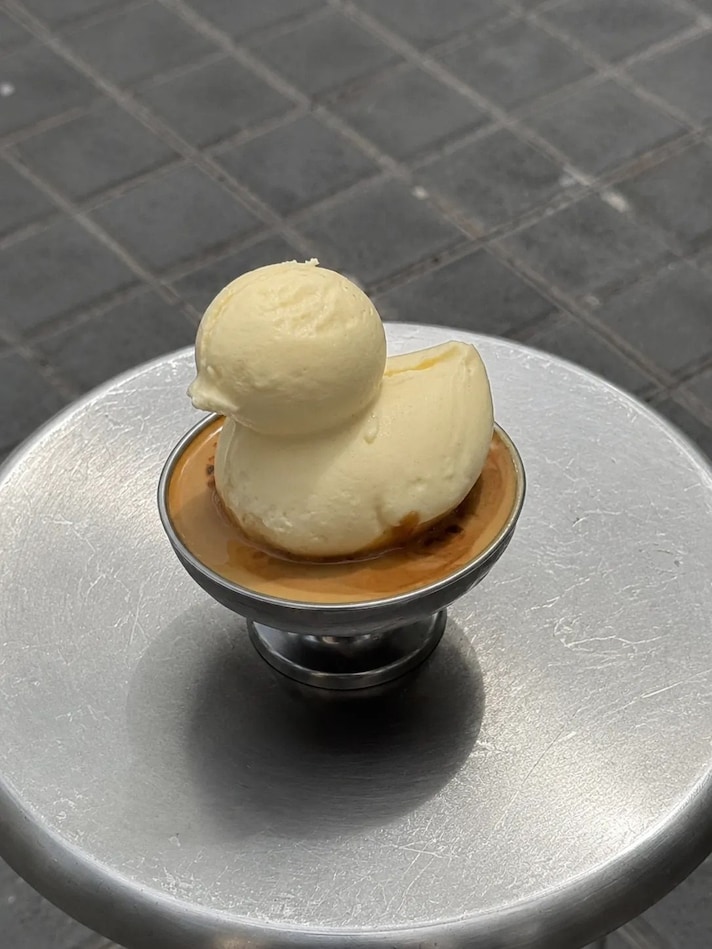
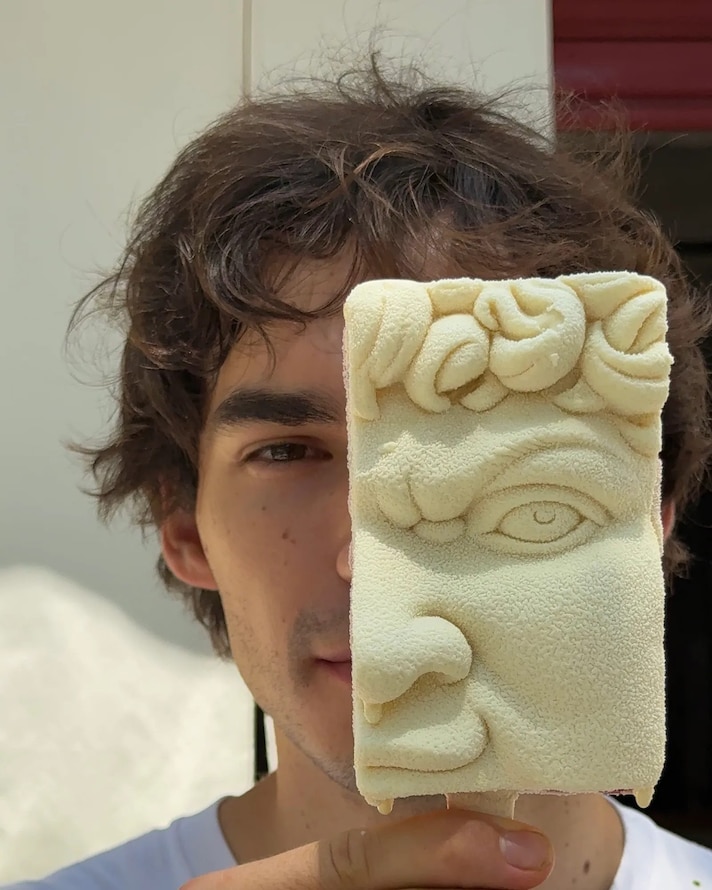
Alongside it is a face of Michelangelo's David, carved from white chocolate ice cream and served on a stick, and vanilla ducks floating in the espresso like an Asian-inspired affogato.
They all come from the same address: Otsu, a Japanese-inspired café that opened just over a year ago at Carrer de la Ciutat de Granada 20, in Poblenou. The neighborhood is the former industrial district of Barcelona, nicknamed the Catalan Manchester in the 19th century, and which today is home to design studios and cafés serving specialty coffee. The name, explains the founder, recalls a Japanese expression meaning "job well done," and the establishment has gained popularity through word of mouth, remaining halfway between a café, a kitchen, and an atelier.
Who is Fer Villanueva, The Chef Who Invented Tarot Ice Cream
Behind the project is Fer Villanueva, born in Mexico City and living in Barcelona for several years. In her Instagram bio, she describes herself as a chef and storyteller, a professional who both prepares and talks about food. Her background, however, comes from a completely different world: she studied product design and marketing and worked for years in the tech sector.
That journey has profoundly influenced his approach to the profession, and his starting point is never a recipe. Villanueva observes, collects images and notes in museums and on the street, and only later tries to reconstruct what has captured his attention using flour and eggs. "Many of my intuitions seem to have nothing to do with food," he told D di Repubblica.
Where Otsu's Viral Ice Creams Come From
In short, every dessert has a story behind it, and it's rarely a gastronomic one. Edible tarot cards were born while leafing through a Taschen collector's book, not so much for the illustrations as for the act of opening it at random and revealing the card in question.
Summer David, on the other hand, arrived after weeks spent photographing sculptures around the city, while the ducks that emerge from the coffee come out of a vintage Chinese stencil, the kind Asian children use to shape animals in the snow.
Then there is the banana bread, which is now a classic at the restaurant, and is made up of a creamy banana enclosing brown butter ice cream, served on a slice of cake.
What's Inside These Ice Creams?
Villanueva makes no secret of the fact that the project begins with image, and in his reconstruction, food serves as a conduit; the stated goal is to make ideas edible, which places aesthetics above and beyond taste. It remains to be seen whether beneath the surface lies a cuisine worthy of the appearance.
The ice cream flavors chosen are anything but reckless: the one with the tarot cards combines white chocolate, strawberries, and vanilla ice cream, which returns on its own in the espresso ducks; the hazelnut butter accompanies the banana, and the white chocolate reconstructs the David.
As for the coffee, Otsu works with roasters specializing in light Nordic roasts, those that prioritize aromatic definition over roasting. Alongside the coffee, there is freshly blended matcha, smoked yuzu tea, charcoal lemonade, and a matcha diluted with fresh pink grapefruit juice, the latter served without refined sugars.
Villanueva describes his work as a search for balance between quality raw materials and an eclectic style, and his favorite ingredients include Sichuan pepper, shiso leaves and many alternatives to refined sugar, such as inulin.
Why They Only Last a Weekend
The reason these sweets have become such a sensation lies in the formula they use to sell them, what Otsu calls Weekend Specials. Every Monday, the team takes a request and tries to transform it into something to serve customers by Saturday. The resulting offering stays on the menu for about 48 hours before making way for another creation.
The habit, the founder explains, began as a learning exercise: giving herself time to pursue an idea she wasn't yet capable of realizing. As the months passed, that weekly appointment ended up introducing new techniques and providing an advantage that Villanueva is happy to acknowledge: the freedom to take risks without the pressure of having to transform every intuition into a stable product.
To taste Otsu's ice creams, you need to be in Barcelona on the right weekend and know in advance what's coming out, information that the shop publishes on its Instagram account a few days before the actual sale.
What Can You Eat at Otsu During The Rest of The Week?
The dishes that regulars order without even looking at the blackboard are three: the Tokyo Breakfast (rice with slow-cooked eggs, katsuobushi, Japanese plums and fermented soybeans), the slow-cooked onse eggs in their shell and the egg sando, the Japanese sandwich of soft bread filled with hard-boiled egg salad.
When asked which card truly represents Otsu, Villanueva leaves aside The Sun, which has carried the name of the place around the world, and chooses The Fool, the card that opens the deck. What interests her is not the naivety of the foolish figure, but rather his propensity to act without having all the answers.
Which, if you think about it, is the same situation anyone who enters Otsu on a Saturday morning finds themselves in: ordering a dessert before even knowing what's on the menu.
;Resize,width=767;)
