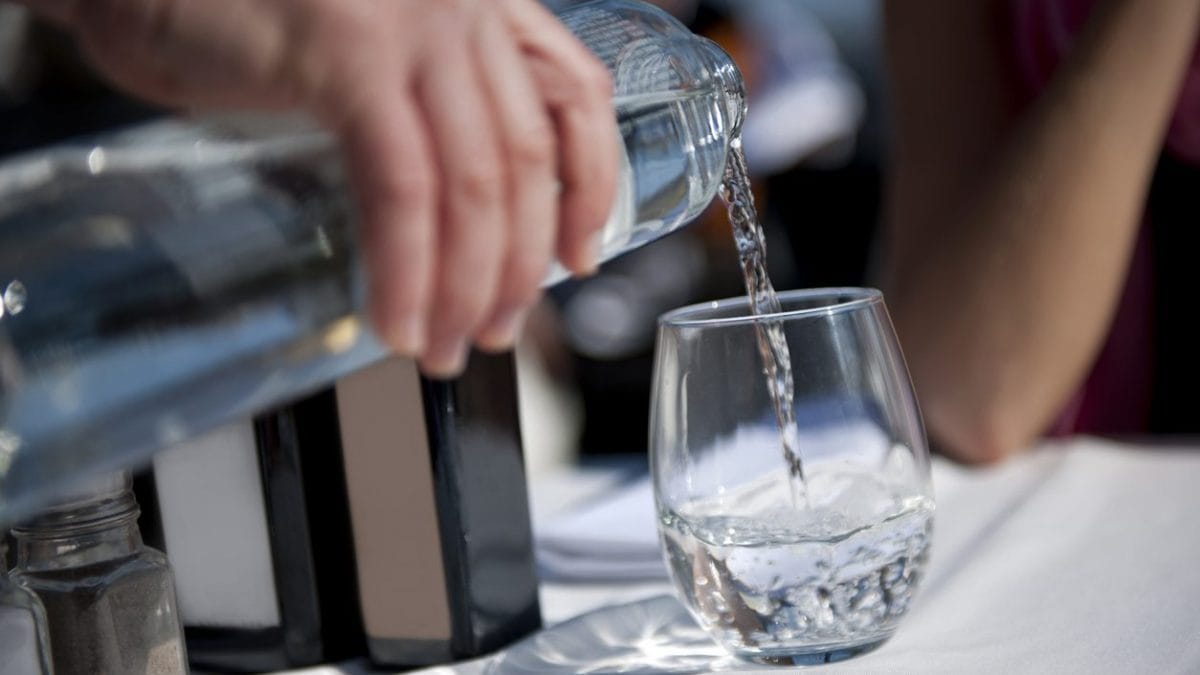
In recent times, driven by who knows who, the false myth of the harm caused by drinking water during meals has resurfaced. It's one of those fake news stories related to the world of nutrition (like the mysterious and fanciful 5-second rule, for example) that periodically resurfaces, gradually gaining more and more followers. Let's say it right away: drinking water during lunch or dinner isn't harmful; in fact, in the right doses, it's even recommended.

After all, we discussed the contribution and usefulness of water while eating some time ago with a water sommelier (yes, a sommelier specializing in water), so we feel sorry for all those who believe that the source of life par excellence is unhealthy during meals. The truth is that we can drink without too many problems, just don't overdo it.
Let's try to nip in the bud a potential trend centered on water and its harmful effects on the body. Let's try to nip in the bud the potential #nowater movement that could arise (it seems exaggerated, yes, but these days, anything is possible). The prosecution's argument in this metaphorical court concerns the dilution of gastric juices when water is ingested with food, thus causing poor digestion and assimilation of what we eat. It should be clear, however, that in the right quantities, water, between a few bites of food at lunch and dinner, is not harmful; in fact, it even helps facilitate the digestive system.
Why It's Good to Drink Water (But Not Too Much) During Meals
Obviously, everything we're saying isn't our own work, and it goes without saying. This morning, we stayed in bed and, with the intention of being naysayers for the sake of it, we decided that drinking a few glasses of water with lunch or dinner isn't bad for your health. Science, in fact, says so. Water, as we can also read on the Umberto Veronesi Foundation website, "… promotes the mixing of food that occurs in the stomach during digestion. It's therefore important to drink the right amount during meals, especially if you eat dry foods like bread, pasta, or cereals, which need to be softened to facilitate the action of gastric juices and therefore digestion." We're obviously not talking about liters of water; two or three glasses are enough to aid our digestion.

"The remainder of the daily water requirement," it is specified, "can be consumed between meals, even through fruit and vegetables." As is often the case with diet, nutrition, and hydration, the important thing is always to maintain the right balance, without exceeding the dose or quantity. Although it is essential for our health, water must also be consumed correctly, avoiding any type of (useless and needlessly dangerous) excess. To summarize as much as possible: while two liters a day are recommended on average, ten liters are not.
If we drink too much water during meals, yes, the gastric juices would be excessively diluted, and digestion would be affected. Drinking the right amount of water, however, helps soften the food we eat, improves its consistency, and also promotes proper intestinal transit.
;Resize,width=767;)
