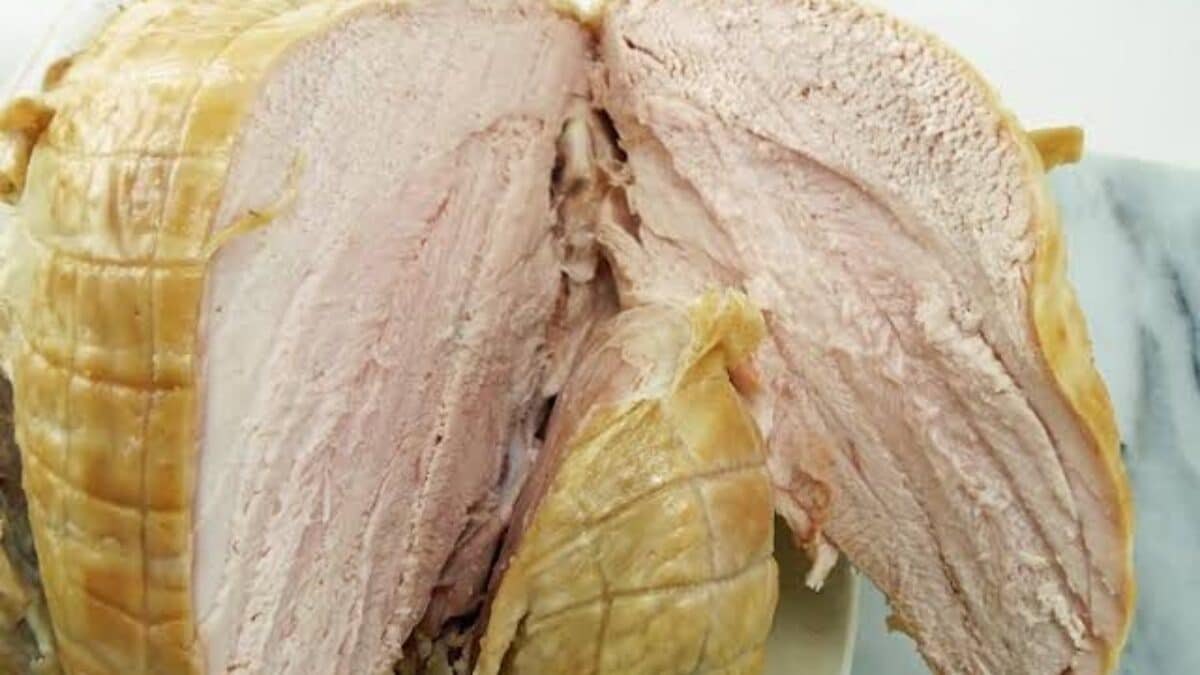
Yes, pink turkey meat is completely safe to eat—as long as the bird has reached a minimum internal temperature of 165°F (74°C) in every part. Slicing into a golden-brown Thanksgiving turkey only to discover rosy, pinkish meat inside is enough to make any host reach for the oven mitts in a panic. However, according to the U.S. Department of Agriculture (USDA), color is not an accurate indicator of whether poultry is fully cooked.
Throwing a fully cooked turkey back into the oven just to eliminate a harmless pink tint is the fastest way to dry out your centerpiece. Understanding the food science behind why turkey stays pink—and knowing the exact signs of undercooked meat—takes the guesswork out of carving day.
Why Fully Cooked Turkey Can Still Look Pink
Even when poultry is cooked well past safe temperatures, several harmless chemical and biological factors can lock a pink pigment into the muscle tissue. Heated gas and electric ovens naturally produce trace gases, including carbon monoxide and nitric oxide. When these gases react with hemoglobin and myoglobin (the proteins that give meat its color), they form a heat-stable pink compound—the exact same chemical reaction that creates the coveted "smoke ring" on barbecued brisket.
Most commercially raised turkeys are harvested at just four to five months old. Because younger birds have thinner skins and a much thinner layer of insulating fat underneath, oven gases penetrate the flesh much more easily, leaving a pink tinge just beneath the skin or near the bone. Nitrates and nitrites—the compounds famous for giving cured ham and hot dogs their permanent pink color—can occur naturally in a turkey's feed or local water supply. Cooking your turkey with cured ingredients, such as a bacon-studded stuffing or a savory herb brine, can also trigger a harmless pink hue. If you smoke or grill your turkey outdoors, expect a distinct pink rim up to half an inch deep around the exterior of the meat.
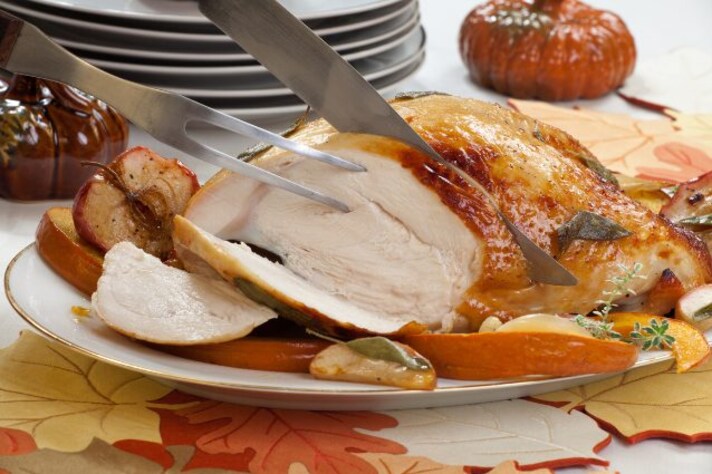
How to Tell Safe Pink Meat from Undercooked Turkey
Because your eyes cannot reliably distinguish between a harmless chemical reaction and raw poultry, you need to rely on temperature and texture rather than color alone.
1. Trust a Digital Meat Thermometer
The only foolproof way to confirm food safety is with an instant-read digital food thermometer. Do not rely on the plastic pop-up timers pre-inserted into store-bought turkeys, as they often trigger too late or register inaccurate readings. Insert your thermometer into three specific spots—making sure the metal probe does not touch bone, which conducts heat faster than meat:
- The thickest part of the breast
- The innermost part of the thigh
- The innermost part of the wing
Once every single location registers 165°F (74°C) or higher, harmful bacteria like Salmonella and Campylobacter have been destroyed, and the meat is safe to serve.
2. Inspect the Texture, Not the Tint
Safely cooked turkey that happens to have a pink hue will still look and feel fully cooked. The muscle fibers will appear opaque, firm, and distinct, pulling apart cleanly into strands. Raw or undercooked turkey, by contrast, will have a wet, glossy, translucent appearance and a soft, rubbery, or mushy texture.
3. Don't Panic Over Pink Juices
Traditional cooking advice often tells home cooks to wait until the juices "run clear." In reality, juices pooled near the bones or joints can retain a slight pinkish tint even after the bird safely crosses the 165°F threshold. As long as your thermometer confirms the temperature, those juices—and the meat around them—are safe to eat.

