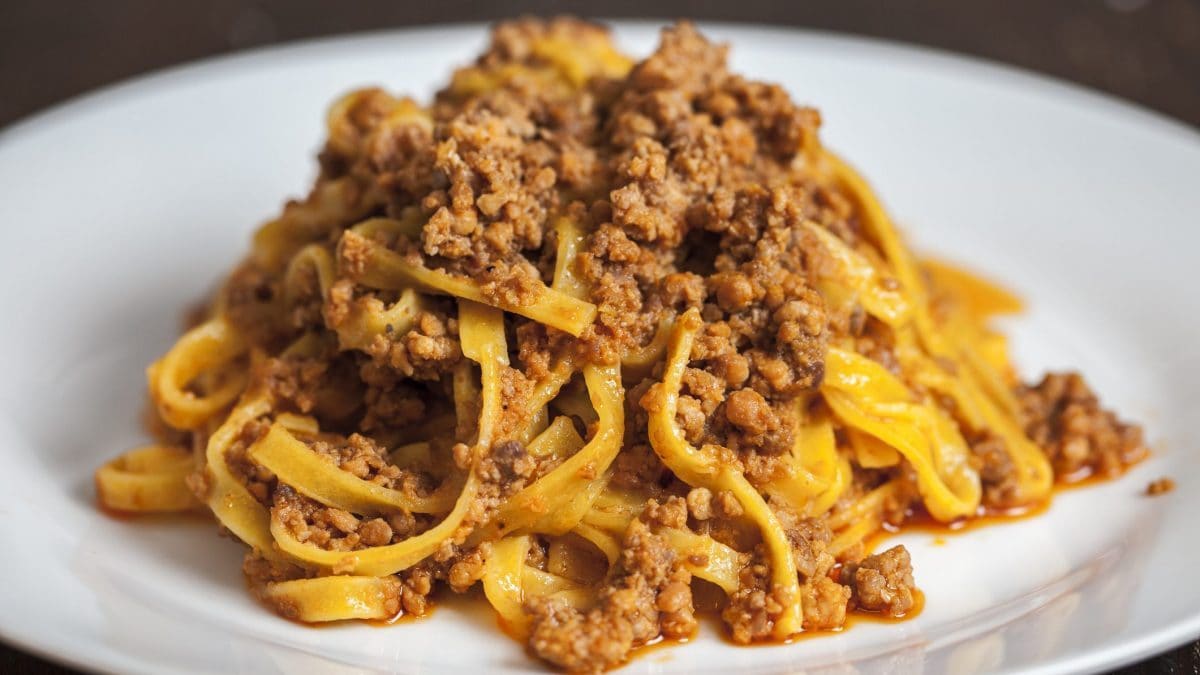
It was already considered as such by many, but as of today, Italian cuisine has officially entered the UNESCO Intangible Cultural Heritage of Humanity. This recognition is of great value for the entire country and, in particular, for the food and wine world. The announcement came from New Delhi, where the UNESCO Intergovernmental Committee confirmed the result of a collaborative effort: institutions, private individuals, researchers, and cultural operators joined forces to complete the nomination. Representing Italy in India were Liborio Stellino, Ambassador to UNESCO; Maddalena Fossati, President of the Promotion Committee and Editor-in-Chief of the historic magazine La Cucina Italiana; the curator of the dossier, Pier Luigi Petrillo, together with Professor Emeritus Massimo Montanari; and officials from the Ministry of Culture, Maria Assunta Peci and Eleonora Sinibaldi.
"The government believed in this challenge from the beginning and did its part to achieve this result, and I thank first of all Ministers Lollobrigida and Giuli for following the dossier. But this is a game we didn't play alone," Prime Minister Giorgia Meloni commented in a video message. "We won this challenge together with the Italian people, together with our compatriots abroad, together with all those around the world who love our culture, our identity, and our way of life. Today we celebrate a victory for Italy. The victory of an extraordinary nation that, when it believes in itself and is aware of what it is capable of achieving, has no rivals and can amaze the world."
"Italian Cuisine is a World Heritage Site. Today, Italy has won, and it is a celebration that belongs to everyone because it speaks to our roots, our creativity, and our ability to transform tradition into universal value." This was stated by the Minister of Agriculture, Food Sovereignty and Forestry, Francesco Lollobrigida, commenting on UNESCO's recognition of Italian Cuisine as a World Heritage Site. "This recognition celebrates the strength of our culture, which is national identity, pride, and vision," the minister continued. "Italian Cuisine is the story of all of us, of a people who have preserved their knowledge and transformed it into excellence, generation after generation."
"This recognition is a source of pride, but also of awareness of the further enhancement our products, our regions, and our supply chains will enjoy. It will also be an additional tool to counter those who seek to exploit the worldwide recognition of Made in Italy, and it will represent new opportunities to create jobs and local wealth, continuing this tradition recognized by UNESCO as a World Heritage Site," concluded Minister Francesco Lollobrigida.
Celebrations For the Precious Recognition
The evening of the announcement, the Colosseum was illuminated in white, red, and green, while Rome's Parco della Musica hosted an event dedicated to Italian gastronomic tradition, organized by the Ministry of Culture and the Ministry of Agriculture and Food Sovereignty, with the support of agri-food companies.
The gastronomic traditions recognized by UNESCO as intangible cultural heritage compose a sort of atlas of taste in which food becomes ritual, identity, and collective memory. There are twenty-six of them, scattered across the world, and they recount techniques, knowledge, and social practices that transcend the simple finished dish. From North African couscous to Korean kimjang, from Belgian beer to Singapore's hawker culture, each entry celebrates communities that transform nourishment into a cultural gesture. Alongside symbolic breads like Armenian lavash or South American cassava bread, convivial traditions emerge, such as the French gastronomic meal, the çay culture of Turkey and Azerbaijan, Arabic and Turkish coffee, and even Chinese tea rituals.
There's no shortage of production techniques that preserve true heritages of craftsmanship, such as Cuban light rum, Serbian brandy, Brazilian Minas cheese, and Japanese sake made with koji mushroom. The picture is completed by iconic dishes such as Ukrainian borscht, Emirati harees, Jordanian mansaf, Malawian nsima, and the lifestyle of Slovenian beekeepers. A global mosaic that demonstrates how food, even more than flavor, is a shared language that unites communities and preserves their memory.
The cuisines recognized by UNESCO as intangible cultural heritage represent those gastronomic systems that are not limited to a single recipe, but preserve a way of living, preparing, and sharing food. Among these stand out Traditional Mexican Cuisine, with its ancestral techniques and the communal role of corn; Japanese Washoku, which expresses the harmony between seasons, territory, and respect for nature; French repas gastronomica, a convivial ritual marked by a precise meal order; and the Mediterranean Diet, a lifestyle shared by many countries and founded on agricultural knowledge, daily cooking, and conviviality. To this core is now added Italian Cuisine, recognized for its biocultural biodiversity, the richness of its regional traditions, and its ability to transform the table into a place of connection. A select group, in short, that does not protect "dishes," but entire cultural universes built around food.
;Resize,width=767;)
