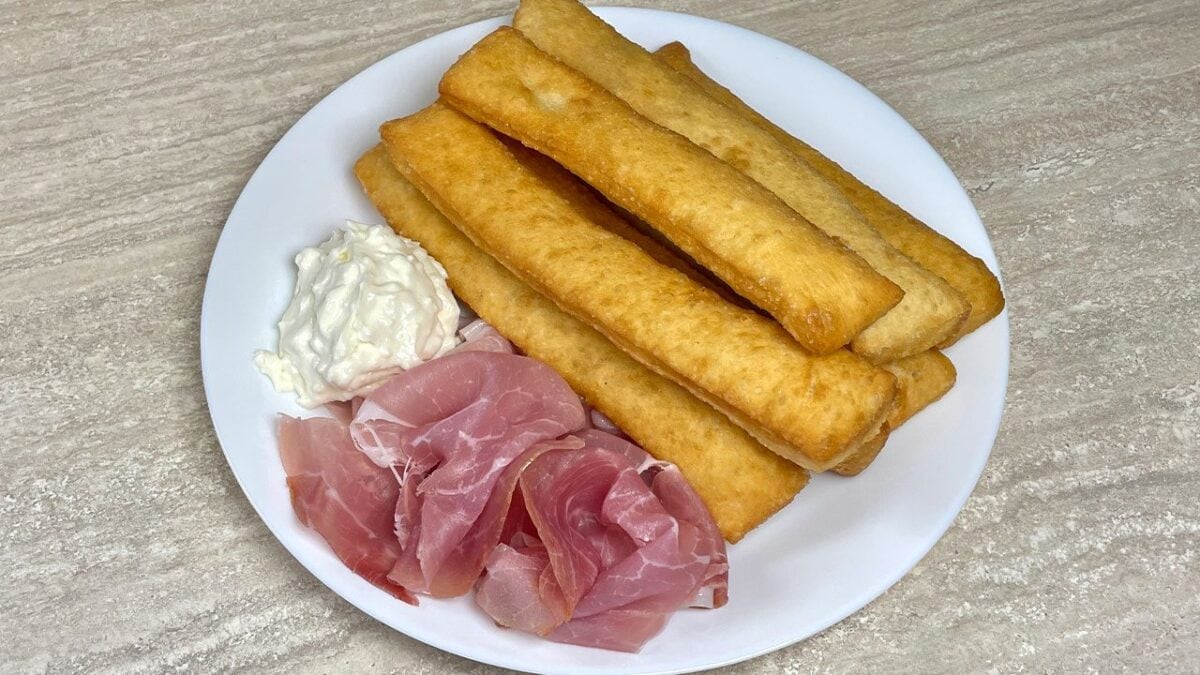
Golden, crispy, and wonderfully fluffy inside, these Italian fried dough sticks, known as sgabei, are a delicious example of traditional Italian comfort food.
Made with a simple yeast dough containing flour, water, olive oil, and salt, sgabei are cut into strips and fried until beautifully puffed and golden brown.
The contrast is irresistible: a lightly crisp exterior gives way to a soft, airy center that's perfect for pairing with savory toppings.
Traditionally enjoyed with cured meats and cheeses, these homemade sgabei are especially delicious served warm with thin slices of prosciutto and creamy stracchino cheese.
Whether prepared as an appetizer, a party snack, or part of an Italian-style aperitivo, they're a wonderful alternative to ordinary bread.
What Are Sgabei?
Sgabei are traditional Italian fried bread strips associated with Lunigiana, a historic area between Liguria and Tuscany.
They belong to a broader tradition of Italian fried dough recipes, in which simple bread dough is transformed into golden, savory snacks.
Sgabei are typically made from a yeast-raised dough that is rolled out, cut into elongated strips, and fried in hot oil.
As the dough cooks, it puffs up and develops a crisp exterior while remaining soft inside.
They're commonly served with cured meats and cheeses, making them especially popular as appetizers or informal snacks.
Although they share similarities with other Italian fried breads, such as gnocco fritto, sgabei are distinguished by their elongated shape and regional identity.
This recipe follows the classic approach, using type 0 flour, fresh yeast, olive oil, and a double resting process to produce light, golden fried dough sticks.
Why Everyone Will Love This Recipe
The best thing about sgabei is their texture. The dough expands as it fries, creating a crisp golden surface and a light, tender interior.
The ingredients are simple, too. There's no need for eggs, butter, or complicated techniques. Just a basic yeast dough and enough time for it to rise properly.
Another reason to love this recipe is its versatility. The fried dough sticks can be served alongside a selection of Italian cured meats, soft cheeses, or other savory accompaniments.
They're also ideal for sharing. Arrange them on a platter with prosciutto and stracchino, and they become an inviting appetizer that feels both rustic and special.
Tips for Perfect Italian Fried Dough Sticks
- Let the dough rise fully. The first rise should continue until the dough has doubled in size, even if it takes slightly longer than two hours.
- Keep the strips evenly sized. Cutting the dough into similar pieces helps them cook at the same rate and puff up consistently.
- Maintain the correct oil temperature. Frying at approximately 350°F (175°C) helps the sgabei become golden without absorbing excessive oil.
- Fry in small batches. Overcrowding lowers the oil temperature and can make the dough greasy instead of crisp.
Frequently Asked Questions
What Is the Difference Between Sgabei and Gnocco Fritto?
Both are traditional Italian fried dough preparations, but they come from different regional traditions.
Sgabei are associated with Lunigiana and are generally shaped into long strips, while gnocco fritto is traditionally associated with Emilia-Romagna and is commonly cut into smaller diamond or rectangular shapes.
Both are delicious served with cured meats and cheeses.
Why Are My Fried Dough Sticks Not Puffy?
The dough may not have risen sufficiently, or the yeast may have been inactive.
Make sure the yeast is fresh, the water is lukewarm rather than hot, and the dough has enough time to rise before shaping and frying.
The oil should also be properly heated before the strips are added.
Can Instant Yeast Be Used Instead of Fresh Yeast?
Yes. Replace the 15g of fresh yeast with approximately 5g of instant yeast.
Instant yeast can usually be mixed directly into the flour, following the instructions on the package.
Can All-Purpose Flour Replace Type 0 Flour?
Yes. American all-purpose flour is a practical substitute for Italian type 0 flour.
The dough may absorb water slightly differently, so adjust the consistency if necessary. It should be smooth, elastic, and soft without being excessively sticky.
What Is the Best Oil for Frying Sgabei?
A neutral oil with a suitable frying temperature works best.
Sunflower, peanut, or canola oil are all good options. The important thing is to maintain a steady temperature of approximately 350°F (175°C).
What Can You Serve With Sgabei?
Sgabei are traditionally enjoyed with savory accompaniments.
Prosciutto and stracchino cheese are particularly delicious because the salty cured meat and creamy cheese complement the warm fried dough.
Other options include salami, mortadella, soft cheeses, and marinated vegetables.
How to Store
Italian fried dough sticks are best enjoyed immediately after frying, while the exterior is crisp and the center is soft.
If there are leftovers, allow them to cool completely and store them in an airtight container in the refrigerator for up to 2 days.
Reheat in a preheated oven or air fryer at approximately 350°F (175°C) for a few minutes, until hot and crisp again.
Avoid reheating them in the microwave, as this tends to make the dough soft and chewy.
Store any prosciutto and stracchino separately in the refrigerator.
How to Freeze
Sgabei can be frozen after frying, although their texture is best when freshly made.
Allow the fried dough sticks to cool completely, then arrange them in a single layer on a baking sheet and freeze until firm.
Transfer them to a freezer-safe bag or container and freeze for up to 2 months for the best quality.
Reheat directly from frozen in a preheated oven at 350°F (175°C) until thoroughly heated and crisp.
For the best results, add the cured meats and cheeses only after reheating.
Ingredients
How to make Italian Fried Dough Sticks (Sgabei)

Begin by pouring the lukewarm water into a bowl or measuring jug. Crumble in the fresh yeast and stir until completely dissolved.
Begin by pouring the lukewarm water into a bowl or measuring jug. Crumble in the fresh yeast and stir until completely dissolved.

Place the type 0 flour in a large mixing bowl and gradually pour in the water and yeast mixture, stirring continuously.
Place the type 0 flour in a large mixing bowl and gradually pour in the water and yeast mixture, stirring continuously.

Continue mixing until the flour has absorbed all the liquid and a rough dough begins to form.
Continue mixing until the flour has absorbed all the liquid and a rough dough begins to form.

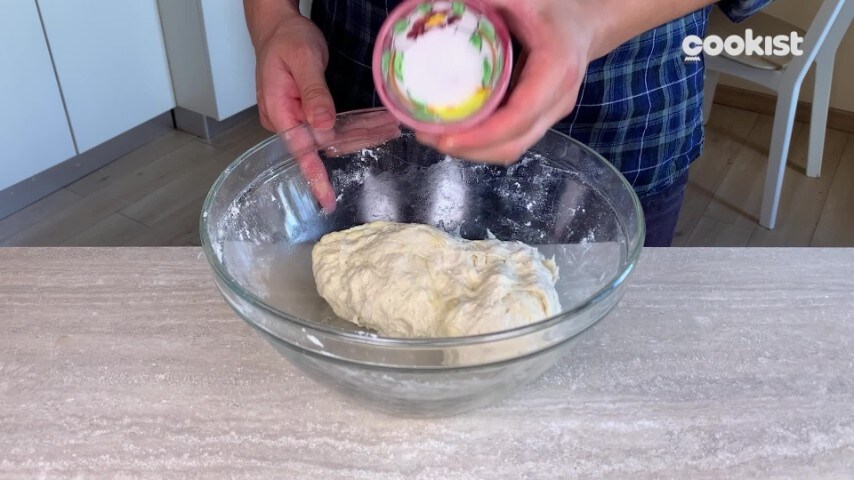
Add the extra-virgin olive oil, followed by the salt, and begin kneading the mixture.
Add the extra-virgin olive oil, followed by the salt, and begin kneading the mixture.

Transfer the dough to a lightly floured work surface and knead until it becomes smooth, uniform, and elastic. It should feel soft and pliable without sticking excessively to your hands.
Transfer the dough to a lightly floured work surface and knead until it becomes smooth, uniform, and elastic. It should feel soft and pliable without sticking excessively to your hands.

Shape the dough into a ball and place it back in the bowl.
Cover with plastic wrap or a clean kitchen towel and leave it to rise in a warm, draft-free place for approximately 2 hours, or until doubled in size. A turned-off oven can provide a sheltered place for rising, provided it is completely cool.

Once the dough has risen, gently transfer it to a lightly floured work surface.
Using a rolling pin, roll the dough into a sheet approximately ⅜ inch (1cm) thick.
Once the dough has risen, gently transfer it to a lightly floured work surface.
Using a rolling pin, roll the dough into a sheet approximately ⅜ inch (1cm) thick.

With a sharp knife or pizza cutter, cut the dough into strips approximately 6 inches (15cm) long and 1¼ inches (3cm) wide.
With a sharp knife or pizza cutter, cut the dough into strips approximately 6 inches (15cm) long and 1¼ inches (3cm) wide.

Arrange the strips on a lightly floured baking sheet or work surface, leaving a little space between them.
Arrange the strips on a lightly floured baking sheet or work surface, leaving a little space between them.

Cover loosely with a clean kitchen towel and allow them to rest for another 30 minutes. This second rest helps the dough relax and become lighter before frying.
Cover loosely with a clean kitchen towel and allow them to rest for another 30 minutes. This second rest helps the dough relax and become lighter before frying.

Meanwhile, pour the vegetable oil into a deep, heavy-bottomed pot, making sure the oil doesn't fill the pot more than halfway.
Heat the oil to approximately 350°F (175°C), checking the temperature with a kitchen thermometer.
Meanwhile, pour the vegetable oil into a deep, heavy-bottomed pot, making sure the oil doesn't fill the pot more than halfway.
Heat the oil to approximately 350°F (175°C), checking the temperature with a kitchen thermometer.

Carefully lower a few dough strips into the hot oil, working in small batches to avoid overcrowding.
Fry the sgabei for approximately 4–5 minutes, turning them as needed, until they become puffed and evenly golden on all sides. Adjust the frying time slightly depending on their thickness and how quickly they brown.

Using a slotted spoon, lift the fried dough sticks from the oil and transfer them to a plate lined with paper towels to absorb any excess oil.
While they're still hot, sprinkle them lightly with salt.
Using a slotted spoon, lift the fried dough sticks from the oil and transfer them to a plate lined with paper towels to absorb any excess oil.
While they're still hot, sprinkle them lightly with salt.

Arrange the Italian fried dough sticks on a serving platter alongside thin slices of prosciutto and a bowl of creamy stracchino cheese.
Serve immediately while the sgabei are warm, crisp on the outside, and deliciously soft inside.
Arrange the Italian fried dough sticks on a serving platter alongside thin slices of prosciutto and a bowl of creamy stracchino cheese.
Serve immediately while the sgabei are warm, crisp on the outside, and deliciously soft inside.


