
There’s a particular kind of dread that hits when you taste your soup and immediately know what happened: you salted with confidence, tasted too late, and now the whole pot tastes like the ocean had a heavy hand. It’s the sort of moment that makes even experienced cooks consider dramatic options—dump it, dilute it into oblivion, or pretend it was “meant” to be that way.
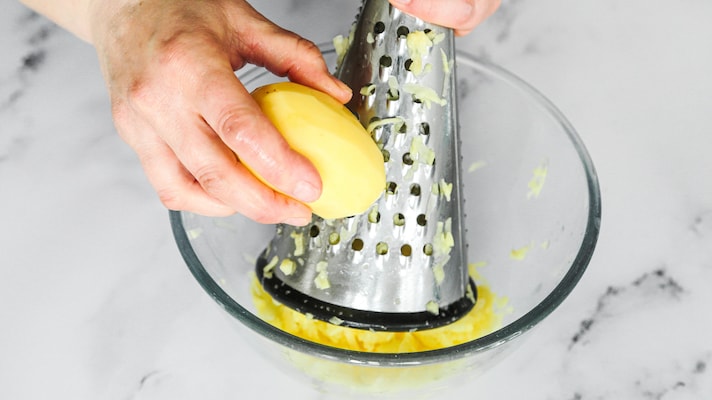
Julia Child, thankfully, offered a solution that’s calmer, smarter, and very on-brand for her: use a raw potato to pull some of that salt back out. More specifically, she recommended grating a raw potato directly into the soup, letting it simmer for several minutes, and then straining out the potato—along with the excess salt it’s absorbed.
How the Potato Trick Works
The logic is surprisingly practical. Potatoes are starchy, and starch is absorbent. When you add raw grated potato to a salty broth, those fine shreds act a bit like a sponge—taking in liquid and, with it, some of the salt. Julia’s method is particularly effective because grating increases the potato’s surface area, which helps it work faster than tossing in a whole chunk.
According to the accounts of her technique, the timing is short and manageable: simmer the grated potato in the soup for about 7 to 8 minutes, then strain it out. The goal isn’t to make your soup taste like potatoes (unless that’s the soup you were making). It’s to give the salt somewhere else to go.
A Few Practical Tips So You Don’t Overcorrect
This is where the method feels especially “Julia”: it’s simple, but it expects you to pay attention. Start with one raw potato for a standard pot of soup, grate it in, simmer, then taste. If the soup is still aggressively salty, you can repeat the process with another small potato—but don’t do two at once unless your soup is truly beyond the pale. You’re aiming for balance, not a broth that tastes oddly muted.
Also, be sure you actually strain. The potato has done its job; leaving it in can change the texture and dilute the flavor in a way that feels accidental rather than intentional.
;Resize,width=767;)
