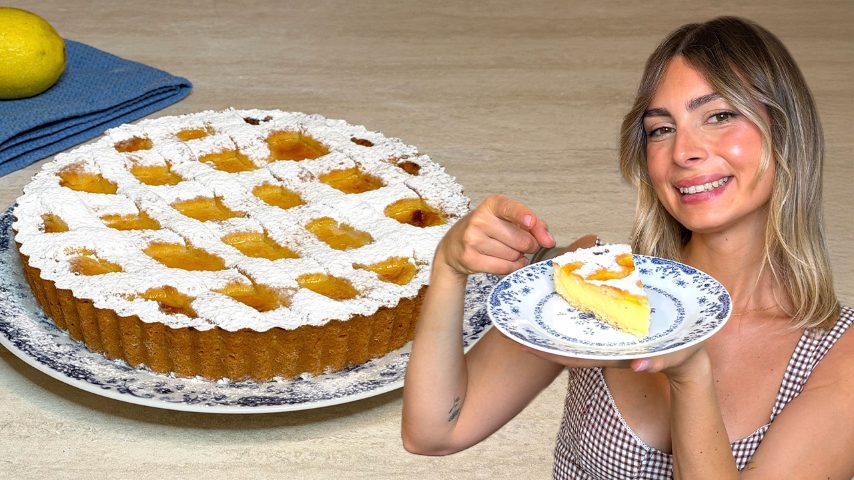
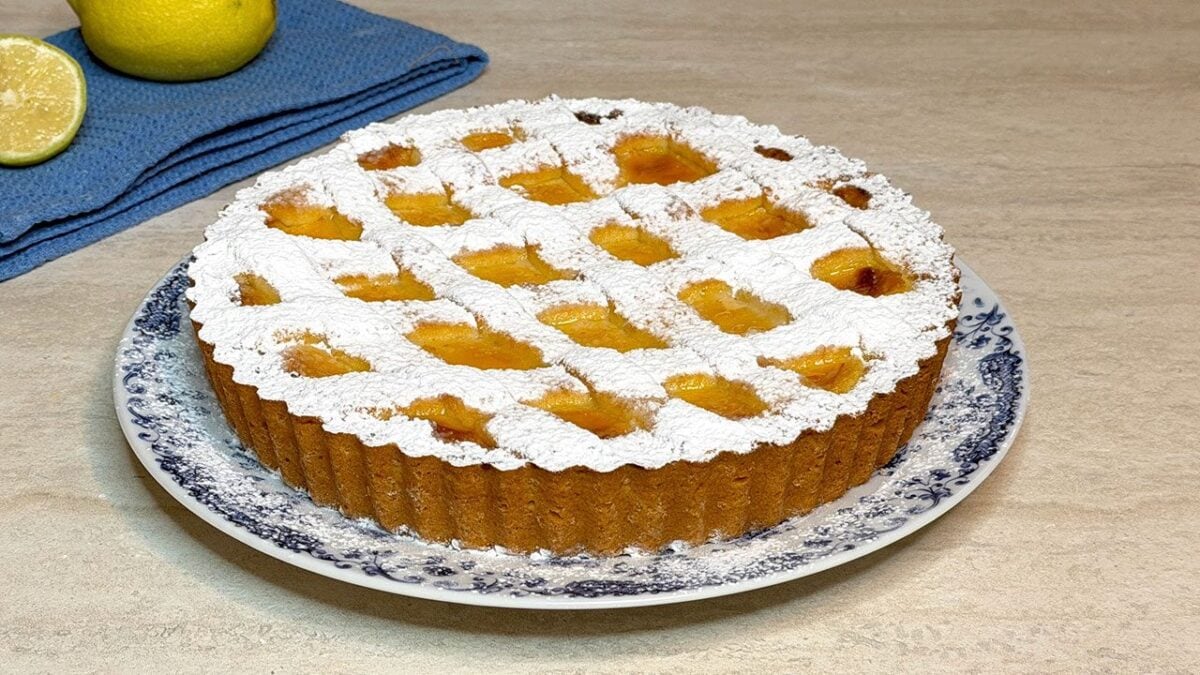
This lemon custard tart combines buttery shortcrust pastry with a smooth, creamy lemon filling for a dessert that's delicate, comforting, and full of citrus flavor.
Inspired by the traditional Italian crostata alla crema di limone, this homemade tart features a soft pastry base, a generous layer of lemon-scented custard, and a beautiful lattice crust that turns golden in the oven.
Unlike lemon tarts made with sharp, intensely citrusy lemon curd, this version uses a milk-based lemon pastry cream flavored with fresh lemon zest. The result is wonderfully creamy, gently sweet, and fragrant without being overly tart.
Perfect for Sunday lunches, family celebrations, or an afternoon treat, this Italian lemon tart is just as delicious served chilled as it is at a cool room temperature.
What Is an Italian Lemon Custard Tart?
An Italian lemon custard tart, or crostata alla crema di limone, is a variation of the classic Italian crostata made with pasta frolla and a creamy lemon-flavored filling.
Pasta frolla is a sweet shortcrust pastry commonly used in Italian tarts and cookies. In this recipe, it contains a small amount of baking powder, which gives the baked crust a slightly softer, more delicate texture.
The filling is a lemon-scented version of crema pasticcera, or Italian pastry cream. It's made by cooking milk, egg yolks, sugar, and cornstarch until thick and smooth.
Unlike lemon curd, which typically contains lemon juice and butter, this custard gets its citrus flavor primarily from fresh lemon zest.
The tart is finished with strips of pastry arranged in a traditional lattice pattern and baked until lightly golden.
Why Everyone Will Love This Recipe
The combination of textures makes this tart particularly satisfying. The shortcrust pastry is buttery and tender, while the lemon custard creates a soft, velvety center.
It's also made with familiar baking ingredients: flour, eggs, butter, sugar, milk, cornstarch, and fresh lemon zest.
The lattice topping gives the tart a beautiful homemade appearance without requiring complicated decorations. A light dusting of powdered sugar is all it needs before serving.
Another advantage is that the recipe can be prepared ahead of time. The custard needs to cool before the tart is assembled, and the finished dessert should cool completely before slicing.
Tips for the Best Lemon Custard Tart
- Use cold butter for the pastry. Work the dough just until it comes together to avoid developing too much gluten, which can make the crust tough.
- Chill the dough for at least 30 minutes. Cold pastry is easier to roll out and helps the lattice strips hold their shape.
- Cool the lemon custard before filling the tart. Hot custard can soften the unbaked pastry and make assembly difficult.
- Let the baked tart cool completely before slicing. This allows the custard filling to settle and helps produce neat slices.
Frequently Asked Questions
What Is the Difference Between Lemon Custard and Lemon Curd?
Lemon custard, or lemon pastry cream, is typically made with milk, egg yolks, sugar, and a thickener such as cornstarch.
Lemon curd usually contains lemon juice, eggs, sugar, and butter, giving it a richer, more intensely tart citrus flavor.
This recipe uses lemon custard, making the filling milder and creamier.
Can Lemon Custard Tart Be Made Ahead of Time?
Yes. This tart is a good make-ahead dessert because it needs time to cool before serving. It can be prepared the day before and refrigerated until needed.
Why Is My Lemon Custard Too Runny?
The custard may not have cooked long enough to thicken properly. Cornstarch needs sufficient heat to activate, so the mixture should be cooked while whisking until it becomes thick and creamy.
The custard will also firm up further as it cools.
Can I Use Lemon Juice Instead of Lemon Zest?
Lemon zest is recommended for this recipe because it provides citrus aroma without significantly changing the liquid balance of the custard.
Adding lemon juice would change both the flavor and the consistency, so it shouldn't be substituted directly for the zest.
How Do I Keep the Tart Crust From Becoming Soggy?
Make sure the lemon custard has cooled before spreading it over the pastry. Pricking the base with a fork also helps prevent excessive puffing during baking.
Bake the tart until the pastry is fully cooked and lightly golden, including around the edges.
Can I Make This Tart Without a Lattice Top?
Yes. The lattice is traditional and decorative, but the tart can also be baked with an open top.
If omitting the lattice, the baking time may need adjusting, so watch the pastry and custard carefully.
How to Store
Because this lemon custard tart contains a milk-and-egg filling, it should be stored in the refrigerator.
Once completely cool, cover the tart carefully or transfer individual slices to an airtight container. Refrigerate for up to 3 days.
For the best texture, allow a slice to sit at room temperature for approximately 10–15 minutes before serving.
Avoid leaving the tart unrefrigerated for more than 2 hours.
How to Freeze
Freezing lemon custard tart is possible, but it's not the ideal storage method.
Milk-based custard thickened with cornstarch can separate or become watery after thawing, affecting the smooth texture of the filling.
If freezing is necessary, allow the tart to cool completely, wrap it tightly, and place it in a freezer-safe container. Freeze for up to 1 month for the best quality.
Thaw overnight in the refrigerator and serve chilled. The custard may be slightly softer or less creamy than when freshly prepared.
For better results, the unbaked shortcrust pastry can be frozen separately and used later with freshly prepared lemon custard.
Ingredients
How to make Lemon Custard Tart

Begin by preparing the shortcrust pastry. Crack the eggs into a large mixing bowl and add the granulated sugar.
Begin by preparing the shortcrust pastry. Crack the eggs into a large mixing bowl and add the granulated sugar.

Finely grate the zest of half a lemon directly into the bowl, avoiding the bitter white pith. Mix everything with a fork until the eggs and sugar are combined.
Finely grate the zest of half a lemon directly into the bowl, avoiding the bitter white pith. Mix everything with a fork until the eggs and sugar are combined.

Add the cold butter, cut into small cubes, and begin incorporating it into the mixture.
Add the baking powder, then gradually work in the all-purpose flour. Continue mixing and gently kneading until the ingredients come together into a smooth, homogeneous dough.
Add the cold butter, cut into small cubes, and begin incorporating it into the mixture.
Add the baking powder, then gradually work in the all-purpose flour. Continue mixing and gently kneading until the ingredients come together into a smooth, homogeneous dough.

Shape the pastry into a ball, wrap it in plastic wrap, and refrigerate for 30 minutes.
Shape the pastry into a ball, wrap it in plastic wrap, and refrigerate for 30 minutes.

Meanwhile, prepare the lemon custard. Pour the milk into a saucepan, add the finely grated lemon zest, and heat gently until hot but not boiling.
Meanwhile, prepare the lemon custard. Pour the milk into a saucepan, add the finely grated lemon zest, and heat gently until hot but not boiling.

In a separate bowl, whisk the egg yolks with the sugar until combined. Add the cornstarch and whisk until smooth and free of lumps.
In a separate bowl, whisk the egg yolks with the sugar until combined. Add the cornstarch and whisk until smooth and free of lumps.

Gradually pour the warm milk into the egg mixture while whisking continuously. Return everything to the saucepan and cook over medium-low heat, stirring constantly, until the custard thickens into a smooth, creamy consistency. Let it bubble gently for about a minute while continuing to whisk so the cornstarch cooks through.
Gradually pour the warm milk into the egg mixture while whisking continuously. Return everything to the saucepan and cook over medium-low heat, stirring constantly, until the custard thickens into a smooth, creamy consistency. Let it bubble gently for about a minute while continuing to whisk so the cornstarch cooks through.

Transfer the lemon custard to a clean bowl and cover the surface directly with plastic wrap to prevent a skin from forming. Cool it promptly, then refrigerate until no longer warm.
Transfer the lemon custard to a clean bowl and cover the surface directly with plastic wrap to prevent a skin from forming. Cool it promptly, then refrigerate until no longer warm.

Once the pastry has rested, preheat the conventional oven to 350°F (180°C).
Remove the dough from the refrigerator and divide it into two portions, reserving approximately one-third for the lattice topping.
Once the pastry has rested, preheat the conventional oven to 350°F (180°C).
Remove the dough from the refrigerator and divide it into two portions, reserving approximately one-third for the lattice topping.

Place the larger portion of pastry on a sheet of parchment paper and roll it out into a circle large enough to cover the bottom and sides of a 9½-inch (24cm) tart pan.
Grease and lightly flour the tart pan, then carefully transfer the rolled pastry into it.
Place the larger portion of pastry on a sheet of parchment paper and roll it out into a circle large enough to cover the bottom and sides of a 9½-inch (24cm) tart pan.
Grease and lightly flour the tart pan, then carefully transfer the rolled pastry into it.

Press the dough gently against the bottom and sides, trim away any excess pastry, and prick the base several times with a fork.
Press the dough gently against the bottom and sides, trim away any excess pastry, and prick the base several times with a fork.

Spoon the cooled lemon custard into the pastry shell and spread it evenly with a spatula, smoothing the surface.
Spoon the cooled lemon custard into the pastry shell and spread it evenly with a spatula, smoothing the surface.

Roll out the remaining pastry and cut it into long, even strips.
Arrange the strips over the custard, alternating their direction to create a classic lattice pattern. Press the ends gently against the edges of the tart to secure them.
Roll out the remaining pastry and cut it into long, even strips.
Arrange the strips over the custard, alternating their direction to create a classic lattice pattern. Press the ends gently against the edges of the tart to secure them.

Transfer the tart to the preheated oven and bake at 350°F (180°C) for approximately 40 minutes, or until the pastry is lightly golden and cooked through.
Transfer the tart to the preheated oven and bake at 350°F (180°C) for approximately 40 minutes, or until the pastry is lightly golden and cooked through.

Remove the Italian lemon custard tart from the oven and let it cool completely in the pan before attempting to remove it.
Remove the Italian lemon custard tart from the oven and let it cool completely in the pan before attempting to remove it.
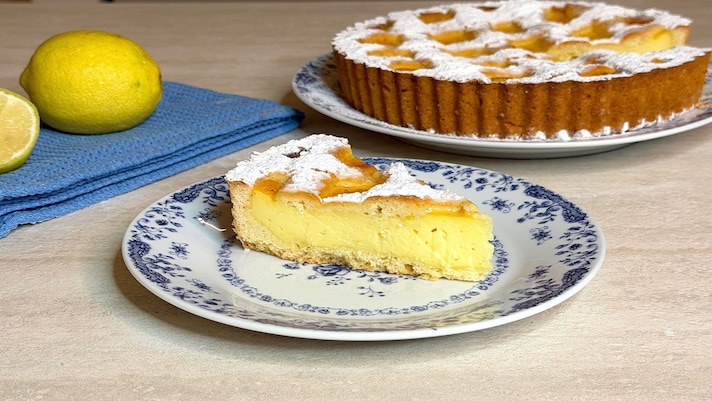
Once cool, carefully transfer it to a serving plate and finish with a light dusting of powdered sugar.
Once cool, carefully transfer it to a serving plate and finish with a light dusting of powdered sugar.
Slice and serve the lemon custard crostata for a creamy, citrus-scented dessert with a beautifully buttery pastry crust.


