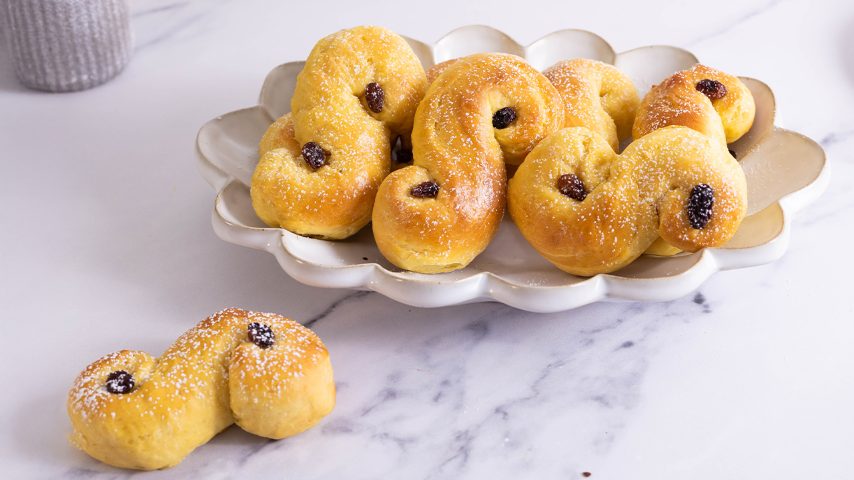
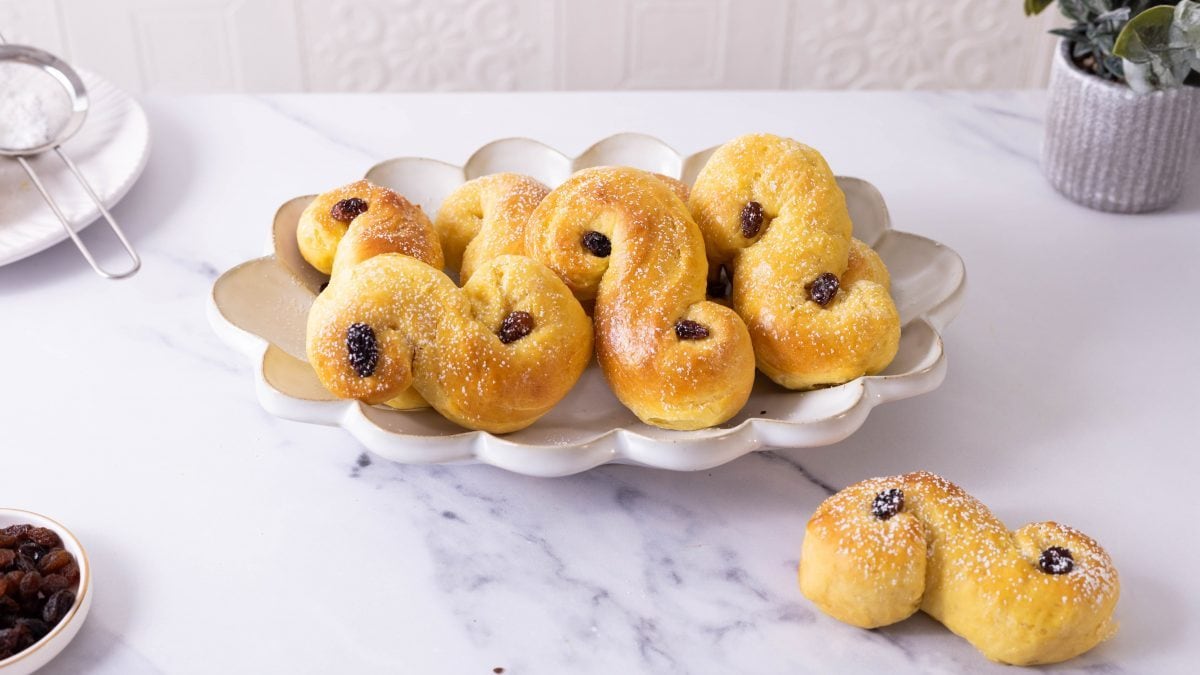
A tray of freshly baked Lussekatter brings with it the unmistakable scent of Swedish Christmas, that is warm saffron, soft brioche dough, and a gentle sweetness that feels festive without trying. These S-shaped buns are tender, lightly buttery, and beautifully aromatic, making them a beloved treat throughout Scandinavia during the holiday season, especially due to their sun-bright color and curls.
Whether enjoyed with morning coffee, paired with a cosy cup of mulled wine, or shared during St. Lucia celebrations, Lussekatter offer the traditional holiday charm.
What is Lussekatter?
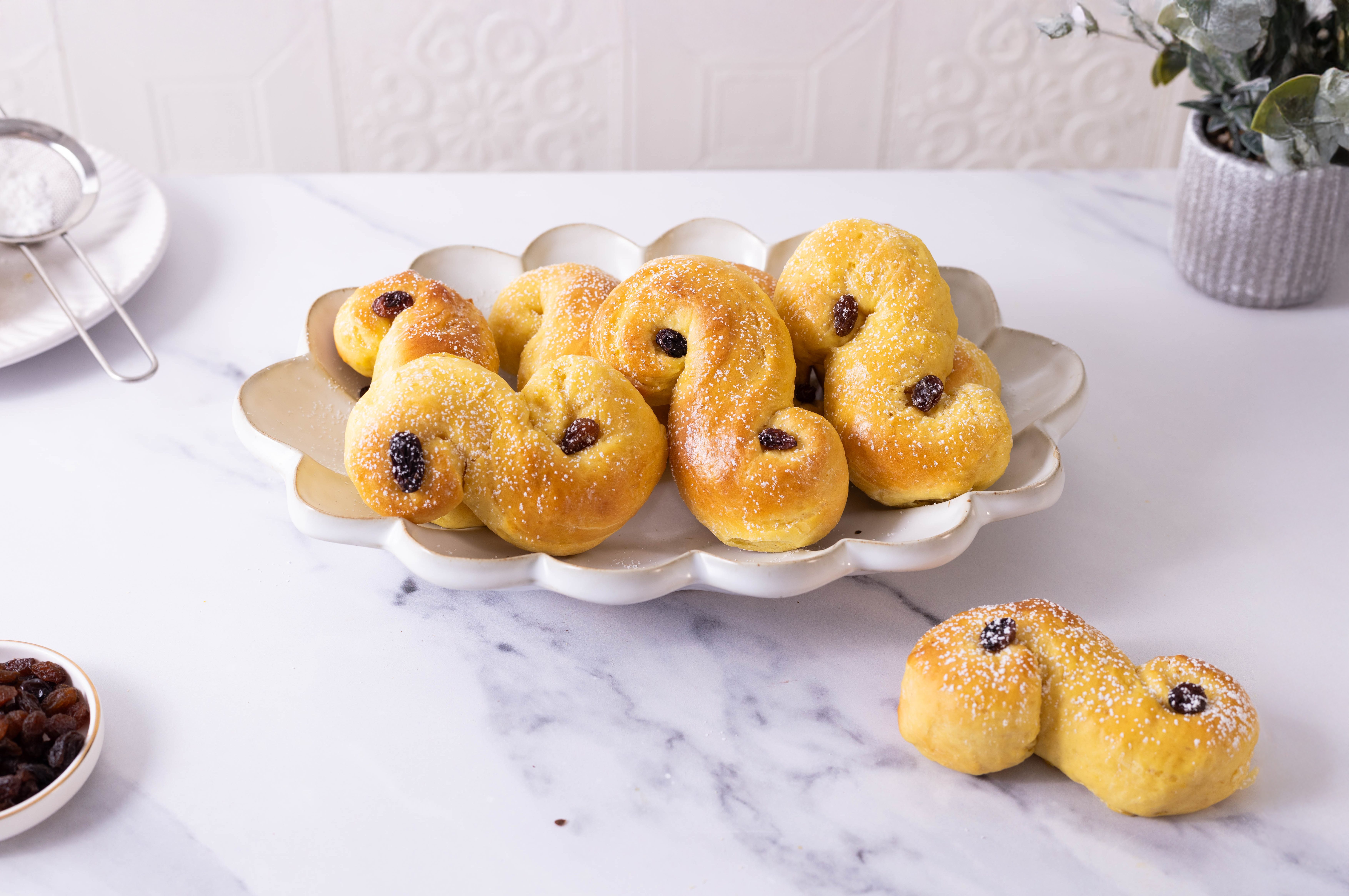
Lussekatter, sometimes called Lussebullar or saint-lucia buns, are traditional Swedish saffron buns made and eaten around St. Lucia Day (13 December) and throughout the Christmas season. They’re essentially a saffron-flavored enriched dough that’s shaped into curled “8” or “S” forms and finished with a raisin in each curl.
The defining ingredient is saffron, which gives the buns their distinctive color and fragrant, honey notes. This dish is tied to St. Lucia festivities and Scandinavian winter baking traditions, but today, they’re loved wherever people crave a festive bun with a subtle, floral lift.
Pro Tips for the Best Lussekatter
- If your saffron comes in threads, crush it finely and bloom it in the warm milk so the color and aroma fully release. If you have powdered saffron, still bloom it as it benefits from warmth and time.
- Knead until the dough is smooth and slightly tacky, not sticky.
- Keep the dough pieces evenly weighed so all buns bake uniformly. Roll the ends toward the centre with consistent pressure to make neat curls.
- Watch the last 3-5 minutes closely. The buns should be golden, not too brown, and sound hollow at the base when done.
- Plump raisins by soaking briefly in warm water or rum, then pat dry. They’ll look and taste better after baking.
Frequently Asked Questions
What makes Lussekatter so yellow?
Saffron is the source of the signature yellow color. Blooming saffron threads in warm milk helps extract more color and aroma. Commercial turmeric can be used as a last resort colourant, but it changes flavor, as saffron is traditional.
Why is my dough dense?
This can be because the yeast was old or killed by milk that was too hot. Also, if the dough wasn’t kneaded enough to develop gluten, then it could affect the dough.
Can I make Lussekatter ahead of time?
You can shape the buns, place them on trays, cover them tightly with plastic wrap, and refrigerate them overnight. Bring to room temperature and allow a final rise, about 30-60 minutes before brushing and baking.
How can I make them vegan?
Replace butter with a plant-based spread and use plant milk for the dough as a substitute for the egg wash. This can be a mixture of plant milk and a little syrup or aquafaba, brushed on before baking, which gives a nice sheen. Saffron and shaping remain the same.
How to Store Lussekatter
Buns can stay fresh for up to a week if stored in the fridge. Just reheat them briefly in a low oven or microwave to regain softness.
Ingredients
How to Make Lussekatter

Pour the milk, butter and saffron powder into a saucepan with a thick bottom.
Pour the milk, butter and saffron powder into a saucepan with a thick bottom.

Place on the heat and let it cook, stirring continuously, until the butter has completely melted; then turn off the heat and let it cool.
Place on the heat and let it cook, stirring continuously, until the butter has completely melted; then turn off the heat and let it cool.

Place the Manitoba flour, granulated sugar and crumbled brewer's yeast in the bowl of the mixer and start mixing with the hook, then add the egg yolk.
Place the Manitoba flour, granulated sugar and crumbled brewer's yeast in the bowl of the mixer and start mixing with the hook, then add the egg yolk.

When the milk and butter mixture is almost cold, add it to the rest of the ingredients and continue kneading.
When the milk and butter mixture is almost cold, add it to the rest of the ingredients and continue kneading.

Once you have obtained a well-strung dough that comes away from the sides of the mixer, turn it over onto the work surface and make a series of reinforcing folds.
Once you have obtained a well-strung dough that comes away from the sides of the mixer, turn it over onto the work surface and make a series of reinforcing folds.

Form a ball, place it in a bowl, cover with cling film, and let it rise at room temperature for about a couple of hours.
Form a ball, place it in a bowl, cover with cling film, and let it rise at room temperature for about a couple of hours.

Once doubled in volume, gently deflate the dough with your hands.
Once doubled in volume, gently deflate the dough with your hands.

Divide it with a tarocco into many loaves of about 70 g each.
Divide it with a tarocco into many loaves of about 70 g each.

Shape each portion of dough into a small loaf.
Shape each portion of dough into a small loaf.

Roll it up both sides, in the opposite direction.
Roll it up both sides, in the opposite direction.

As they are ready, transfer the sweets onto a non-stick baking tray.
As they are ready, transfer the sweets onto a non-stick baking tray.

Decorate the brioche by placing the raisins on the two centers.
Decorate the brioche by placing the raisins on the two centers.

Cover the sweets with a clean cotton cloth and let it rise for another hour.
Cover the sweets with a clean cotton cloth and let it rise for another hour.

Once the time has passed, brush the brioche with a lightly beaten egg yolk with a drop of milk.
Once the time has passed, brush the brioche with a lightly beaten egg yolk with a drop of milk.

Place the sweets in a hot oven at 390°F/200°C for about 15 minutes, then take them out of the oven and let them cool.
Place the sweets in a hot oven at 390°F/200°C for about 15 minutes, then take them out of the oven and let them cool.
;Resize,width=712;)
Dust the Santa Lucia cats with a light layer of icing sugar to taste, then arrange them on a tray. Enjoy!
Dust the Santa Lucia cats with a light layer of icing sugar to taste, then arrange them on a tray. Enjoy!
;Resize,width=767;)
