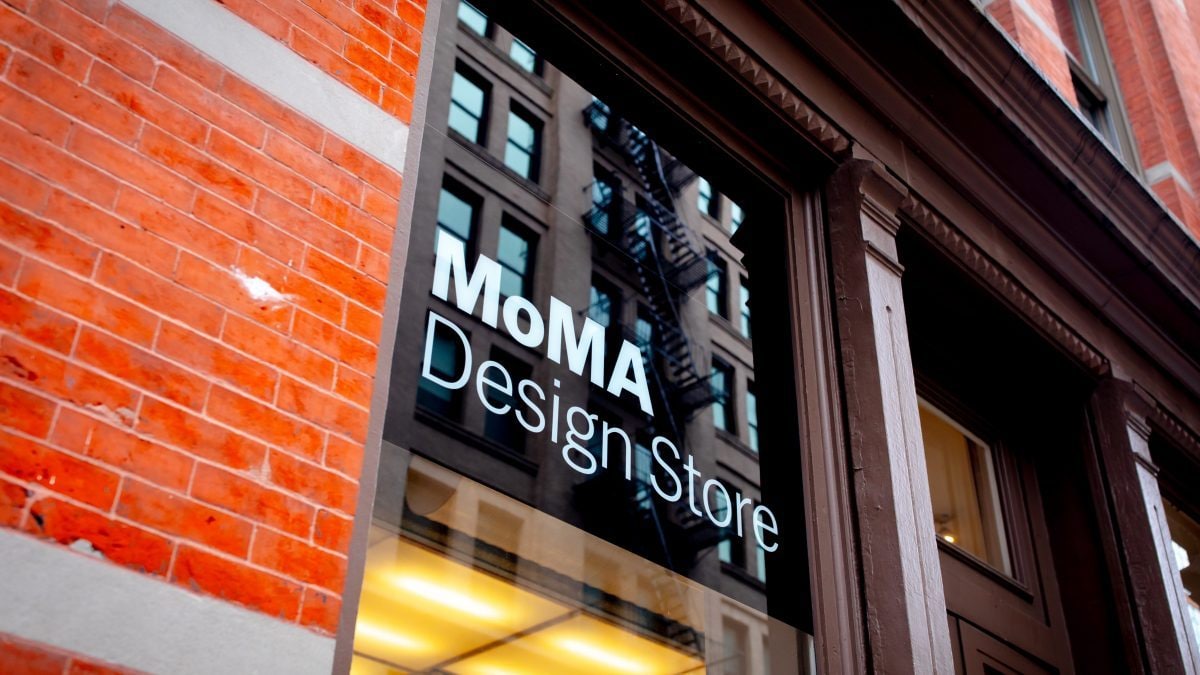
There are supermarkets that look like museums, so precise and orderly are they, and in some cases the opposite happens: a museum that looks like a supermarket. This is what's happening at the MoMA in New York, where a pop-up opened a few days ago that reproduces a real market where, however, nothing is edible. It's called MoMA Mart and will be on display until March 29th: shelves full of objects like pasta, biscuits, milk cartons, fruit and vegetables, which are not meant to satisfy your hunger but to decorate your living room.
What's at MoMA Mart
The shelves are there, the products are there, and at first glance, it might easily look like your local supermarket: drinks, snacks, preserves, pizza, bread, butter, and croissants. Unfortunately, none of what you see is edible, as they are, in fact, household items. This is what you can find inside the MoMA Design Store in Soho and Midtown: a temporary space—opened on January 7th—that aims to transform supermarket shopping into a playful and fun experience (also available online on their official website).
This means that a tomato becomes a table, a pizza a clock, a fruit a vase, and butter a hair clip: all to give the illusion of a trip to a market where food and art come together and intertwine, transforming everyday products into true design objects. As Emmanuel Plat, Merchandising Director of MoMA Design Store Retail, explains, "This is not simply a themed collection; it's an immersive retail experience that reinterprets food forms as functional design objects, inviting visitors to experience design through a creative and unexpected lens."
The Connection Between Food and Art in the 20th Century (and Beyond)
This isn't the first time these two worlds have met, and the MoMA Mart experience draws inspiration from the works of artists who have become true symbols of Pop Art, such as Claes Oldenburg and Ed Ruscha, both of whom are present in the museum's collection. Indeed, it was precisely the exponents of this artistic movement who made food the protagonist of their works throughout the twentieth century: just think, to cite one of the most famous examples, of Andy Warhol‘s depiction of the Campbell's Soup Can.

Food thus becomes a means of expression, capable of conveying thoughts and ideals, a way to narrate reality, reaching the masses in an immediate and direct way. "MoMA Mart draws inspiration from the long-standing role of food in art and design," says Plat, "in particular from the way artists have used everyday food forms to explore culture, perception, and everyday life. Food has always been a powerful cultural force, and designers are embracing it in new and creative ways." The result, in this case, is the emptying of the supermarket—one of the greatest expressions of our routine—of its primary goods to fill it with aesthetic meaning: we shop, it's true, but not to nourish ourselves, but rather to furnish and entertain ourselves.

;Resize,width=767;)
