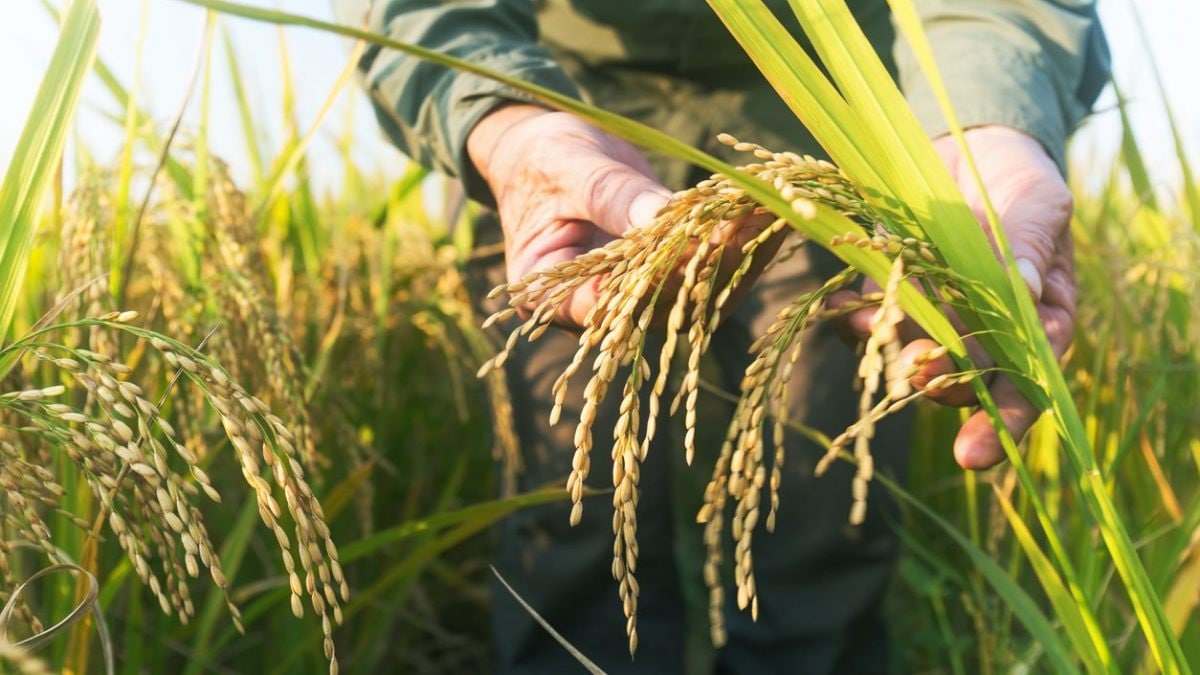
Imagine a future where humans live and work permanently on the Moon and Mars. One of the main obstacles to making this vision possible is ensuring an autonomous, sustainable, and nutritious diet. It is precisely from this challenge that Moon-Rice was born, an innovative Italian project that aims to cultivate a "dwarf" protein-rich rice, designed to thrive in hostile space environments. This is not science fiction, but cutting-edge science, born in the research laboratories of the Italian Space Agency (ASI) and some of Italy's leading universities.
Why You Need Special Rice to Let it Grow in Space
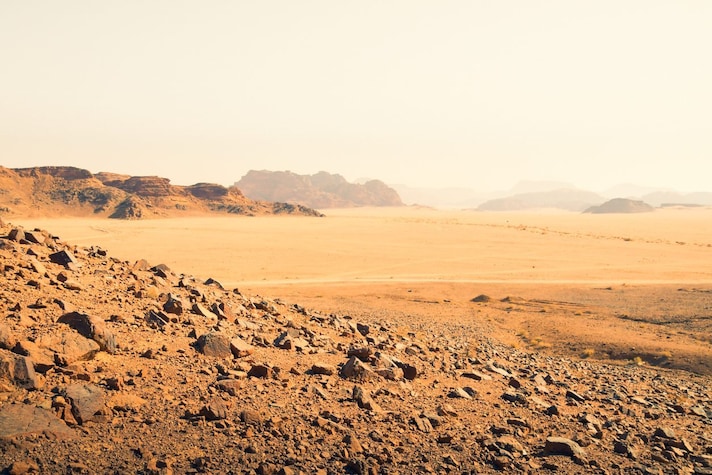
On space stations or in future lunar and Martian bases, space will be extremely limited and the environmental conditions will be very different from those on Earth: microgravity, high radiation, limited water availability, and inhospitable soil. In this context, growing plants as we know them today is impossible. The Moon-Rice project was born to meet these needs. Researchers are developing genetically modified rice varieties that are ultra-compact (about 10 cm tall) but rich in protein, capable of growing in small spaces and providing complete nutrition for astronauts.
The project is based on advanced genetic technologies, particularly CRISPR/Cas9 editing, used to reduce the plant's size without compromising its productivity. The goal is to obtain a rice with a high protein-to-starch ratio, thus improving its nutritional value. This type of rice would be particularly suitable for long-duration space missions, where every gram transported has a high cost and every cubic centimeter is precious. Another advantage is the rapid growth cycle: dwarf and fast-growing varieties can guarantee frequent harvests, increasing crew self-sufficiency.
Moon-Rice is coordinated by the Italian Space Agency, in collaboration with the Universities of Milan, Sapienza University of Rome, and Federico II University of Naples. Initial experiments are taking place in the laboratory, where germination, productivity, adaptability, and resistance to simulated stresses (such as reduced gravity or artificial soils) are being tested. This research was recently presented at the Society for Experimental Biology Annual Conference in Antwerp, garnering interest from the international scientific community.
Land-Based Applications Too
Although conceived for space exploration, the Moon-Rice project also has concrete implications for Earth. The compact and resistant varieties could be used in extreme environments, such as deserts, arctic zones, or in urban settings with indoor vertical farming. Furthermore, high-protein rice could become a valuable resource in areas affected by famine or nutritional poverty.
Moon-Rice is not just an agricultural project, but a symbolic and concrete step toward autonomous space missions and the colonization of new worlds. Ensuring fresh, nutritious, and directly cultivated food on-site means freeing ourselves from dependence on terrestrial supplies and making human presence in space sustainable.
Growing rice on the Moon or Mars is no longer a utopia: it is one of the most fascinating frontiers of biotechnology and agricultural engineering, with roots firmly planted—it's true to say—in Italian knowledge and creativity.
;Resize,width=767;)
