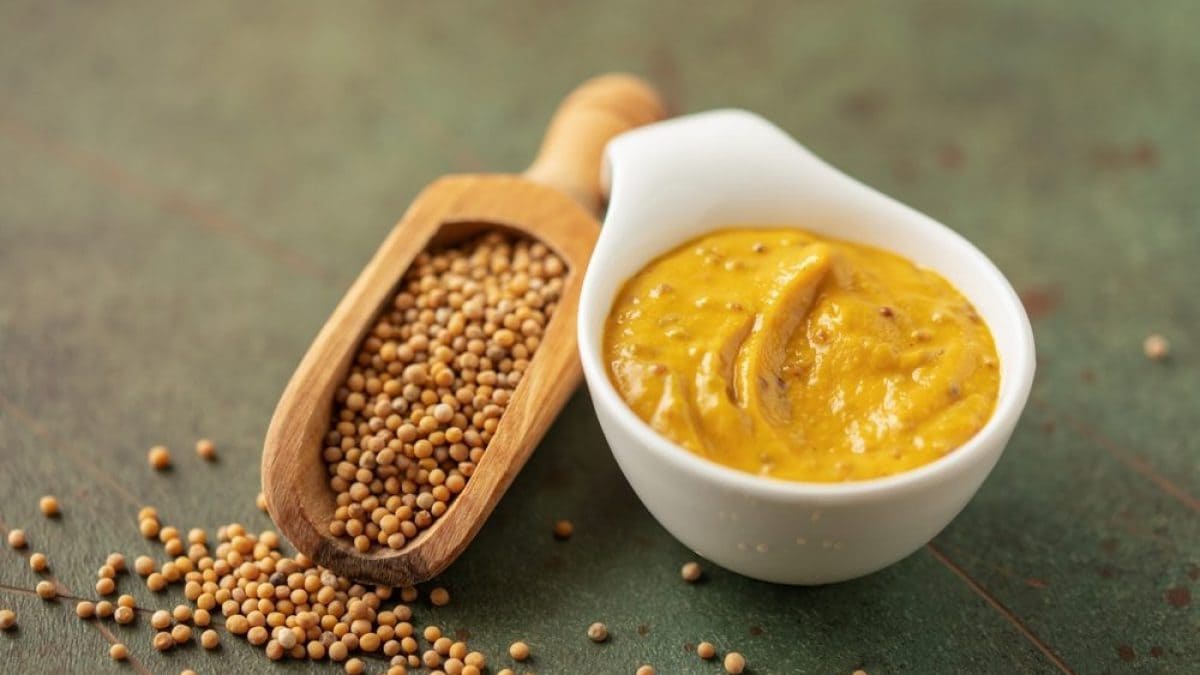
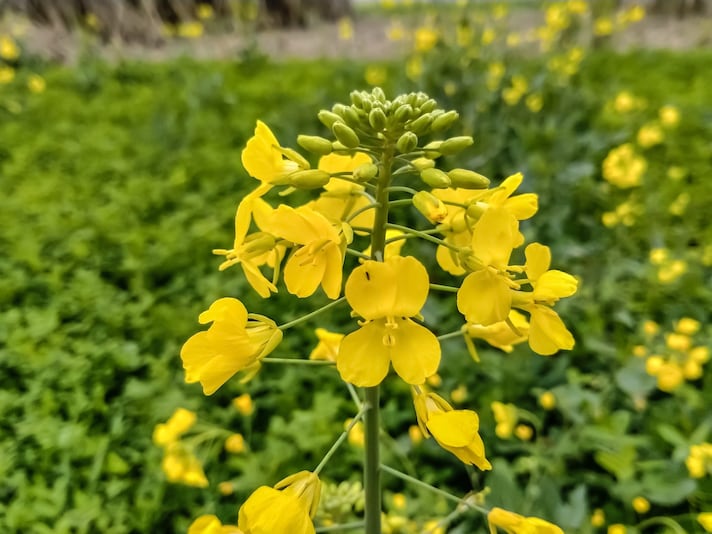
Mustard is one of the most beloved sauces due to its creaminess and unique, bitter flavor with distinctive spicy notes that vary in intensity depending on the ingredients it's mixed with. It's obtained by grinding the seeds of the mustard plant, a member of the Brassicaceae family. It grows wild along the Mediterranean coast and comes in several varieties: wild mustard, black mustard, brassica mustard, and white mustard.
Mustard seeds are famous precisely because they are the basic ingredient for the preparation of the sauce of the same name, but what you perhaps don't know is that the leaves and flowers of this plant can also be consumed as food: the leaves can be cooked and used in soups and stews, the flowers can be used raw to decorate dishes, the seeds are used both to produce the sauce and to obtain a sort of flour and the precious mustard oil.
All parts of the mustard plant are particularly beneficial thanks to their rich nutritional profile, although this isn't common knowledge because we're used to thinking of mustard as a simple sauce and nothing more. In reality, it's a low-calorie product, rich in vitamins, minerals, and full of antioxidants (also responsible for its spiciness) that positively impact the body in multiple ways. Here are all the properties of mustard and some contraindications to watch out for.
Mustard's Properties and Benefits
Mustard not only adds incredible depth of flavor to the dishes you use it in, but it also possesses a number of health benefits. The specific nutritional values vary depending on the variety of mustard used and the form in which you consume it (leaves, sauce, etc.), but in general each type has common characteristics: it is a low-calorie food, especially in sauce form – approximately 67 kcal per 100 grams of product – with a high content of monounsaturated and polyunsaturated fatty acids, compared to a very low presence of saturated acids. Mustard is very rich in vitamins, particularly those of groups A, C, and K, mineral salts, including calcium, magnesium, selenium, and iron, and antioxidants. Precisely because of its rich nutritional profile, mustard has always been used as a natural medicine, and its oil is still used today in Ayurvedic medicine.
1. Anti-Inflammatory Action
Mustard's best-known property is its anti-inflammatory effect, a quality largely due to its abundant minerals such as selenium and magnesium, but also copper and iron. As early as ancient Greece and Rome, the seeds were used to treat a variety of conditions such as joint pain, sore throats, and digestive problems, and even today, science says that regular consumption helps improve the functioning of the muscular, respiratory, and intestinal systems. Compresses made from mustard seeds and oil are also often used to relieve pain caused by arthritis and rheumatism.
2. Gastrointestinal Support
Mustard contains a good amount of fiber, which, combined with the anti-inflammatory properties mentioned above, is a great ally for gastrointestinal health. Mustard sauce itself is an effective stimulant of gastric juice production, thus promoting proper digestion. Furthermore, the seeds have a mild laxative effect and cleanse the body of toxic substances, promoting their elimination. Furthermore, fiber, thanks to the substance mucilage, creates a viscosity effect that is very useful for relieving constipation.
3. Improved Blood and Heart Health
Mustard's presence of omega-3 fatty acids, minerals, and other phytocompounds makes it highly beneficial for improving the function of the entire cardiovascular system. Regular consumption of mustard, in any form, promotes healthy heart function, stimulates blood circulation, helps regulate blood pressure, and stabilizes heart rate. Mustard's cardioprotective properties are also enhanced by its ability to bind bile acids, a property that helps reduce the body's absorption of dietary cholesterol. In this case, the leaves are the most beneficial parts because it is precisely here that the beneficial properties for the cardiovascular system, and particularly for regulating cholesterol, are concentrated.
4. Helps With Skin Health
It's precisely this concentration of anti-inflammatory, antibacterial, and antioxidant properties that give mustard its powerful skincare benefits, whether consumed as a food or used as a cosmetic oil. Mustard oil, in particular, has a highly hydrating effect, protects against sun damage, and is an excellent aid in treating conditions like acne, eczema, and psoriasis.
Mustard's Contraindications
Mustard is a highly concentrated product, not so much as a food product but rather when used, for example, as a seed or as an oil. In any case, even as a food, it should be consumed in moderation, and in some specific cases, it's best to eliminate it entirely, or at least consult your doctor for advice on its use and consumption. In particular, if you're intolerant or allergic to other Brassicaceae products (broccoli, cabbage, Brussels sprouts, cauliflower, turnips, etc.), avoid mustard as well, as it belongs to the same family.
Limit or avoid consumption of this product if you suffer from ulcers, gastritis, or gastric and intestinal problems in general, due to its stimulating effect on gastric juices, which could lead to increased symptoms. Consult your doctor if you are pregnant or breastfeeding, as there are not yet sufficient studies on the safety of mustard during these two phases, and if you are taking certain medications, as it may interact and conflict with some of the ingredients.
When using mustard seeds or mustard oil as poultices, massages, or cosmetic treatments, never do so on your own. Instead, seek the advice of an expert or have them applied by someone who specializes in natural remedies. Excessive or prolonged application, such as poultices and compresses, can have the opposite effect, causing irritation, skin lesions, swelling, and blisters.
;Resize,width=767;)
