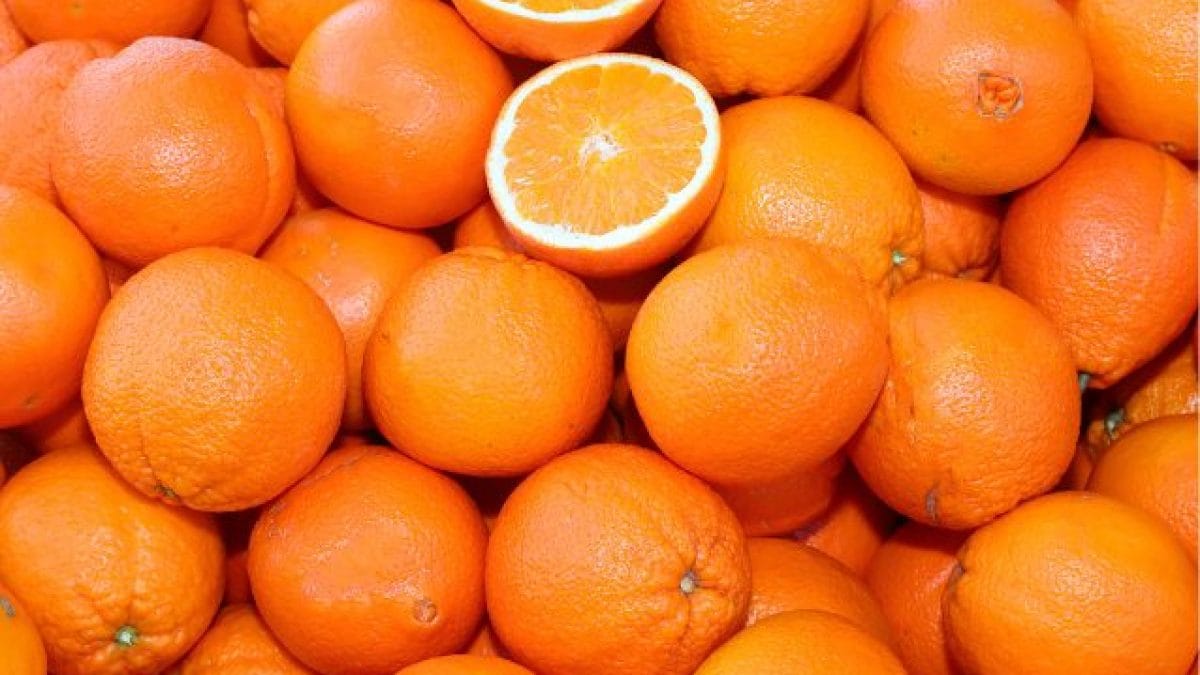
Do oranges really protect us? A nutrition biologist explains the nutritional properties and benefits of oranges, how much vitamin C they contain and what it is for. We will also discover why eating a whole orange is definitely better than drinking just the juice, why we should also eat the white part of the peel and what the symptoms of vitamin C deficiency are.
What is an Orange and The Main American Varieties
The orange is the result of a spontaneous crossbreeding that occurred over 4,000 years ago between the pomelo (Latin name Citrus maxima) and the mandarin (Citrus reticulata). The latter two, together with the citron, are the ancestors of all citrus fruits, likely originating millions of years ago in Southeast Asia, between India, China, and Indonesia, where wild species still grow today. It's as if nature, thousands of years ago, conducted a random genetic experiment, and we humans, much later, decided to continue that same "experiment" by selecting the tastiest, sweetest, and juiciest specimens.
There are many varieties of oranges, but in the U.S. the two best known are:
- Sweet “navel” oranges, such as Washington Navel or Cara Cara, are among the most popular varieties in the United States and are widely used for eating fresh thanks to their seedless flesh and balanced sweetness.
- Juicing oranges, like Valencia, are another staple in U.S. markets; they have a bright flavor and high juice content, which is why they’re commonly used for fresh orange juice.
- Blood oranges, including varieties such as Moro and Tarocco, are less common but increasingly popular in American grocery stores. Their deep red color comes from anthocyanins, natural antioxidant pigments that also give the fruit its distinctive berry-like flavor.
Oranges' Properties and Benefits
An orange is over 85% water, as we can clearly see from the amount of juice it produces. The remaining 15% contains simple sugars, fiber, vitamins, and numerous bioactive compounds that make it a true masterpiece.
We all know that oranges, and citrus fruits in general, contain vitamin C, probably the most famous vitamin in the world, which provides many benefits to our body:
- First of all, it is a powerful antioxidant: this means that it fights free radicals, i.e. those unstable molecules that form in our body due to stress, pollution, smoking, UV rays, and which accelerate cellular aging.
- But vitamin C doesn't just "put out fires": it also plays a key role in the construction of collagen, the protein that maintains healthy skin, tendons, bones, and blood vessels. Without vitamin C, we cannot produce collagen.
- Another superpower of vitamin C is that it improves the absorption of non-heme iron (found in legumes, vegetables, and grains). Therefore, pairing an orange or lemon juice with a plant-based source of iron can make a difference, especially for vegetarians and vegans.
- It's also good for the immune system, but not in the way it's often claimed: it doesn't magically prevent colds or flu. What it does do is support the normal functioning of the immune system and reduce the duration of symptoms when we're already sick.
In fact, it would be useful to take it always and not only when we have the first symptoms of a cold: two medium-sized oranges can contribute to the entire daily requirement.
What Happens if We Don't Take Vitamin C?
Vitamin C is so important that almost all living things can synthesize it on their own, except humans, who must consume it through food. Our ancestors likely had abundant vitamin C, which they obtained from vegetables and raw meat, but over time we lost the ability to produce it.
Without vitamin C, our body begins to fail and severe muscle and joint pain sets in, the gums begin to bleed, subcutaneous hemorrhages form, and if the vitamin C deficiency continues over time, death can result. These are the symptoms of scurvy, a disease caused precisely by a lack of vitamin C and already known to the ancient Egyptians over 3,000 years ago, but it was only during the great naval expeditions and the golden age of pirates that this disease became a plague. After Columbus's discovery of America, an era of exploration began that forced men to spend long periods on ships with a total lack of fresh foods such as fruits and vegetables rich in vitamin C. The situation was so tragic that in 1520 Magellan lost 80% of his crew during his expedition. It is estimated that between 1500 and 1800, scurvy killed at least two million sailors. But thanks to science, and a Dutch doctor named Lind, it was possible to understand that to prevent this type of disease, it was enough to eat fresh fruit, especially citrus fruits.
Is It Better to Have a Whole Orange or a Squeezed Orange?
An orange provides about 40-60 kcal (depending on its size), is very low in fat, and provides an excellent supply of fiber, especially if you eat it whole instead of juiced. In fact, much of the fiber is lost in juice.
If we squeeze an orange, we obtain water and sugars, eliminating the fiber that remains in the pulp. Fiber has several functions, including regulating the absorption of sugars and increasing the feeling of satiety. Therefore, a squeezed orange will fill us up much less than a whole fruit, which, moreover, requires chewing, and chewing also contributes to increasing the feeling of satiety.
Furthermore, to make a juice, we generally use multiple oranges, so increasing the calories and the amount of free sugars in our diet is much easier and quicker if we drink juice.
This isn't to say that drinking orange juice every now and then is absolutely forbidden; it's simply better to prefer the whole fruit, not because the vitamins evaporate or are destroyed in the juice, but because of the sugars and satiety. So yes, orange juice is good, but if you want to maximize its benefits… eat it in segments.
Here's Why You Should Never Discard Oranges' White Pith
The white, spongy part found on oranges, tangerines, and citrus fruits in general is called the pith and is usually discarded due to its bitter taste, even though it is edible and very rich in fiber. Eating it this way can be tricky, precisely because of its bitter notes, but we can use it in the kitchen with a few tricks. One thing you can also do is avoid removing every white thread from your citrus fruit when eating it: the important thing is to choose organic or untreated citrus fruits. The pith is also very rich in pectin, a natural thickener that gives jams their gelatinous consistency.
;Resize,width=767;)
