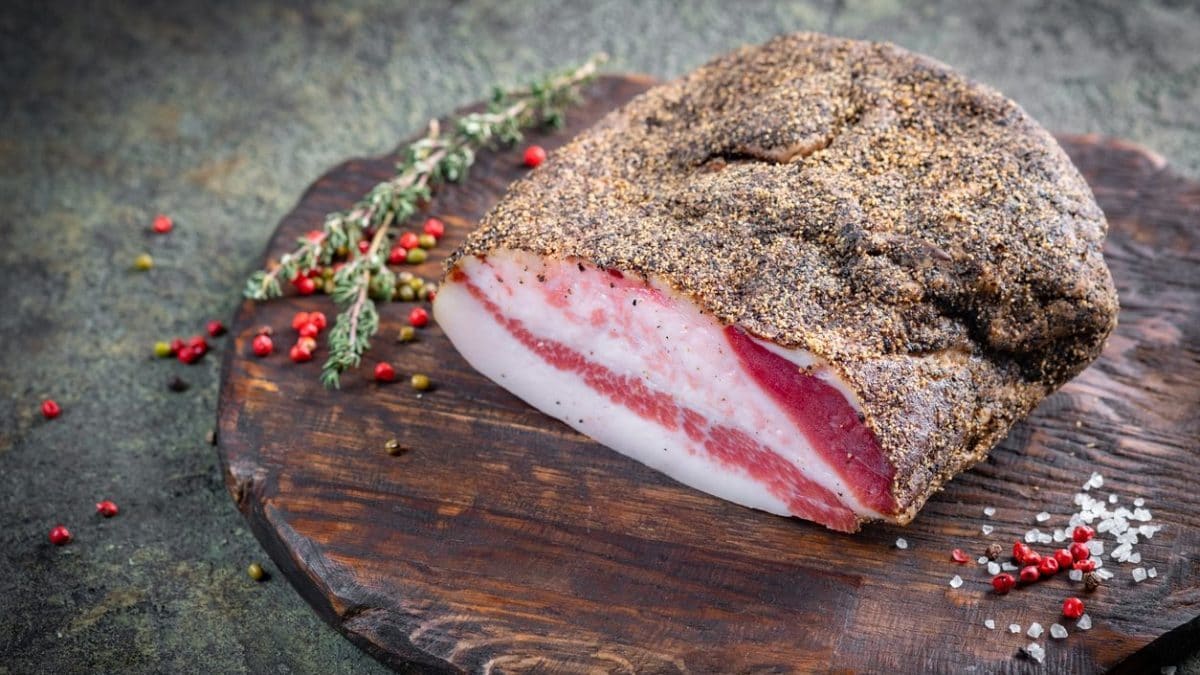
Lately—but actually, it's been a lifetime— pancetta and guanciale have been at the center of yet another debate over carbonara. This debate has also introduced a third inconvenience between the two contenders: bacon, used by American soldiers arriving in Italy during World War II and even by the New York Times more recently. In short, these three pork products simply can't seem to find peace. While similar, they differ in origin, cut, preparation, flavor, and culinary uses. Internationally, pancetta and bacon are more well-known and widespread, while guanciale is primarily based on the pork butchering tradition of Central Italy. Let's get to know them better… and choose your favorite.
Pancetta, Rustic and Versatile
Let's start with pancetta, one of the most popular Italian cured meats. It's a cut made from the ventral part of the pig (the belly, to be precise): it's a cut characterized by a considerable proportion of fat, which gives it its characteristic tenderness and ability to melt during cooking. After being trimmed, skinned, and removed from excess fat, it is treated with a mixture of salt and various spices (black pepper, cloves, garlic) and then left to cure for a period that can vary from 15 to 120 days. Some versions call for smoking or flavoring with chili pepper.

It can be found on the market sweet (natural), smoked, rolled or spread out, sliced, diced, or whole. Being a relatively inexpensive food, it is mainly used in cooking as an all-purpose flavoring, because it can enrich pasta dishes, vegetable-based side dishes (such as potatoes or peas), and sautéed dishes for soups or risottos. It is also used to keep meat or vegetables tender that would otherwise dry out in the oven, using it as a coating for chicken legs, fillets, asparagus, leeks, or as a coating for roulades. It is generally eaten cooked, but can also be eaten "raw" on platters, to stuff sandwiches, or to decorate tasty appetizers, such as stuffed figs.
Guanciale, A Traditional Cured Meat
Guanciale is a more prized cured meat than the previous one, as it comes from the cheek, throat, or neck of the pig, where we find more noble fat compared to the abdominal fat. The cut also includes the rind, the tough outer layer that is usually removed before use. The production process involves salting and seasoning similar to that of pancetta and a longer curing period, from a minimum of 30 days to 4-6 months. In the regions of central and southern Italy, guanciale is often included in the PAT (traditional agricultural food products), with stories of excellence from Umbria to Lazio, passing through Abruzzo and Campania. In the kitchen, it is highly appreciated for its strong flavor: the most classic way to enhance it is to brown it without adding oil or butter, until it becomes crunchy with the fat released which becomes the key element to give an unmistakable flavor and body to cult pasta dishes such as carbonara, amatriciana or gricia or specialities linked to the territory such as stewed broad beans and vignarola.

Bacon, the English Specialty
Here we come to bacon, which belongs to the Anglo-Saxon gastronomic tradition. To contextualize it, we could immediately define it as a close relative of cured pancetta. Unlike the latter, which is obtained exclusively from the belly of the pig, bacon also comes from other cuts, including the back, loin, throat, and flank, making it leaner in some variations. During the processing phases, it is usually treated with salt, spices, and sugar, dried for a few months, cooked in various ways, and then most often smoked: it cannot therefore be said that there is just one type, indeed, there are many , from the lean and meaty British black bacon, to the typical American side bacon, with layers of fat that run lengthwise across the slice.

Its flavor is more complex and intense than the soft, delicate flavor of pancetta: it's best eaten crunchy and dry in sandwiches (like club sandwiches), burgers, salads, or as a key ingredient in an English breakfast. It pairs perfectly with eggs (scrambled or Benedict) or as a wrap for meat, vegetables, or even shellfish. A tried-and-true pairing is with scallops, which create a perfect balance of saltiness and sweetness.
;Resize,width=767;)
