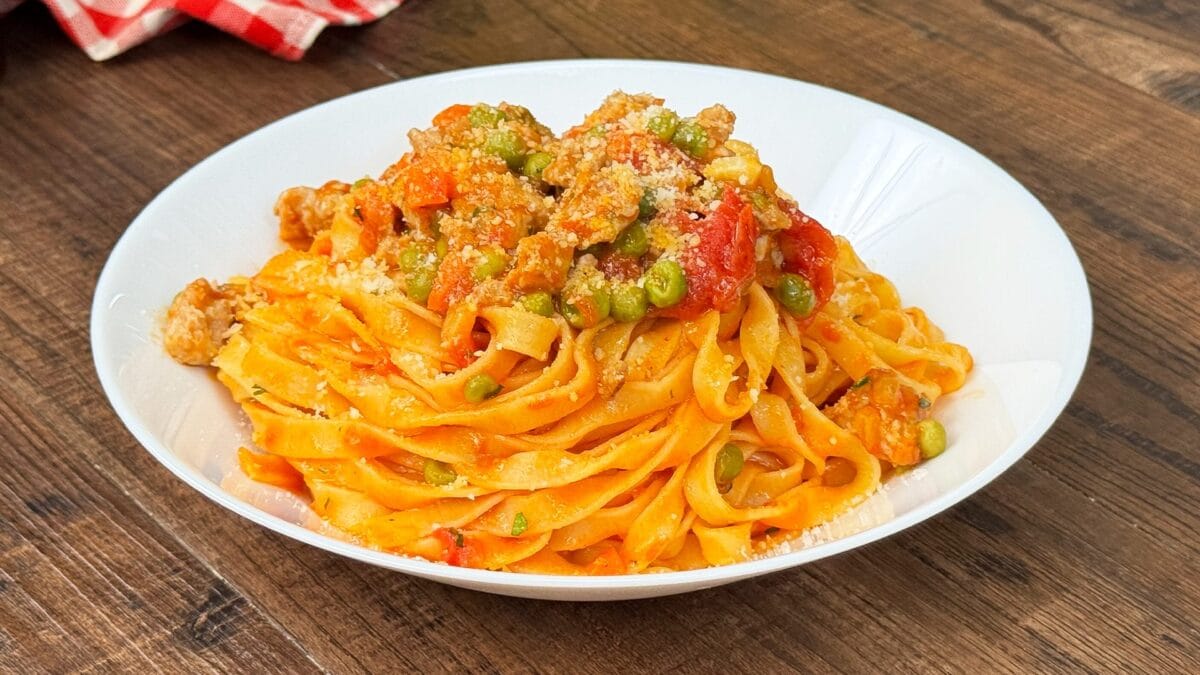
Rich, hearty, and packed with traditional Italian flavors, Pasta alla Burina is the kind of comforting dish that turns simple ingredients into a satisfying meal.
This rustic Italian pasta combines egg fettuccine with crumbled sausage, sweet green peas, tomatoes, and a flavorful base of onion, carrot, and garlic. A splash of white wine adds depth to the sauce, while grated Pecorino Romano brings everything together with its distinctive salty, savory flavor.
The sauce simmers for just 20 minutes, giving the sausage time to release its flavor into the tomatoes while the peas become tender.
Perfect for a family lunch or a cozy weeknight dinner, this Italian sausage and pea pasta is filling, flavorful, and wonderfully straightforward to prepare.
What Is Pasta alla Burina?
Pasta alla Burina is a rustic Italian pasta dish associated with the cooking traditions of Rome and the surrounding Lazio region.
The word burina evokes a country-style, unpretentious approach to cooking. Rather than referring to one strictly standardized recipe, the name is associated with hearty preparations made from accessible, flavorful ingredients.
Versions can vary, but sausage, peas, tomatoes, and grated cheese are a particularly satisfying combination.
This recipe uses egg fettuccine, which pair beautifully with the chunky sauce. The sausage is browned with aromatic vegetables, deglazed with white wine, and simmered with peeled tomatoes and peas.
Unlike creamy sausage pasta recipes, Pasta alla Burina gets its richness from the meat, olive oil, tomato sauce, and Pecorino Romano.
The result is a robust, comforting dish that celebrates the simplicity of traditional Italian home cooking.
Why Everyone Will Love This Recipe
The combination of sausage and peas is what makes this pasta so satisfying. The sausage adds richness, while the peas provide little bursts of sweetness that balance the savory tomato sauce.
Egg fettuccine are particularly good here because their broad, flat shape catches the sauce and small pieces of sausage.
Another advantage is the simple preparation. The sauce comes together in one pan, using everyday ingredients such as canned tomatoes, frozen peas, onion, and carrot.
And the finishing touch makes a difference: freshly grated Pecorino Romano adds a sharp, salty flavor that complements the richness of the sausage.
Tips for the Best Pasta alla Burina
- Brown the sausage properly. Let the crumbled sausage develop some golden color before adding the wine. This builds a deeper, more savory flavor.
- Use good-quality peeled tomatoes. Crush them before adding them to the pan so they break down into a rich, evenly textured sauce.
- Save some pasta cooking water. A small splash helps the sauce cling to the fettuccine without becoming dry.
- Add Pecorino Romano at the end. Finishing the pasta with freshly grated cheese preserves its bold flavor and helps create a delicious coating.
Frequently Asked Questions
What Does Pasta alla Burina Mean?
Alla burina roughly suggests a rustic or country-style preparation in Italian. In this context, it describes a hearty pasta made with simple, flavorful ingredients rather than an elaborate sauce.
What Kind of Sausage Is Best for Pasta alla Burina?
Fresh Italian pork sausage works particularly well. Mild sausage allows the other ingredients to stand out, while spicy Italian sausage adds a little heat.
Remove the casings before crumbling the sausage into the pan.
Can Fresh Peas Be Used Instead of Frozen Peas?
Yes. Fresh peas can replace frozen peas, although their cooking time may vary depending on their size and tenderness. The sauce should simmer until the peas are cooked through.
Can Another Pasta Shape Be Used?
Absolutely. Egg fettuccine are delicious with this sauce, but tagliatelle, rigatoni, penne, or pappardelle also work well. Short pasta shapes are particularly good at catching the sausage pieces and peas.
Can Parmesan Replace Pecorino Romano?
Yes. Parmesan has a milder, nuttier flavor than Pecorino Romano, but it's a good alternative if that's what is available.
For a more traditional Roman-style finish, Pecorino Romano is the preferred choice.
What Can Be Served With Pasta alla Burina?
Because this pasta is already quite hearty, a simple green salad or a side of roasted vegetables makes an excellent accompaniment.
Crusty bread is also delicious for soaking up any tomato sauce left on the plate.
How to Store
Allow leftover Pasta alla Burina to cool slightly, then transfer it to an airtight container and refrigerate promptly.
It will keep in the refrigerator for 3 to 4 days.
Reheat the pasta in a skillet over medium-low heat with a splash of water to loosen the sauce. Stir gently until thoroughly heated.
For the best texture, avoid overheating the fettuccine, as they can become too soft.
If preparing the recipe ahead of time, storing the sauce separately from the pasta will give better results.
How to Freeze
The sausage, tomato, and pea sauce freezes better than the finished pasta.
Allow the sauce to cool completely, then transfer it to freezer-safe containers or bags, leaving a little space for expansion.
Freeze for up to 3 months for the best quality.
Thaw overnight in the refrigerator, then reheat gently in a saucepan until thoroughly hot. Cook fresh fettuccine separately and toss them with the warmed sauce before serving.
Freezing the already dressed pasta is possible, but the egg fettuccine may become softer after thawing and reheating.
Ingredients
How to make Pasta alla Burina: Rustic Italian Sausage and Pea Pasta

Begin by preparing the vegetables. Peel the carrot and onion, then finely chop them together with the garlic clove to create an aromatic base for the sauce.
Begin by preparing the vegetables. Peel the carrot and onion, then finely chop them together with the garlic clove to create an aromatic base for the sauce.

Pour a drizzle of extra-virgin olive oil into a large skillet and heat it over medium heat.
Pour a drizzle of extra-virgin olive oil into a large skillet and heat it over medium heat.

Add the chopped carrot, onion, and garlic, then sauté gently until the vegetables begin to soften and become fragrant.
Add the chopped carrot, onion, and garlic, then sauté gently until the vegetables begin to soften and become fragrant.

Remove the casings from the Italian sausages and crumble the meat directly into the skillet. Break it into small pieces with a wooden spoon and cook for several minutes, stirring occasionally, until the sausage is nicely browned.
Remove the casings from the Italian sausages and crumble the meat directly into the skillet. Break it into small pieces with a wooden spoon and cook for several minutes, stirring occasionally, until the sausage is nicely browned.

Pour in the dry white wine and let it simmer until most of the liquid has evaporated. This helps lift the flavorful browned bits from the bottom of the pan.
Pour in the dry white wine and let it simmer until most of the liquid has evaporated. This helps lift the flavorful browned bits from the bottom of the pan.

Meanwhile, crush the canned peeled tomatoes with a fork or your hands, then add them to the skillet along with their juices.
Meanwhile, crush the canned peeled tomatoes with a fork or your hands, then add them to the skillet along with their juices.

Stir in the frozen peas, season lightly with salt, and mix everything together. Remember that the sausage and Pecorino Romano are already savory, so additional salt should be used sparingly.
Stir in the frozen peas, season lightly with salt, and mix everything together. Remember that the sausage and Pecorino Romano are already savory, so additional salt should be used sparingly.

Reduce the heat and let the sauce simmer gently for approximately 20 minutes, stirring occasionally. The tomatoes should break down into a rich sauce, the peas should become tender, and the sausage should be completely cooked.
Reduce the heat and let the sauce simmer gently for approximately 20 minutes, stirring occasionally. The tomatoes should break down into a rich sauce, the peas should become tender, and the sausage should be completely cooked.

While the sauce simmers, bring a large pot of salted water to a boil.
Add the dried egg fettuccine and cook according to the package instructions until al dente. Before draining, reserve a small cup of pasta cooking water.
While the sauce simmers, bring a large pot of salted water to a boil.
Add the dried egg fettuccine and cook according to the package instructions until al dente. Before draining, reserve a small cup of pasta cooking water.

Transfer the drained fettuccine directly into the skillet with the sausage, tomato, and pea sauce.
Transfer the drained fettuccine directly into the skillet with the sausage, tomato, and pea sauce.

Toss everything together over low heat until the pasta is evenly coated. Add a splash of reserved pasta cooking water if necessary to loosen the sauce and help it cling to the fettuccine.
Toss everything together over low heat until the pasta is evenly coated. Add a splash of reserved pasta cooking water if necessary to loosen the sauce and help it cling to the fettuccine.

Remove the skillet from the heat and finish with freshly chopped parsley and a generous sprinkling of grated Pecorino Romano.
Toss once more, then divide the Pasta alla Burina among serving plates.
Remove the skillet from the heat and finish with freshly chopped parsley and a generous sprinkling of grated Pecorino Romano.
Toss once more, then divide the Pasta alla Burina among serving plates.

Serve immediately, while the pasta is hot and the rustic sausage and pea sauce is beautifully coating every strand.
Serve immediately, while the pasta is hot and the rustic sausage and pea sauce is beautifully coating every strand.


