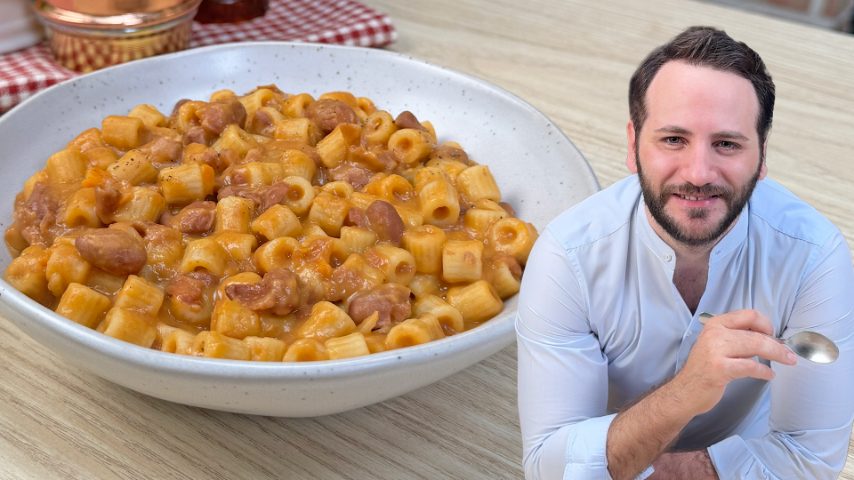
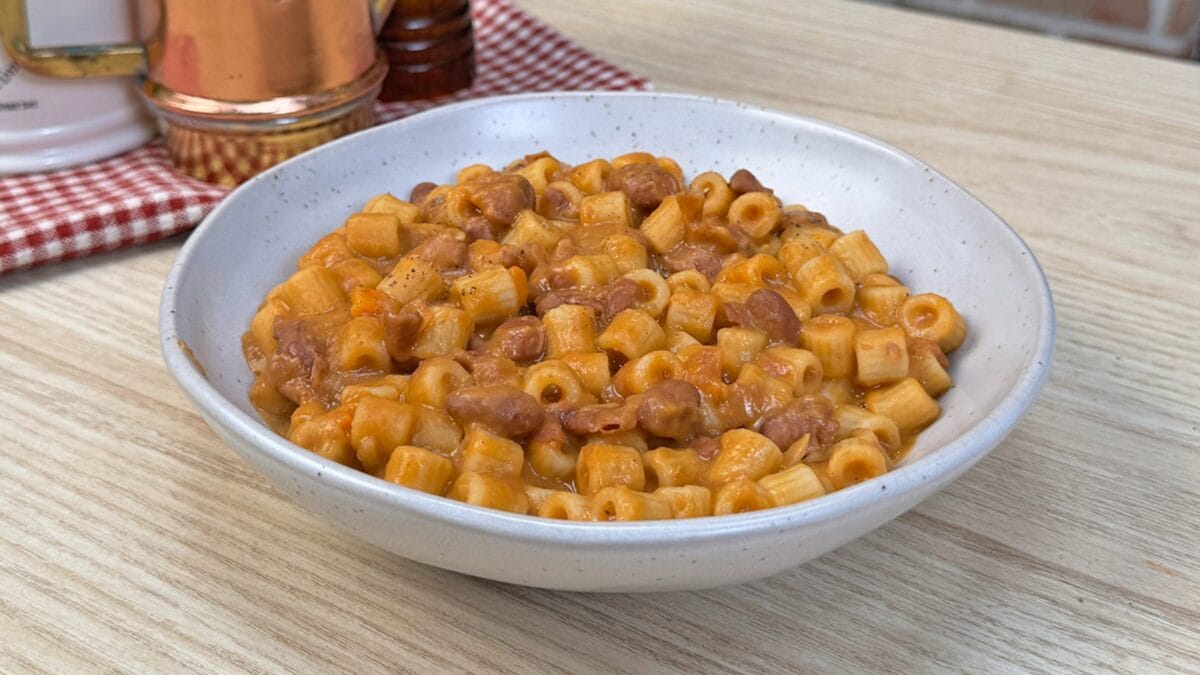
Few dishes capture the warmth of Italian home cooking quite like pasta e fagioli. Made with simple pantry ingredients, this comforting combination of pasta and beans transforms into a rich, satisfying meal that's especially welcome on cold days.
This pasta e fagioli recipe brings together borlotti beans, ditaloni pasta, tomato passata, and a fragrant base of onion, carrot, celery, garlic, bay leaves, and rosemary.
The secret to its creamy texture is surprisingly simple: a small portion of the cooked beans is blended and stirred back into the pot. The result is a thick, velvety broth that coats every piece of pasta.
And because the pasta cooks directly with the beans, it absorbs all those delicious flavors while releasing starch that makes the dish even creamier.
What Is Pasta e Fagioli?
Pasta e fagioli literally means pasta and beans in Italian.
It's a traditional dish found throughout Italy, with countless regional and family variations. Some versions are brothy and soup-like, while others are thick enough to eat almost like a creamy pasta dish.
The type of beans can also vary. Borlotti beans, known as cranberry beans in the United States, are particularly popular because of their tender texture and rich, slightly nutty flavor.
Other versions use cannellini beans or different local varieties.
The pasta is usually small, making it easy to scoop up with the beans and broth. Ditalini, ditaloni, and other short pasta shapes are common choices.
This version is meatless, tomato-based, and naturally creamy, with the pasta cooked directly in the bean mixture.
Why Everyone Will Love This Recipe
This Italian pasta and bean soup is the definition of comfort food. It's warm, filling, and full of savory flavor, yet made with affordable, everyday ingredients.
The borlotti beans give the dish a naturally creamy texture and make it satisfying without meat. Tomato passata adds a gentle sweetness and a little acidity, while rosemary and bay leaves provide a wonderfully aromatic finish.
Another reason to love it? Everything cooks in one pot. There's no need to boil the pasta separately, and the cooking liquid becomes part of the sauce.
It's also easy to adjust the consistency. Add a little more hot water for a soupier pasta e fagioli, or keep it thick and creamy for a more traditional, spoonable pasta dish.
Tips for Making the Best Pasta e Fagioli
- Blend only some of the beans. This creates a creamy base while leaving plenty of whole borlotti beans for texture.
- Add hot water gradually. The pasta absorbs liquid as it cooks, so keep extra hot water nearby and add it whenever the mixture becomes too thick.
- Stir frequently during the final cooking stage. Pasta cooked directly in a thick bean mixture can stick to the bottom of the pot if left unattended.
- Serve as soon as the pasta is ready. Pasta e fagioli continues to thicken as it sits because the pasta absorbs more liquid.
Frequently Asked Questions
What Kind of Beans Are Best for Pasta e Fagioli?
Borlotti beans are an excellent choice because they have a creamy texture and a slightly nutty flavor. Cannellini beans are another popular option and can be used if borlotti beans are unavailable.
Is Pasta e Fagioli a Soup or a Pasta Dish?
It can be both. Some versions have plenty of broth and are served as soup, while others are thick and creamy. This recipe falls somewhere in between, with a rich bean-based sauce that coats the pasta.
What Is the Difference Between Pasta e Fagioli and Minestrone?
Pasta e fagioli focuses on pasta and beans, usually with a relatively simple aromatic base. Minestrone typically contains a wider variety of vegetables and may include pasta, rice, or beans.
Can You Make Pasta e Fagioli Without Tomatoes?
Yes. Many traditional Italian versions are made without tomatoes. They rely on beans, aromatics, herbs, and cooking liquid to create a creamy, flavorful dish. This recipe uses tomato passata for added depth and color.
Can You Use Canned Beans for Pasta e Fagioli?
Absolutely. Canned borlotti or cranberry beans work well. Drain and rinse them before adding them to the pot, just as you would with other precooked beans.
Why Is My Pasta e Fagioli Too Thick?
The pasta continues to absorb liquid during cooking and even after the heat is turned off. Stir in a little hot water or vegetable broth until the dish reaches your preferred consistency.
How to Store
Allow leftover pasta e fagioli to cool slightly, then transfer it to an airtight container and refrigerate within 2 hours.
Store in the refrigerator for up to 3–4 days.
The pasta will continue to absorb liquid as it sits, so the mixture will become considerably thicker.
To reheat, place the desired portion in a saucepan over medium-low heat and add a splash of water or broth. Stir gently until the pasta and beans are heated through.
Reheat leftovers to 165°F (74°C).
How to Freeze
Pasta e fagioli can be frozen, although the pasta may become softer after thawing and reheating.
For the best texture, freeze the bean and tomato base before adding the pasta. Allow it to cool, transfer it to freezer-safe containers, and freeze for up to 3 months for the best quality.
When ready to serve, thaw the base in the refrigerator, bring it to a simmer, and cook fresh pasta directly in the mixture, adding hot water as needed.
If freezing the finished dish, divide it into individual portions and expect the pasta to be softer after reheating.
Ingredients
How to make Pasta e Fagioli
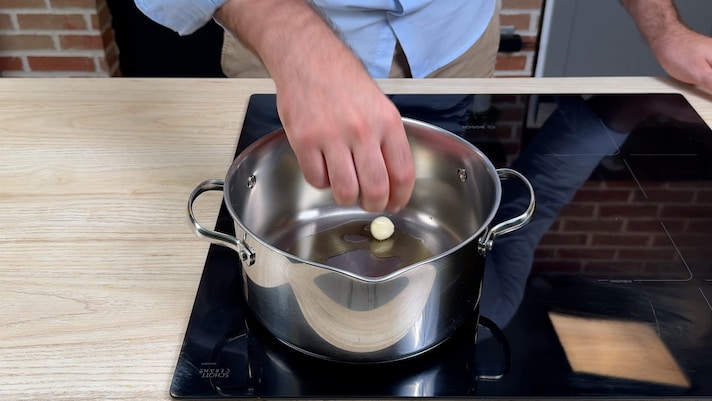
Pour the extra virgin olive oil into a large, heavy-bottomed pot and place it over medium-low heat.
Add the whole garlic clove and let it sauté gently for approximately 2 minutes, allowing it to flavor the oil without burning.
Pour the extra virgin olive oil into a large, heavy-bottomed pot and place it over medium-low heat.
Add the whole garlic clove and let it sauté gently for approximately 2 minutes, allowing it to flavor the oil without burning.
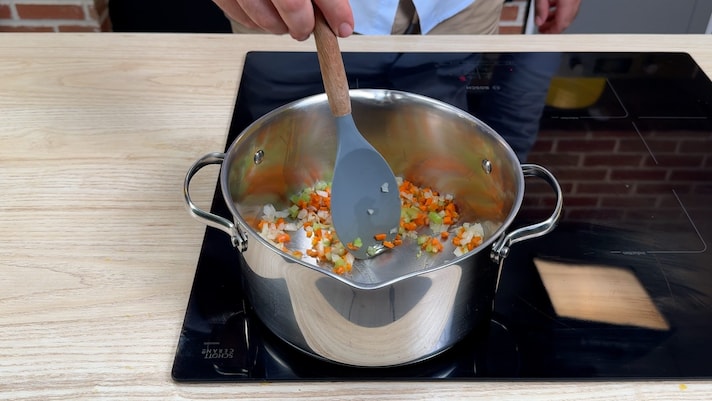
Add the chopped onion, celery, and carrot to the pot. Stir well and cook for 5–7 minutes, until the vegetables soften and become fragrant.
The vegetables should cook gently rather than brown aggressively. This helps create a balanced, savory base for the pasta e fagioli.
Add the chopped onion, celery, and carrot to the pot. Stir well and cook for 5–7 minutes, until the vegetables soften and become fragrant.
The vegetables should cook gently rather than brown aggressively. This helps create a balanced, savory base for the pasta e fagioli.
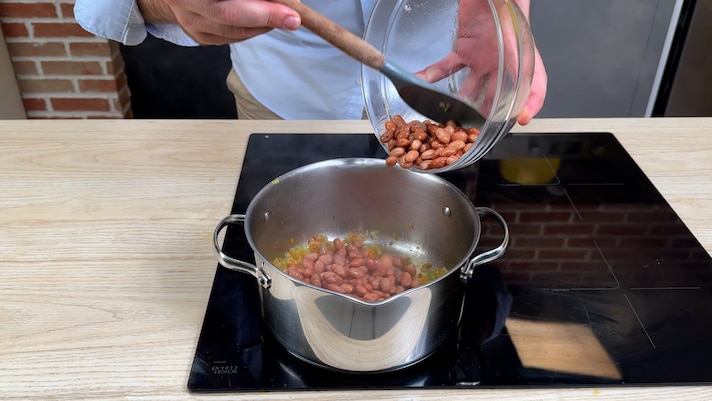
Add the cooked borlotti beans, making sure they have been drained and rinsed.
Stir them into the softened vegetables, then add the bay leaves and a sprig of fresh rosemary.
Add the cooked borlotti beans, making sure they have been drained and rinsed.
Stir them into the softened vegetables, then add the bay leaves and a sprig of fresh rosemary.
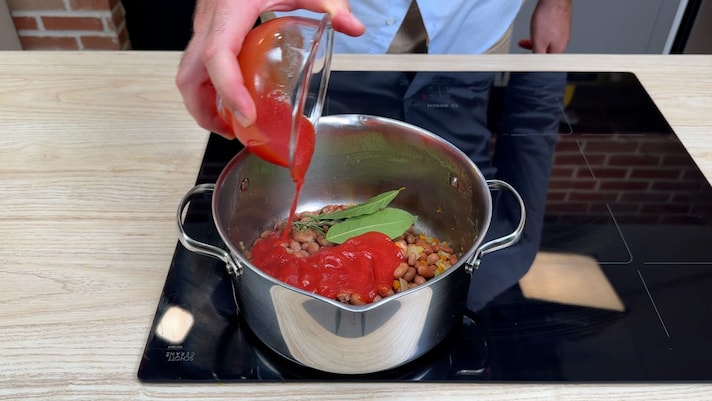
Let everything cook together for a couple of minutes so the beans begin absorbing the flavors of the aromatics.
Pour in the tomato passata and stir until the beans are evenly coated.
Let everything cook together for a couple of minutes so the beans begin absorbing the flavors of the aromatics.
Pour in the tomato passata and stir until the beans are evenly coated.
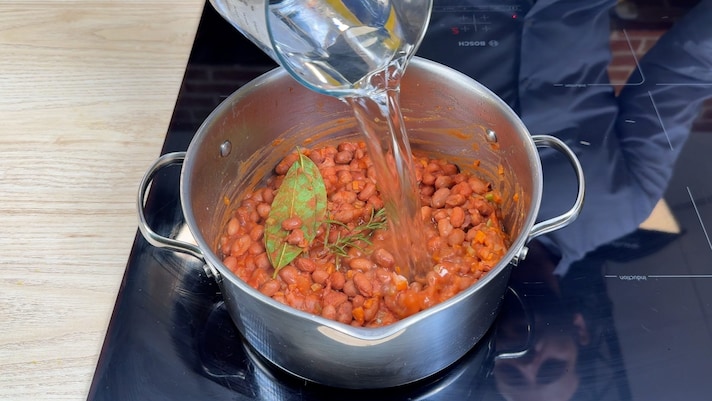
Add enough water to cover the beans, then bring the mixture to a gentle simmer.
Reduce the heat and cook for approximately 15–20 minutes, allowing the tomato, vegetables, herbs, and beans to blend into a flavorful base.
Stir occasionally and add a little more water if the mixture becomes too dry.
Add enough water to cover the beans, then bring the mixture to a gentle simmer.
Reduce the heat and cook for approximately 15–20 minutes, allowing the tomato, vegetables, herbs, and beans to blend into a flavorful base.
Stir occasionally and add a little more water if the mixture becomes too dry.
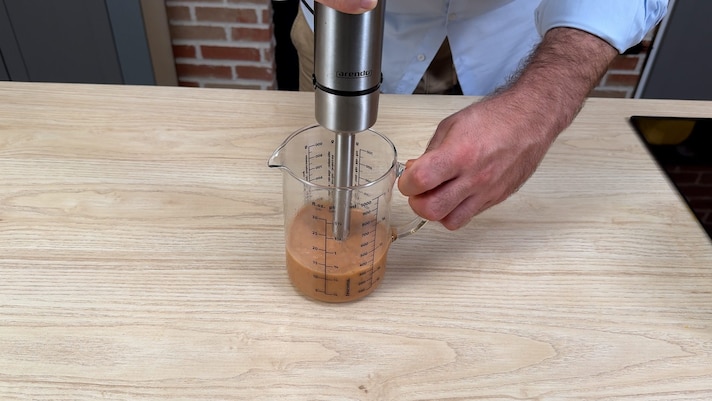
Take out a small portion of the beans along with a little cooking liquid and transfer them to a tall container.
Use an immersion blender to blend the beans until smooth and creamy.
This step is what gives the finished pasta e fagioli its signature velvety texture without needing cream, butter, or flour.
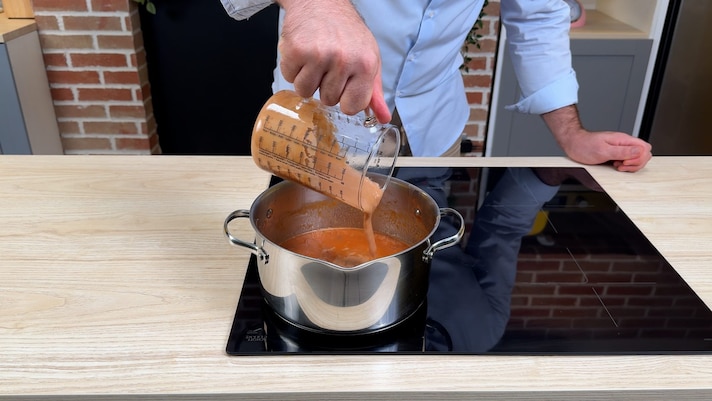
Pour the blended bean mixture back into the pot and stir thoroughly to combine it with the remaining whole beans.
The liquid should now look slightly thicker and creamier.
Pour the blended bean mixture back into the pot and stir thoroughly to combine it with the remaining whole beans.
The liquid should now look slightly thicker and creamier.
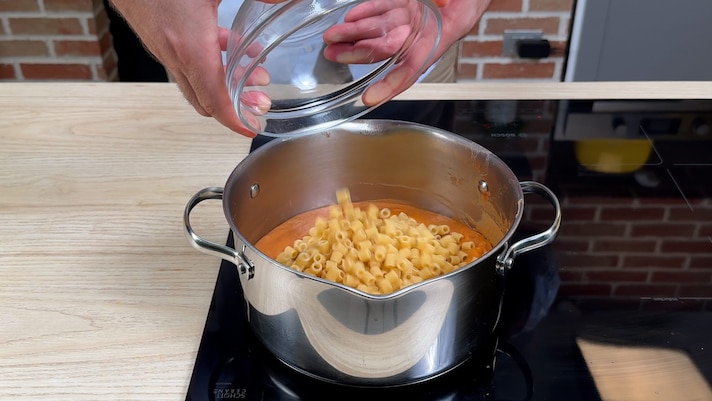
Add the ditaloni rigati pasta directly to the pot, stirring gently to distribute it evenly among the beans.
Add the ditaloni rigati pasta directly to the pot, stirring gently to distribute it evenly among the beans.
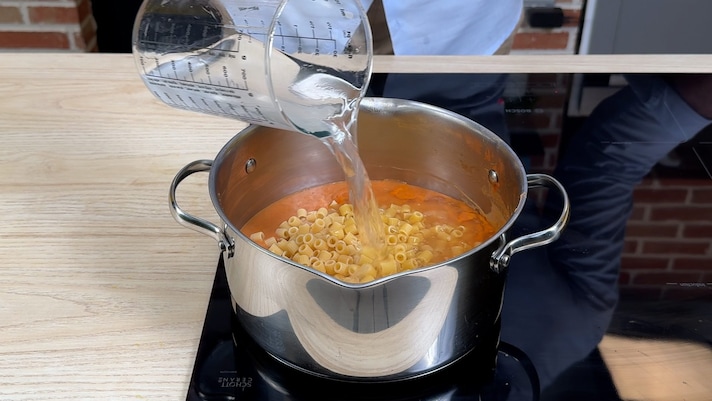
Pour in enough hot water to allow the pasta to cook, keeping the mixture loose enough to stir comfortably.
Pour in enough hot water to allow the pasta to cook, keeping the mixture loose enough to stir comfortably.
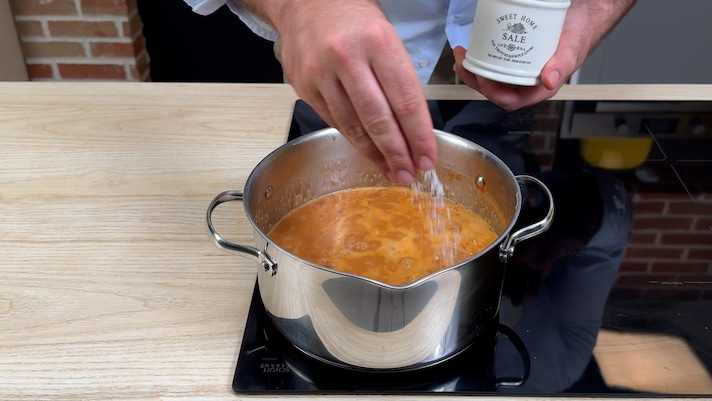
Season with fine salt and freshly ground black pepper, adjusting the amounts according to the saltiness of the cooked beans and your personal preference. As the pasta cooks, it will absorb the flavorful bean broth and release starch, naturally thickening the dish. Keep some extra hot water nearby and add it a little at a time whenever the mixture becomes too dense.
Season with fine salt and freshly ground black pepper, adjusting the amounts according to the saltiness of the cooked beans and your personal preference. As the pasta cooks, it will absorb the flavorful bean broth and release starch, naturally thickening the dish. Keep some extra hot water nearby and add it a little at a time whenever the mixture becomes too dense.
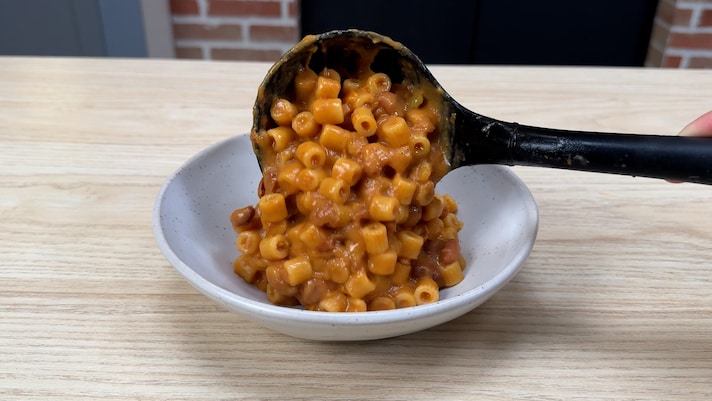
Spoon the warm Italian pasta and bean soup into individual bowls, making sure each portion contains plenty of pasta, whole borlotti beans, and creamy broth.
Spoon the warm Italian pasta and bean soup into individual bowls, making sure each portion contains plenty of pasta, whole borlotti beans, and creamy broth.

Serve immediately while the texture is at its best.
Serve immediately while the texture is at its best.


