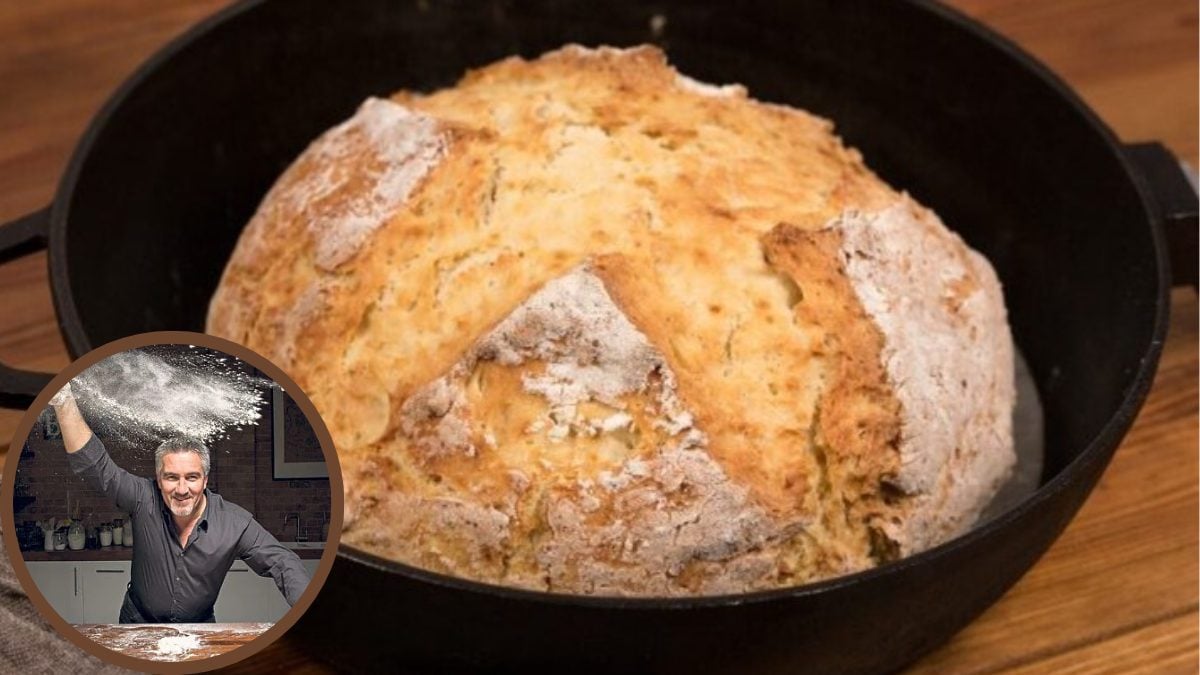
Paul Hollywood’s Irish Soda Bread is a beautifully simple loaf that relies on just a handful of ingredients and no yeast. Instead, bicarbonate of soda reacts with buttermilk to create a light, tender crumb and a rustic crust.
Traditional Irish soda bread is known for its quick preparation and hearty texture. This version combines white flour and wholemeal flour, giving the loaf both softness and nutty depth. It’s perfect served warm with butter, alongside soups and stews, or toasted the next day for breakfast.
Why Everyone Will Love This Recipe
- No yeast required: The bread rises with baking soda and buttermilk.
- Quick to make: Ready in about 40 minutes from start to finish.
- Rustic flavor: Wholemeal flour adds nutty depth.
- Perfect with meals: Ideal with soups, stews, or cheese boards.
- Beginner-friendly: One of the easiest homemade breads.
It’s homemade bread without the fuss of kneading or long rising times.
What Is Irish Soda Bread?
Irish soda bread is a traditional quick bread from Ireland made with simple pantry ingredients: flour, salt, baking soda, and buttermilk.
Instead of yeast, the bread uses bicarbonate of soda as the leavening agent. When combined with acidic buttermilk, it creates bubbles that help the dough rise. The distinctive cross cut into the top of the loaf serves both practical and traditional purposes. It allows heat to penetrate the dough during baking and is often said in folklore to “let the fairies out.” The result is a rustic loaf with a crisp crust and soft interior.
Baking Tips for the Best Soda Bread
- Work quickly once the buttermilk is added. The soda begins reacting immediately.
- Don’t overwork the dough. Too much handling can make the bread dense.
- Use a sharp knife for the cross. Deep cuts help the loaf bake evenly.
- Check for doneness. The loaf should sound hollow when tapped underneath.
- Serve warm if possible. Fresh soda bread is especially delicious right out of the oven.
Frequently Asked Questions
Why is there a cross cut in soda bread?
The cross allows the heat to reach the center of the loaf and helps the bread bake evenly.
Can I make soda bread without buttermilk?
Yes. You can substitute with milk mixed with 1 tablespoon of lemon juice or vinegar.
What flour works best for soda bread?
A mix of white flour and wholemeal flour gives the best balance of flavor and texture.
Why is my soda bread dense?
Overworking the dough or using too little buttermilk can cause dense bread.
Can I add other ingredients?
Yes. Raisins, seeds, oats, or herbs are common additions.
How should soda bread be served?
It’s delicious with butter, jam, cheese, or hearty soups and stews.
How to Store Irish Soda Bread
Wrap the cooled loaf in foil or store it in an airtight container at room temperature for up to 2 days. For best results, slice and toast leftovers.
How to Freeze Irish Soda Bread
Soda bread freezes well. Slice the cooled loaf and store it in a freezer bag for up to 2 months. Toast slices directly from frozen.
Ingredients
- 250g plain white flour
- 250g plain wholemeal flour
- 1 tsp salt
- 1 tsp bicarbonate of soda
- About 400 ml buttermilk
How to Make Paul Hollywood's Irish Soda Bread
- Preheat the oven to 200°C / Gas Mark 6.
- Line a baking tray with baking parchment.
- In a large bowl, combine white flour, wholemeal flour, salt and bicarbonate of soda. Mix well.
- Make a well in the center of the flour mixture and pour in half the buttermilk.
- Using your fingers or a round-bladed knife, draw the flour into the liquid.
- Gradually add more buttermilk until a soft, sticky dough forms. You may not need the full amount.
- Tip the dough onto a lightly floured surface.
- Quickly shape it into a round loaf, then flatten slightly with the palm of your hand.
- Place the dough on the prepared baking tray.
- Using a sharp knife, cut a deep cross into the top, almost reaching the base.
- Dust the loaf lightly with flour.
- Bake for about 30 minutes, or until the loaf is golden brown and sounds hollow when tapped underneath.
- Transfer the bread to a wire rack and allow it to cool slightly.
- Serve the bread fresh on the day it’s baked, or toast slices the next day.
;Resize,width=767;)
