
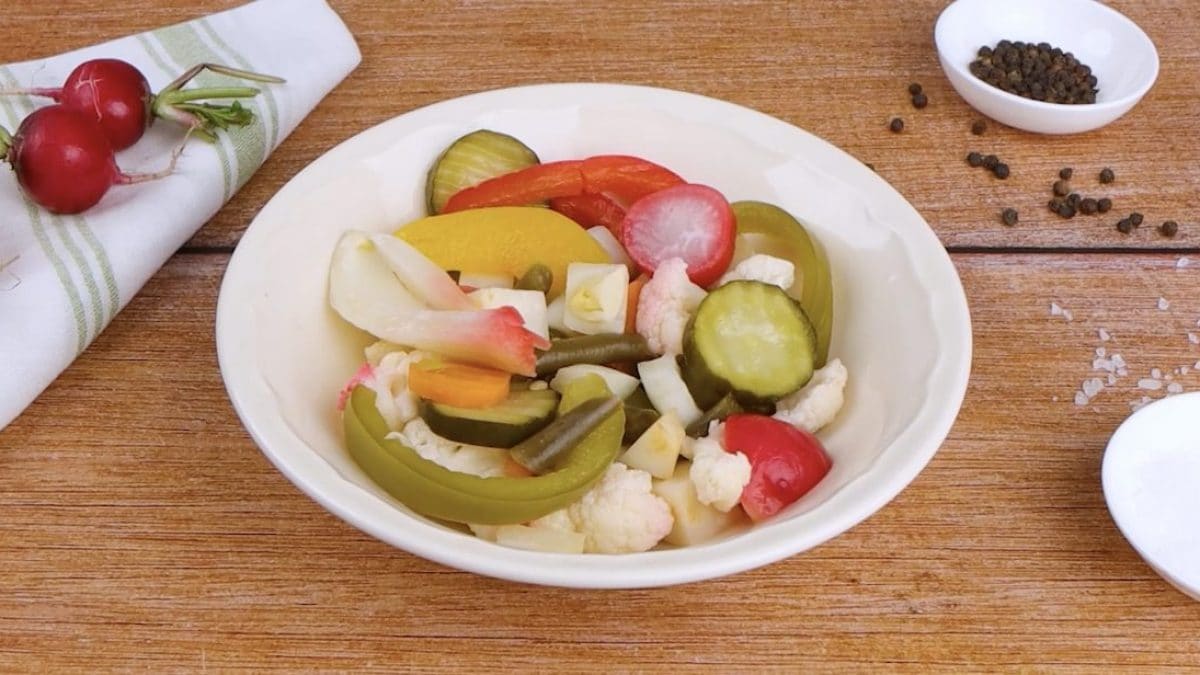
Crunchy, colorful, and bursting with tangy flavor, pickled vegetables are the perfect way to elevate any appetizer spread. This mix combines the natural sweetness of carrots, the crispness of cucumbers, the subtle bite of radishes, and the aromatic charm of fennel and celery. These ingredients are all infused in a lightly spiced, wine-and-vinegar brine. Pickled vegetables are ideal for parties, as a side dish, or even as a topping for sandwiches and salads.
What are Pickled Vegetables?
Pickled vegetables are fresh vegetables preserved in a seasoned acidic liquid, typically vinegar, sometimes with wine and sugar, which enhances both flavor and shelf life. The process allows vegetables to absorb the tangy, spiced liquid, resulting in a crisp, zesty, and aromatic snack.
Traditionally, pickling was a way to store vegetables for the winter, but today it’s appreciated for the unique textures and flavors it brings to modern cuisine. This colorful medley blends both classic and inventive elements, turning simple vegetables into a gourmet appetizer.
Pro Tips for the Best Pickled Vegetables
- Use fresh, firm vegetables to ensure they remain crisp after pickling.
- Sterilize your jars before filling them to prolong shelf life and avoid spoilage.
- Don’t rush the cooking process, brief boiling in stages preserves texture and prevents over-softening.
- Allow the pickled vegetables to rest for at least 24 hours in the refrigerator for the flavors to fully develop.
- Customize your spices by adding chili flakes or mustard seeds for an extra kick.
Frequently Asked Questions
How long do pickled vegetables last?
When stored in sterilized jars in the refrigerator, pickled vegetables can last up to 4 weeks. Always check for unusual odors or mold before consuming. Properly sealed jars can sometimes extend shelf life further.
Can I use other vegetables for pickling?
Absolutely, Pickling is versatile. You can include broccoli, zucchini, or even cherry tomatoes, adjusting boiling times according to vegetable density to maintain crispness.
Do I need to peel the vegetables?
Peeling is optional and depends on the vegetable and your texture preference. Carrots and cucumbers can be left unpeeled if well-washed, which adds color and nutrients.
Can I make pickled vegetables without wine?
Yes, you can substitute white wine with water or vegetable stock. The flavor will be slightly less complex but still delicious.
How long before they are ready to eat?
You can enjoy them immediately, but waiting 24-48 hours allows the flavors to meld, giving a more balanced and rich taste.
Ingredients
How to Make Pickled Vegetables
;Resize,width=712;)
Cut the carrots into salami slices.
Cut the carrots into salami slices.
;Resize,width=712;)
Cut the cucumbers into wavy rounds.
Cut the cucumbers into wavy rounds.
;Resize,width=712;)
Slice peppers into strips.
Slice peppers into strips.
;Resize,width=712;)
Halve the radishes.
Halve the radishes.
;Resize,width=712;)
Cube the celery and fennel, and separate the cauliflower into flowers.
Slice the spring onions.
;Resize,width=712;)
In a pot, combine white wine vinegar, white wine, coarse salt, peppercorns, bay leaves, and sugar. Stir until the sugar dissolves.
Cube the celery and fennel, and separate the cauliflower into flowers.
;Resize,width=712;)
Add green beans, carrots, and celery to the boiling liquid and cook for 2 minutes.
In a pot, combine white wine vinegar, white wine, coarse salt, peppercorns, bay leaves, and sugar. Stir until the sugar dissolves.
;Resize,width=712;)
Add cauliflower, fennel, and peppers, and boil for another 2 minutes.
Add green beans, carrots, and celery to the boiling liquid and cook for 2 minutes.
;Resize,width=712;)
Add cucumbers, spring onions, and radishes, boiling for a final 2 minutes. Drain vegetables while reserving the liquid.
Add cauliflower, fennel, and peppers, and boil for another 2 minutes.
;Resize,width=712;)
Arrange vegetables in sterilized jars and cover them with the reserved cooking liquid. Seal the jars tightly.
Add cucumbers, spring onions, and radishes, boiling for a final 2 minutes. Drain vegetables while reserving the liquid.
;Resize,width=712;)
Serve as an appetizer, side dish, or garnish.
Arrange vegetables in sterilized jars and cover them with the reserved cooking liquid. Seal the jars tightly.
;Resize,width=712;)
Serve as an appetizer, side dish, or garnish.
;Resize,width=767;)
