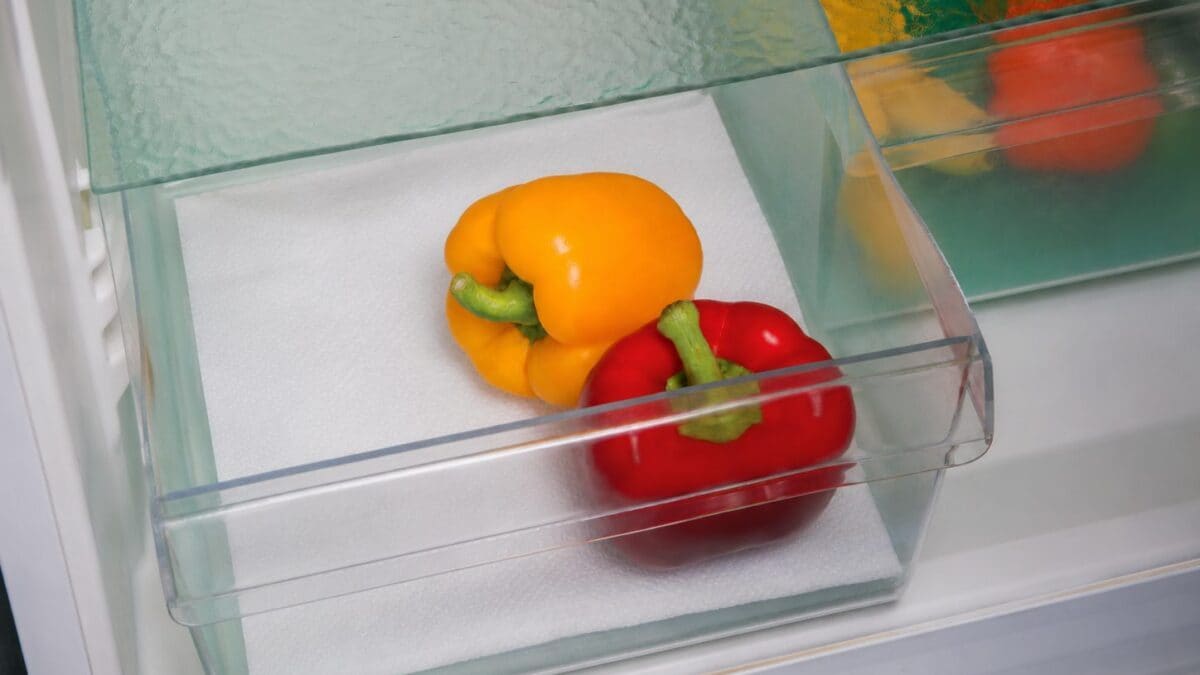
Opening the refrigerator and finding wilted salad, mushy greens, or vegetables starting to deteriorate is a fairly common inconvenience. Often, one of the culprits is excess moisture that builds up inside the crisper drawer. To limit the problem, a very simple trick can be helpful, requiring no special products: use a few sheets of paper towels. Their absorbent properties can help collect some of the moisture in the drawer and create more favorable conditions for food preservation.
What is The Kitchen Paper in The Drawer For?
Many vegetables continue to release some water even while stored in the refrigerator; this can be compounded by the normal condensation that forms inside the appliance. When excessive humidity remains in contact with vegetables for a long time, they can lose their consistency and quality more quickly. Leafy greens are among the most susceptible to this problem and can become soft or show signs of deterioration.
Placing paper towels on the bottom of the drawer helps collect at least some of the water. This won't stop the natural deterioration of food, but it can help manage humidity. Naturally, the paper towels should be checked and changed regularly; leaving them in the drawer completely wet will ultimately defeat their purpose.
How to Use This Method Correctly
Before adding the paper towels, it's a good idea to check the drawer's condition. Any vegetable residue, dirt, and water should be removed, so you're starting with a clean, dry surface.
Once cleaning is complete, you can arrange one or more sheets on the bottom, adjusting the quantity to the size of the compartment. You can then rearrange the food, avoiding crowding it too much if possible.

The Vegetables That Will Benefit Most From It
This trick can be particularly useful for vegetables that are more susceptible to moisture buildup. Leafy greens, in particular, can quickly lose their firmness when left in an excessively damp environment. Paper can therefore be used when storing delicate products in the drawer or when condensation frequently forms on the bottom. Foods for which it can be useful include:
- lettuce and salad;
- spinach;
- chard and other leafy greens;
- fresh aromatic herbs;
- carrots;
- some previously washed vegetables.
Even in these cases, it is important to remember that the paper represents only a support: temperature, initial conditions of the food and storage methods continue to play a fundamental role.
Be Careful With Freshly Washed Vegetables
Washing vegetables before storing them in the refrigerator can be convenient, especially when you want them ready for later meals. However, the problem arises when they're stored while still very wet. The water left on the leaves and surfaces of the food increases the amount of moisture present during storage. For this reason, if you decide to wash them ahead of time, it's important to also spend a few minutes drying them.
Salads and other leafy vegetables can be dried using a spin dryer, while other vegetables can be dried using a clean cloth or paper towel. Only after removing excess water should the food be placed in its compartment. The foil placed on the bottom will thus primarily help manage any moisture that will build up later.
Not All Vegetables Need to Be Stored in The Fridge
Another common mistake is to think that all vegetables will necessarily last longer if stored cold. In reality, each food has different characteristics and needs.
Potatoes, onions, and garlic, for example, are generally stored in different conditions than traditional refrigerator vegetables: for these products, factors such as ventilation, light, and humidity are also important. The proximity of the fruit and vegetables must also be considered: some fruits produce ethylene gas during ripening and can affect other products stored nearby.

Other Tips to Avoid Throwing Away Fruit and Vegetables
Paper towels can be part of a broader strategy to better preserve purchased foods. A few simple habits can help prevent products forgotten at the bottom of the refrigerator from ending up in the trash. For example, it's helpful to regularly check the contents of the refrigerator drawer and consume the oldest purchased foods or those showing the first signs of losing freshness first. Some good habits to remember include:
- keep the vegetable drawer clean;
- avoid water stagnation;
- do not store excessively wet vegetables;
- check food regularly;
- separate, when appropriate, products with different needs;
- consume the more delicate vegetables first.
Alternatives to Kitchen Paper
Those who prefer a solution specifically designed for this purpose can also find absorbent sheets, mats, and liners for refrigerator drawers on the market. These products are generally placed on the bottom of the crisper and are designed to help manage excess moisture.
Depending on the model, they can be made of absorbent materials or have a structure that promotes air circulation underneath the food. Some are washable and reusable, while others need to be replaced periodically.
Before purchasing, it's still advisable to check the manufacturer's instructions and ensure the product is suitable for use inside the refrigerator and near food. Traditional kitchen paper remains a simple and readily available solution, while specific anti-humidity sheets can be an alternative for those seeking a product designed to permanently line the drawer.
;Resize,width=767;)
