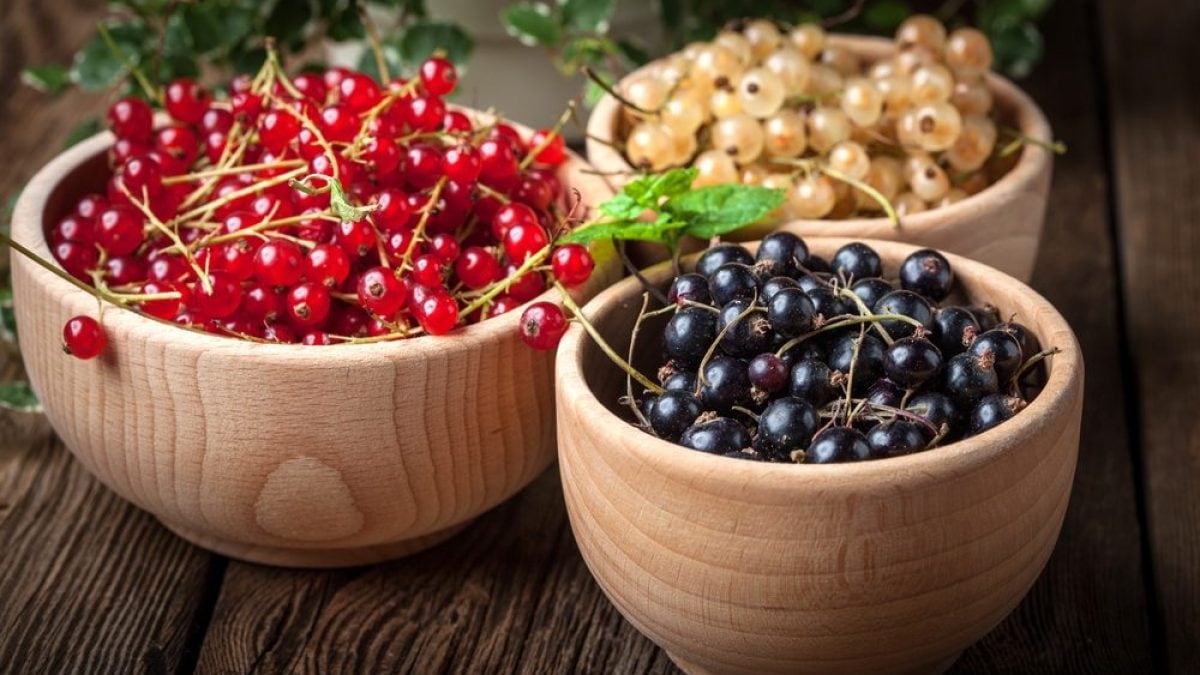
Currants are a berry, though less well-known than other varieties like raspberries and blueberries. However, they're a food you should learn to consume more of because, despite their small size, they're a true wonder of health benefits. Belonging to the Grossulariaceae family, currants are a medium-sized, spontaneous shrub with small, sweet-tasting berries and juicy pulp. They're a very ancient plant, already known and used by the Romans for their remarkable health benefits.
Currants are also very versatile in the kitchen due to their bold, tart flavor, which pairs well with a wide variety of ingredients: they're used to make delicious preserves, juices, smoothies, and jams, but they're also a perfect accompaniment to many savory dishes like meat and fish. They're also perfect for enhancing salads and fresh side dishes, ideal for summer, and for adding a truly unforgettable touch to the most delicious desserts. There are three varieties of currants in nature: red, black, and the rarest, white, but regardless of color, they're all very similar nutritionally and in their pleasantly tart flavor.
Rich in minerals and vitamins, all types of currants are powerful natural antioxidants, have a diuretic and detoxifying effect, and help protect your eyes and bones. Want to learn more about them? Here are all the characteristics, and a few contraindications, of these small but powerful berries.
Currants' Properties and Benefits
Don't be fooled by the small size of the berries: currants are incredibly rich in beneficial properties. Made up of nearly 80% water, currants are decidedly low in calories (just 28 kcal per 100 grams of fresh fruit) and rich in minerals, especially potassium, calcium, and phosphorus. The currant skin contains a good amount of fiber, essential for intestinal function and regularity, while the quantities of carbohydrates and proteins are negligible, as is cholesterol, which is completely absent.

Rich in citric acid, anthocyanins, and flavonoids (especially the black variety), currants are powerful antioxidants and contain vitamin C, vitamin A, and vitamin B2. Because of this incredible concentration of nutrients, currants have been used for centuries in herbal medicine and natural medicine, where they are primarily used for their anti-allergic and anti-inflammatory properties, particularly for the respiratory tract and skin.
For this reason, it's common to find currants not only as a fruit to be consumed fresh, but also as a dry extract compressed into capsules or as dried plant leaves to be prepared as an infusion. How does all this translate into benefits for the body? Here are the main properties of currants.
1. It Is a Powerful Purifier and Diuretic
The composition of currants, with a very high percentage of water, makes the berries useful for diuresis and for combating cellulite and water retention, with a detoxifying and purifying effect.
2. It Is a Great Ally of Eyesight
Currant berries have a refreshing and protective effect on the retina, proving to be valuable for eye health and vision; this is especially true for red currants which, like all red fruits, are high in two phytocompounds with antioxidant action, lycopene and anthocyanins.
3. It Has a Strong Antibacterial And Anti-Inflammatory Action
Currants are very rich in vitamin C, one of the most important vitamins for our body: thanks to this concentration, the fruit has an excellent antibacterial and anti-inflammatory action, supporting and strengthening the immune system in fighting ailments and seasonal ailments.

4. It Is a Powerful Antioxidant
Redcurrants and blackcurrants, in particular, are powerful antioxidants thanks to the substances they contain (lycopene and anthocyanins in particular). This means that currants are a great ally in counteracting the action of free radicals and cellular aging, as science itself has demonstrated with several studies focusing on this particular property of currants.
5. Stimulates Memory And Concentration
Currants are very useful for stimulating memory and concentration thanks to their polyphenols(such as anthocyanins and phenols), which have an antioxidant and anti-inflammatory action, and nutrients such as magnesium and phosphorus, which are excellent for supporting cognitive functions.
6. Relieves Allergic Reactions
If you suffer from specific seasonal allergies, blackcurrant can be a great ally (obviously consult your doctor first, never self-prescribe any improvised treatments): thanks to its strong anti-inflammatory and antihistamine properties, it stimulates the production of cortisol, a natural anti-inflammatory, and counteracts the release of histamine, a substance that, among its various functions, also regulates immune and allergic responses. Blackcurrant is therefore used as a preventative therapy at least 1-2 months before the onset of allergy season and also during the acute phase, to quickly relieve symptoms even when the reaction is already underway.
7. Helps Maintain Healthy Skin And Hair
Currants also have cosmetic applications, thanks to their antioxidant, anti-inflammatory, and soothing properties, as well as the many other substances they contain, making them a true panacea for skin and hair care. On the skin, they are used to support the production of collagen, elastin, and other skin proteins, to nourish dry skin (they contain polyunsaturated fatty acids such as omega-6), and to treat sensitive, red, or disordered skin. On the hair, currants are generally used in the form of oil and are used to treat damaged or brittle hair.
Red, Black and White Currants: The Differences
Although they belong to the same botanical family, redcurrants, blackcurrants, and whitecurrants differ in color, taste, and nutritional properties.
Red currant (Ribes rubrum) is the most common variety: its berries have a tart, fresh flavor and are rich in vitamin C, anthocyanins, and lycopene, making it a powerful antioxidant and capillary protector. It is ideal for promoting blood circulation and counteracting free radicals.
Blackcurrant (Ribes nigrum), with its more intense and aromatic flavor, stands out for the high content of polyphenols and essential fatty acids (such as omega-6) present in its seeds. It is known for its anti-inflammatory and anti-allergic properties, so much so that it is often used in herbal medicine as a natural remedy for seasonal allergies and joint inflammation.

The more delicate white currant (Ribes rubrum var. alba), less widespread but equally beneficial, has a sweeter and less acidic flavor, and is appreciated for its content of B vitamins and minerals such as potassium and iron, which help remineralize and tone the body.
In common, all three varieties share a high concentration of natural antioxidants, fiber and water, which promote hydration, purification and general well-being of the body.
Currants' Contraindications
Beyond any intolerances or allergies to berries or specific components, currants present some contraindications for those suffering from certain disorders or pathologies. It is especially not recommended for those suffering from hypertension, as it may raise blood pressure; for those taking anticoagulant drugs, as the gamma-linolenic acid present in the plant can enhance their effect and increase the risk of hemorrhages; and for those with kidney or heart conditions that cause excessive fluid accumulation (edema), as it may further stimulate fluid formation due to its diuretic action. In general, it is always best to consult your doctor, especially if you suffer from any specific pathologies, before consuming this fruit.

For healthy individuals, however, be careful to avoid excessive consumption of currants, especially blackcurrants, as they can cause digestive problems such as bloating or diarrhea, being very high in fiber. Blackcurrant juice, being acidic, could also worsen symptoms of gastric reflux. Finally, be careful about drinking currants in the evening, especially in the form of juice or infusion: having a tonic effect on cortisol, it could interfere with sleep quality.
;Resize,width=767;)
