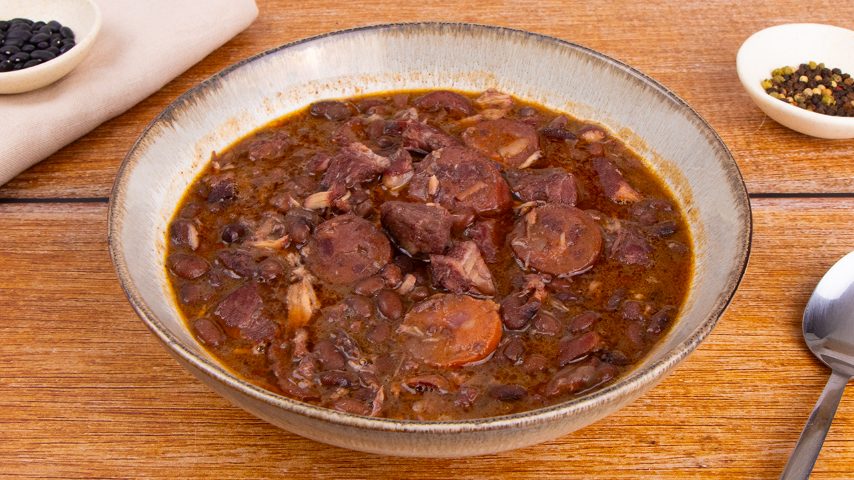
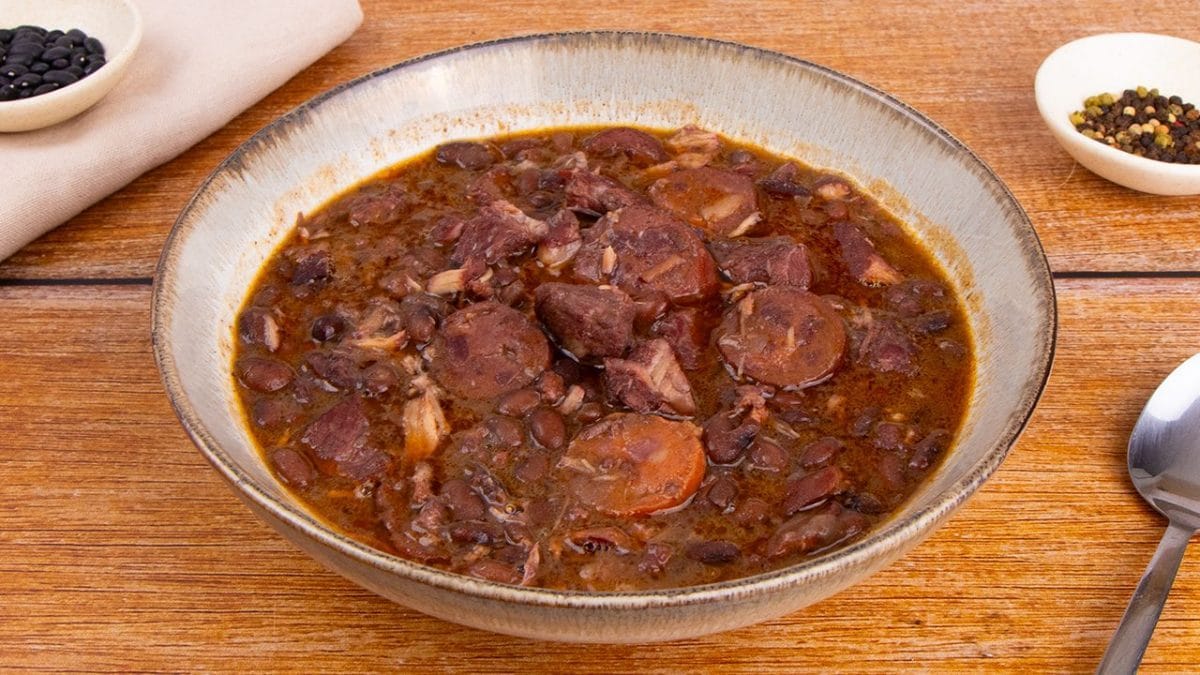
Feijoada is one of Brazil’s most famous comfort foods: a hearty black bean stew packed with pork shoulder, bacon, fresh and smoked sausages, and smoky ham hock. Everything simmers slowly with onion, garlic, bay leaves, and seasonings until the beans turn creamy and the meat becomes wonderfully tender.
It is rich, generous, and made for sharing. Traditionally accompanied by simple sides that balance its intense flavors, feijoada is ideal for a leisurely family lunch, a gathering with friends, or whenever you want a substantial one-pot meal.
The secret is patience. A long soak for the beans followed by gentle cooking gives this Brazilian stew its characteristic thick broth and deep, savory flavor.
Why Everyone Will Love This Recipe
Feijoada is the kind of meal that becomes more flavorful with every spoonful. Black beans provide a creamy, earthy base, while the combination of pork shoulder, bacon, sausages, and smoked ham hock creates layers of savory and smoky flavor.
It is also wonderfully satisfying without requiring complicated cooking techniques. Once the ingredients have been browned and combined, most of the work happens during the slow simmer.
And although the stew is substantial, it can be balanced with traditional accompaniments such as white rice, collard greens, farofa, and fresh orange slices. These sides are commonly served alongside Brazilian feijoada and provide contrasting textures and freshness.
What Is Feijoada?
Feijoada is a Brazilian bean-and-meat stew most commonly associated with black beans and a mixture of pork or beef cuts. Today, it is deeply embedded in Brazilian food culture and is often enjoyed as a social meal shared with family and friends.
Its exact historical origins are more complex than one popular story suggests. Feijoada is sometimes described as a dish invented by enslaved Africans using unwanted cuts of pork, and this explanation remains widespread. However, other historical interpretations connect the modern dish with older Portuguese and European traditions of slowly cooking beans or legumes together with different meats, which then evolved in Brazil alongside local ingredients and the influences of Indigenous, African, and Portuguese foodways.
What is unquestionable is the place feijoada eventually gained in Brazilian cooking. Numerous regional and family versions now exist, with different combinations of smoked meats, salted meats, sausages, and accompaniments.
Cooking Tips
- Soak the black beans for the full 12 hours because proper hydration helps them cook more evenly and reduces the amount of time required for them to become tender.
- Brown the pork shoulder before adding the other ingredients because caramelizing its exterior develops a deeper savory flavor that will eventually season the entire stew.
- Cook the onions, bacon, and garlic in the same pot used for the meat because the browned residue left behind contributes additional flavor to the base.
- Cut the meats into reasonably large pieces because feijoada cooks for a long time and smaller pieces can break apart before the beans have finished cooking.
- Use both fresh and smoked sausage because combining the two creates greater depth than relying on a single type of sausage.
- Add only enough water to keep the ingredients comfortably covered because excessive liquid can leave the finished feijoada thin instead of rich and creamy.
- Simmer the stew gently rather than keeping it at a vigorous boil because slow cooking tenderizes the pork while allowing the black beans to soften without disintegrating too quickly.
- Stir occasionally and check the bottom of the pot as the beans thicken because the stew becomes more likely to stick during the later stages of cooking.
- Taste the feijoada before adding additional salt because bacon, smoked sausage, ham hock, and bouillon can all contribute significant saltiness on their own.
- If the broth seems too thin near the end of cooking, lightly mash a small spoonful of beans against the side of the pot and stir them back into the stew to create a naturally thicker consistency.
Frequently Asked Questions
Can I Make Feijoada Without All the Different Types of Meat?
Yes. Feijoada varies considerably from recipe to recipe, so you do not need every possible meat to produce a flavorful stew. Pork shoulder, bacon, and one good sausage can already create a satisfying version, although using smoked meat adds extra depth.
Can I Use Canned Black Beans?
You can, but the preparation will change substantially because canned beans are already cooked. Add them much later in the process, after the meats have had enough time to become tender, otherwise the beans may break down completely during the long simmer.
What Should I Serve With Feijoada?
White rice is one of the most common accompaniments, while sautéed collard greens, farofa, and orange slices are also traditional partners. The rice absorbs the rich bean broth, while greens and citrus bring freshness to an otherwise substantial meal.
Why Is My Feijoada Too Watery?
The stew may simply need additional uncovered cooking time so excess liquid can evaporate. You can also mash a small amount of cooked black beans and mix them back into the pot, which thickens the broth without requiring flour or cornstarch.
Can I Make Feijoada Spicy?
Yes. The basic recipe does not have to be particularly hot, but chili peppers or chili sauce can be added according to taste. Add spicy ingredients gradually so they complement rather than overpower the smoked pork, black beans, garlic, and bay leaves.
Can I Prepare Feijoada in a Pressure Cooker?
Yes, a pressure cooker can significantly shorten the cooking time, especially for soaked beans and tougher cuts of pork. Because pressure cookers vary, follow the manufacturer’s guidance for beans and meat, then finish the feijoada uncovered if the sauce needs to reduce and thicken.
How to Store
Allow the feijoada to cool, then transfer it to airtight containers and refrigerate for up to 3 days. The flavor can become even more developed after resting overnight as the beans and meats continue to absorb the seasonings. Reheat gently on the stove, adding a small splash of water if the stew has become too thick in the refrigerator.
How to Freeze
Feijoada freezes particularly well because both the cooked beans and braised meats retain their texture. Let the stew cool completely, divide it into practical portions, and transfer it to airtight freezer-safe containers. Freeze for up to 2 months for the best quality. Thaw overnight in the refrigerator, then reheat gently in a saucepan until thoroughly hot, adding a little water if necessary to loosen the sauce.
Ingredients
How to Make Brazilian Feijoada
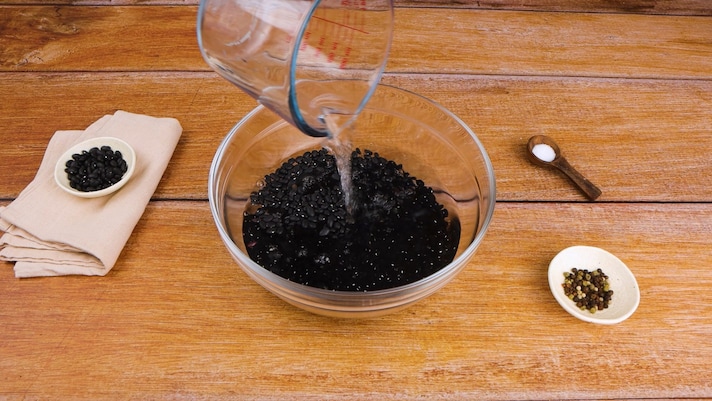
To prepare the feijoada, first place the black beans in a bowl, cover them with water and leave them to soak for 12 hours.
To prepare the feijoada, first place the black beans in a bowl, cover them with water and leave them to soak for 12 hours.
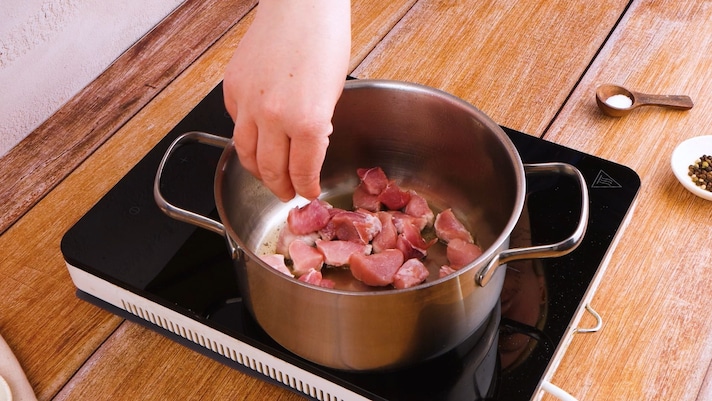
Once the beans have soaked, drain them and set them aside. Pour a drizzle of seed oil into a large, high-sided pot, then add the diced pork shoulder.
Once the beans have soaked, drain them and set them aside. Pour a drizzle of seed oil into a large, high-sided pot, then add the diced pork shoulder.
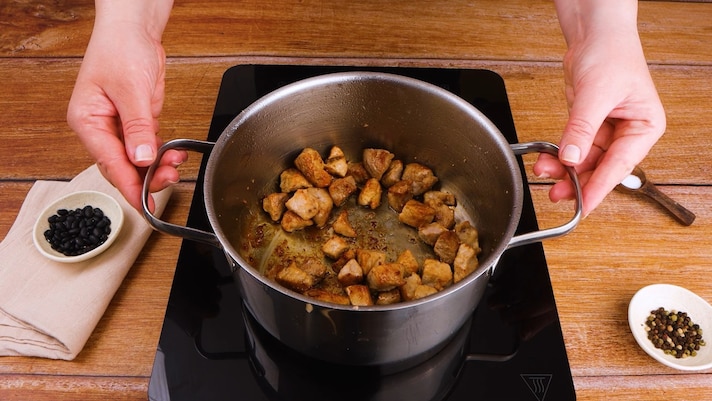
Brown the meat over medium heat until golden brown, then remove it and place it on a plate.
Brown the meat over medium heat until golden brown, then remove it and place it on a plate.
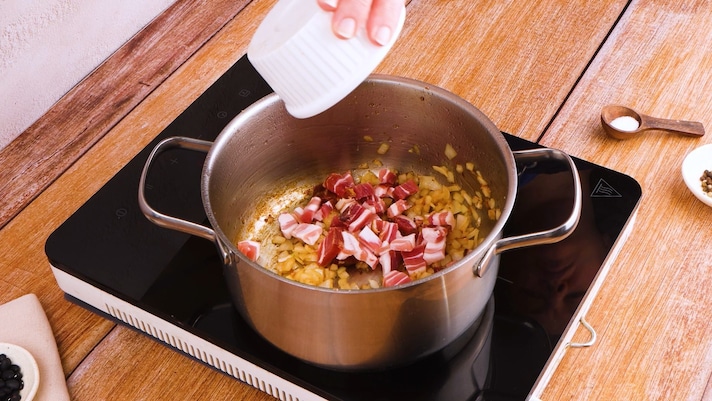
In the same pan, add the chopped onions and bacon to the cooking liquid of the meat. Let it fry gently for a few minutes, stirring often, until the pancetta is slightly crispy.
In the same pan, add the chopped onions and bacon to the cooking liquid of the meat. Let it fry gently for a few minutes, stirring often, until the pancetta is slightly crispy.
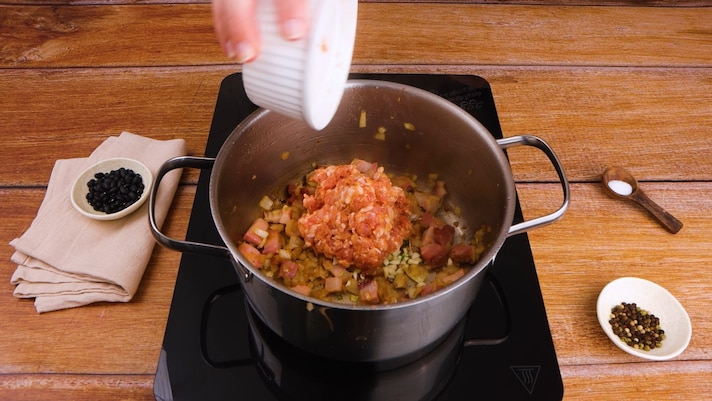
At this point, add the chopped garlic clove and the fresh sausage, removed from the casing and crumbled. Stir and cook for a couple of minutes, browning the meat.
At this point, add the chopped garlic clove and the fresh sausage, removed from the casing and crumbled. Stir and cook for a couple of minutes, browning the meat.
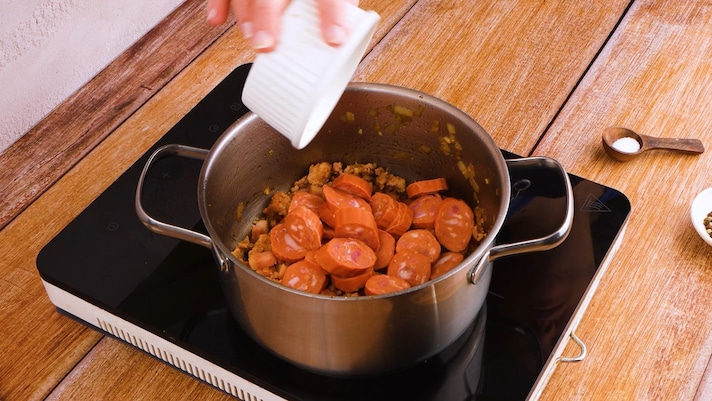
Also add the smoked sausage cut into not too thin slices.
Also add the smoked sausage cut into not too thin slices.
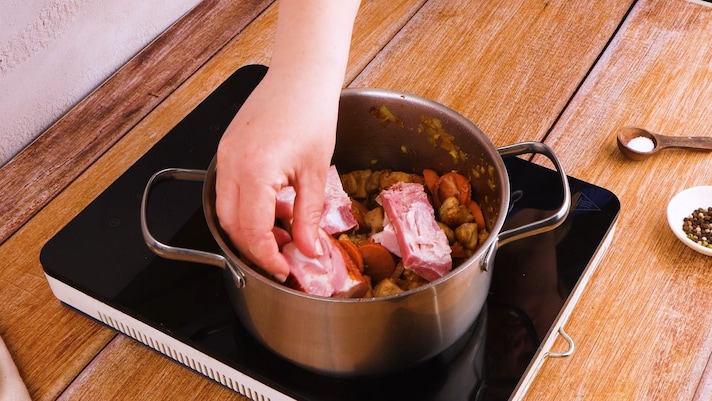
Finally, after mixing everything, add the pork shank cut into pieces.
Finally, after mixing everything, add the pork shank cut into pieces.
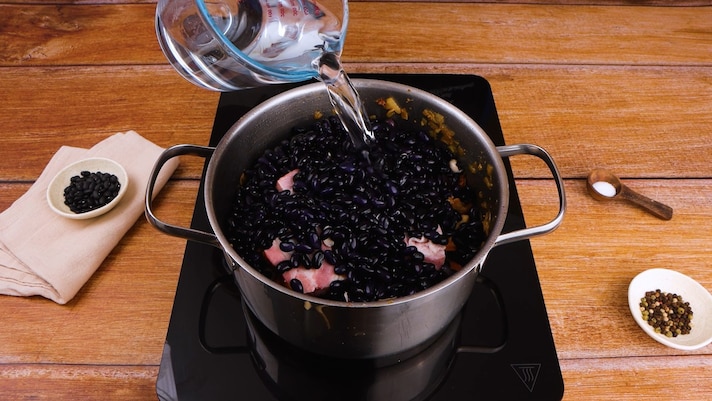
Transfer the legumes to the pot and cover them with water.
Transfer the legumes to the pot and cover them with water.
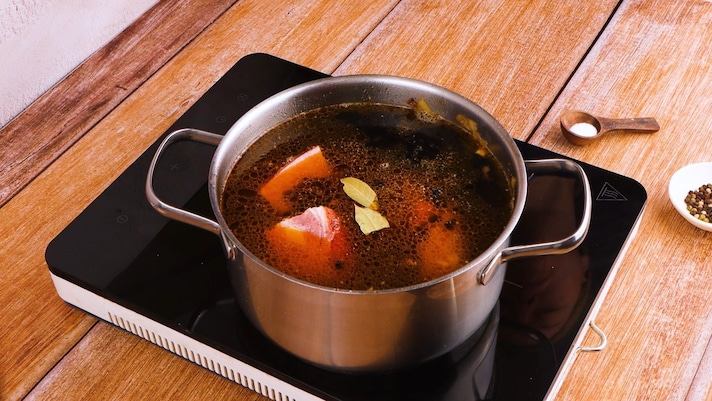
Combine salt, pepper and bay leaves.
Combine salt, pepper and bay leaves.
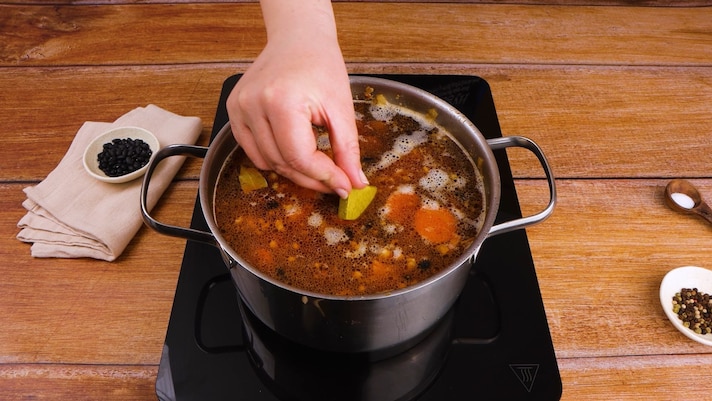
Complete with the broth cube and mix everything again.
Complete with the broth cube and mix everything again.
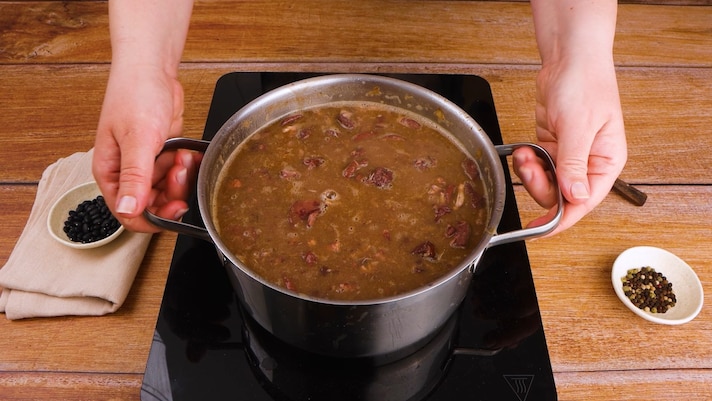
Bring the water to a boil, then lower the heat, cover the pot with a lid and cook the feijoada for about 2 hours, stirring occasionally, until the meat and beans are tender and the soup is thick and creamy. Finally, distribute it into individual holsters.
Bring the water to a boil, then lower the heat, cover the pot with a lid and cook the feijoada for about 2 hours, stirring occasionally, until the meat and beans are tender and the soup is thick and creamy. Finally, distribute it into individual holsters.
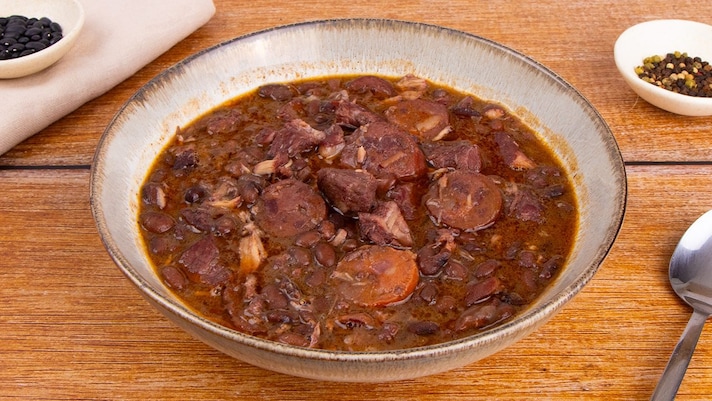
The feijoada is ready to be enjoyed!
The feijoada is ready to be enjoyed!


