In recent years, sourdough has returned to the spotlight, not only among baking enthusiasts but also among those just starting out. This small and indispensable helper is increasingly attracting the curiosity of the scientific community, which has long been particularly interested in the types of yeast that develop within it. Little, however, has been said about how flour influences the development of sourdough. Now, a research team has conducted several experiments to understand whether it can influence the aroma and structure of yeast and, consequently, bread. The answer is yes, and below we'll explain how.
Eighteen Yeasts and Three Flours
Those who already use it know very well that sourdough is nothing more than an ecosystem in which different types of bacteria and yeasts coexist and interact, determining specific aromas and characteristics of the final product. Many in the industry have long wondered what influences its flavor, focusing in particular on the microorganisms that live within it. Now, researchers at North Carolina State University have focused specifically on the flour used to make sourdough. The question that guided the study, published in the scientific journal Microbiology Spectrum, was: how important is flour in determining the lifespan of the yeast?
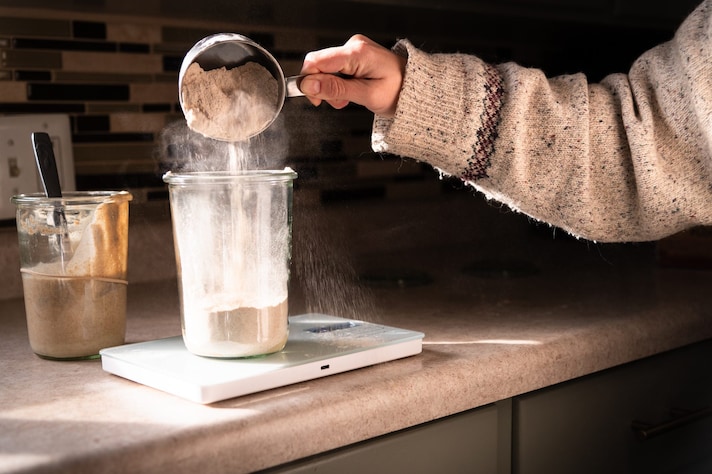
To understand this, the researchers worked under controlled conditions, creating eighteen sourdough starters in the laboratory and using three types of flour, divided according to the Anglo-Saxon classification: all-purpose (roughly comparable to 00 flour with a medium protein content), bread (specifically for bread, usually a strong 0 flour) and whole wheat (whole wheat flour). The experts created six starters with each flour and, among these, the refreshment frequency also varied: three were fed daily and three every other day, for a period of 28 days. Throughout the month, the behavior of the sourdough starter was monitored through metabarcoding, a method that identifies the microbes present in a sample.
Stable Yeasts, Different Bacteria
After the observation period, the researchers took stock, and what they discovered was surprising: during the study, the yeasts responsible for fermentation proved to be extremely stable. In all the sourdough starters, the Kazachstania genus was the most present. What really changed, however, were the lactic acid bacteria, responsible for the development of acidity and aromas: the sourdough starters prepared with wholemeal flour contained Companilactobacillus bacteria; those made with specific bread flour had high levels of Levilactobacillus; while those made with all-purpose flour favored Lactiplantibacillus and Furfurilactobacillus. Although the researchers did not directly measure the impact of the different bacteria on flavor, it is known that each of them produces specific aromatic compounds, more or less acidic than others. Consequently, different sourdough starters impart different aromas to the final product and it is plausible that they influence the flavor of the bread.
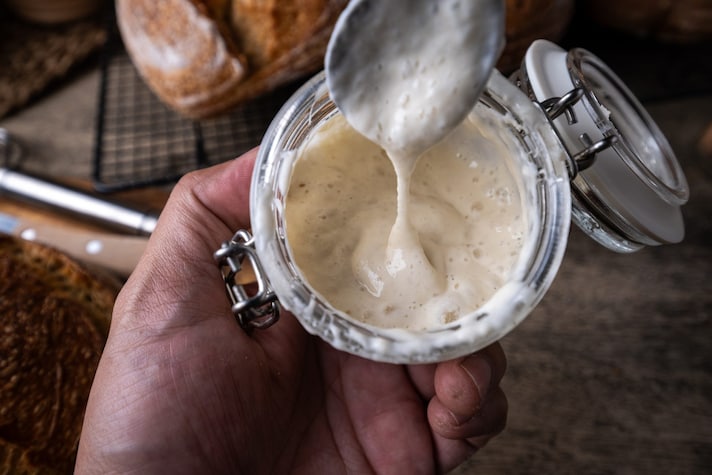
Another discovery concerns refreshment times: researchers have observed that it is not essential to feed the sourdough starter every day. In fact, whether the refreshment is done daily or every other day does not cause significant changes. So, if a small sourdough starter is resting in your fridge, you can generally feed it every 48 hours: the result will still be exceptional.
;Resize,width=767;)
