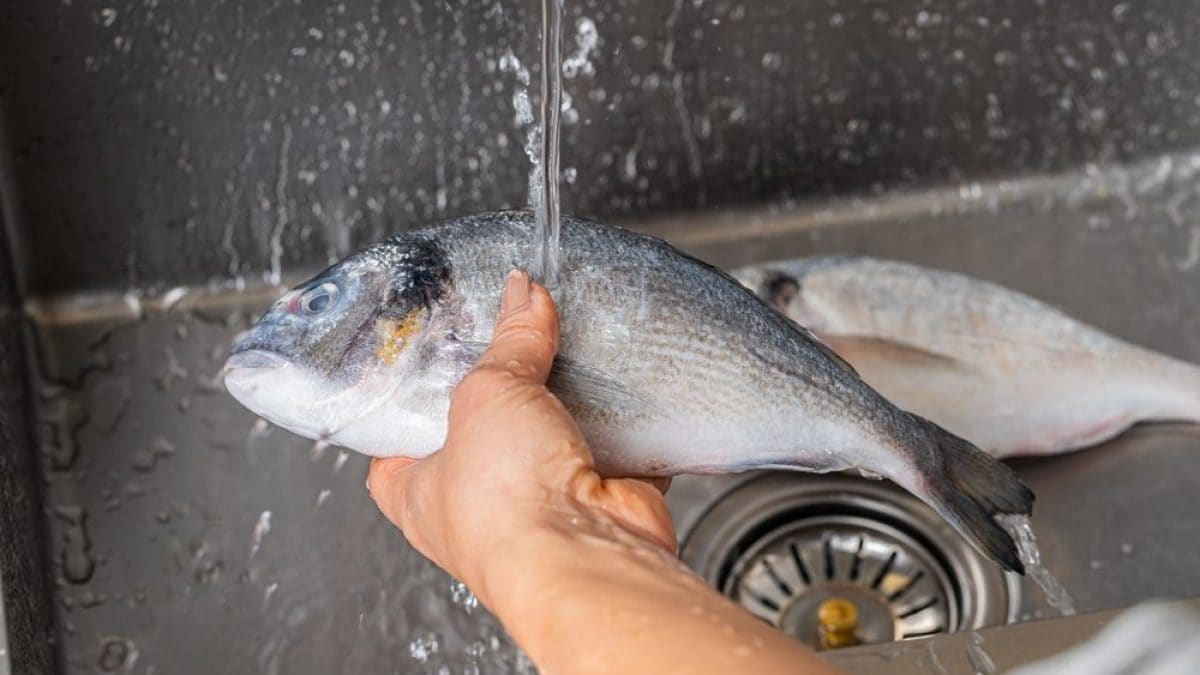
To wash or not to wash fish, that is the question. Among the Hamletian dilemmas in the kitchen, one of the most recurring concerns fresh foods, which, once purchased and brought home, need to be thoroughly rinsed for reasons of hygiene and food safety. How should one handle seafood? In reality, there is no general rule, but there are situations in which washing is necessary and others in which it is not. The universal recommendation is: never use hot water, because it risks altering the consistency of the flesh, accentuates the unpleasant marine odor, and encourages bacterial growth rather than eliminating it.
When You Should Wash Fish
It's essential to wash a whole fish, that is, before it's been cleaned and gutted by the fishmonger. In this case, you'll need to remove the most perishable parts, such as the innards and gills. Rinsing the fish under cold running water removes all residue, including blood and any sand. Make sure the water is gentle, so as not to let the fish linger too long and avoid splashing, which could contaminate other surfaces. Then pat the fish dry with a kitchen towel. The same applies to shellfish, for example when you need to gut shrimp. Once finished, clean the sink, cutting board, and all utensils that have come into contact with the fish with appropriate products, including your hands. Washing is essential whether the fish is being cooked immediately or frozen, as this is important for hygiene reasons and to maintain the product's quality longer.
When You Shouldn't Wash Fish
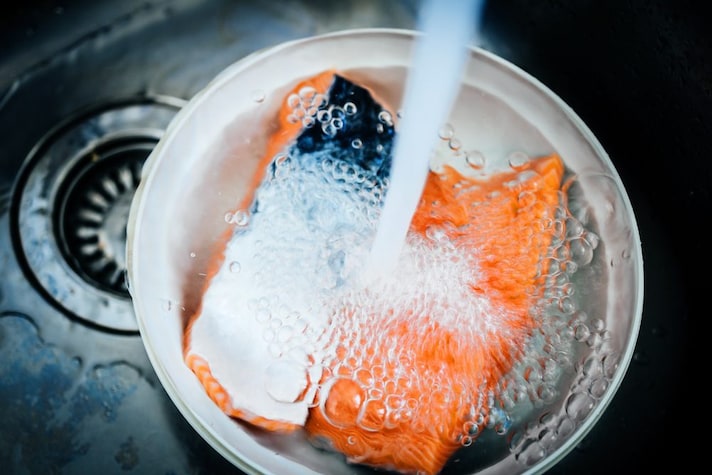
In other cases, however, washing is unnecessary and can even be counterproductive. Whole fish already cleaned by the fishmonger, as well as filleted and sliced fish, do not need to be rinsed again under running water, as they have already been properly treated. Water does not sanitize the fish, and adding more can actually ruin the flesh, which absorbs it, losing texture and flavor. A common mistake, in fact, is rinsing just to be "safe," believing it eliminates any bacteria. In reality, this achieves the opposite effect: bacteria can spread to utensils or the work surface. The risk, therefore, increases rather than decreases.
How to Eat Fish Safely
More than washing, it is cooking that guarantees the food safety of fish, eliminating potentially dangerous organisms, such as bacteria or parasites: the advice is to cook to an internal temperature of at least 145-150°F/63-65°C. The dangers of poisoning, in fact, arise when the fish is undercooked, semi-raw or raw: it is no coincidence that for sushi, sashimi, carpaccio or tartare it is recommended to consume it after freezing, which is required by law in restaurants – which must be equipped with a blast chiller – and which is also necessary to do at home, freezing the fish according to the guidelines of the FDA for at least 96 hours (4 days) at a temperature of 0°F/-18°C.
;Resize,width=767;)
