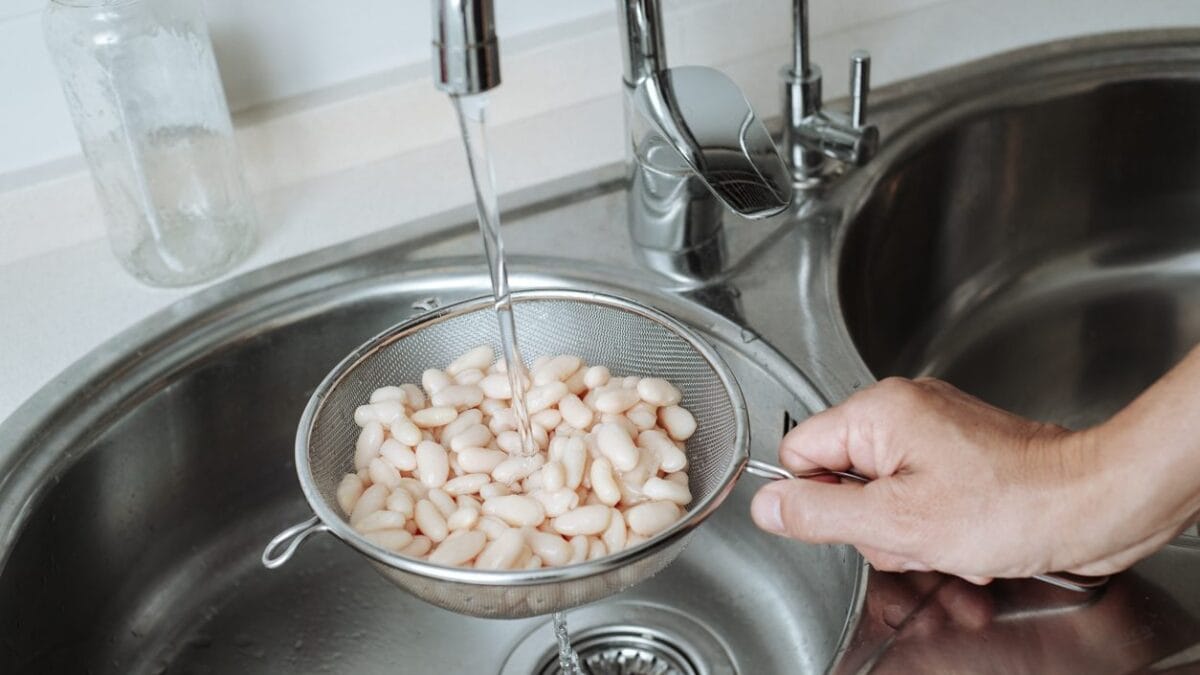
Should canned legumes be rinsed before eating? This is a common concern when using precooked chickpeas, beans, and lentils, which are convenient and ready to use. These products are immersed in a special liquid, called preserving liquid, which is often removed before cooking. But is it really necessary to rinse canned legumes? And can the preserving liquid be eaten, or should it be thrown away?
Rinsing canned legumes isn't actually necessary: the preserving liquid is generally safe to consume and, in some cases, can even be used as a useful ingredient in recipes. However, eliminating it can be beneficial for reducing the salt content and achieving a more delicate flavor. So, let's look at what the preserving liquid contains, when it's best to rinse legumes, and which recipes are best suited for preserving it.
What Does Canned Legumes' Liquid Contain?
When you open the tin or glass container in which canned legumes are stored, you'll find them immersed in a liquid: this is the so-called preserving liquid, so called because it "governs" the preservation process, keeping the legumes in optimal condition until they reach our tables. The name can be misleading, as it's not simply a liquid like water: it's an aqueous mixture of salts and other dissolved compounds. In short, it's not a simple soaking, but a way to keep the product stable until it's opened.

The composition of the preserving liquid varies depending on the type of legume, the processing method, and the ingredients listed on the label. In its simplest form, it consists of water and the substances that legumes release during soaking and industrial cooking. During cooking, some of the components naturally present in legumes pass into the water: these include starch, soluble proteins, sugars, oligosaccharides, and mineral salts, in varying quantities. Starch helps thicken the liquid, while proteins and other dissolved compounds influence its physical properties. Some products also contain salt, while others may include added ingredients, such as texture regulators or firming agents.
Once opened, however, what should be done? Should canned legumes be rinsed or not? Rinsing isn't necessary to make them safe: the liquid from canned legumes is generally safe to consume, as long as the product has been properly processed and stored. Rinsing after draining can be helpful in reducing sodium and making the legumes more digestible, but it's not mandatory: it also depends on how you plan to use the legumes. In any case, it's important to know that the liquid from canned legumes, coming from an intact and properly stored package, is safe to consume, as long as the product has been properly processed and used according to the instructions on the label.
This doesn't mean, however, that every liquid in a container is automatically safe. Before using it, you should check that the can or jar is intact, without bulges, leaks, or significant damage, and that the contents do not exhibit any unusual odors. If, upon opening, the liquid leaks suddenly and unusually, or the container appears suspicious, discard the entire product without tasting it. These are essential precautions for all preserved foods, not just legumes.
Why Rinsing Canned Legumes Can Affect Their Flavor and Texture
Rinsing canned chickpeas, beans, and lentils under running water isn't necessary, but it can be helpful. The cooking liquid may contain added salt in addition to the substances naturally released during cooking. When you drain the liquid, some of the sodium is removed along with it, helping to reduce the overall sodium content. This effect is particularly beneficial for those who need to monitor their sodium intake, but it can also be useful for those who want to prepare dishes with a more delicate flavor and more precisely manage the amount of salt added during cooking.

Rinsing canned legumes changes the flavor and texture of the product. In addition to the salty note, the preserving liquid can have a slightly viscous consistency due to the starch, proteins, and other substances released during cooking. Removing it, therefore, first of all tones down any characteristic flavors of the preserving liquid, allowing the natural flavor of chickpeas, beans, and lentils to emerge more fully. This is particularly useful when using legumes in cold salads, hummus, creams, veggie burgers, or side dishes—preparations where you want to precisely control the seasoning and enhance the aromas of the other ingredients. Rinsing also removes some of the surface coating and makes the legumes less sticky to the touch, making them easier to distribute throughout the dishes. The texture may also change slightly, although it's important to note that rinsing doesn't automatically make legumes firmer: softness depends primarily on the variety, cooking method, and industrial processing.
When to Rinse Canned Legumes and When To Use Their Liquid
Deciding whether to rinse canned chickpeas, beans, and lentils or save their liquid depends primarily on the type of recipe you're making and the result you're aiming for. In most preparations that require a firm texture and a less salty flavor, such as cold salads, side dishes, hummus, spreads, and veggie burgers, draining and rinsing legumes is generally the best option. This process reduces surface sodium and produces a more neutral flavor, easy to pair with herbs, spices, citrus fruits, extra virgin olive oil, and other condiments. Rinsing is also particularly useful when adding legumes to already savory dishes, such as salads with olives, capers, aged cheeses, or pickled vegetables, because it allows you to better control the overall balance of flavors.
In soups, broths, and stews, however, the choice is more flexible: you can rinse the legumes for a more delicate flavor or save some of the liquid if you want to give the dish more body: the viscous consistency and the liquid help make these types of recipes creamier. In this case, however, it's important to consider that the liquid can add salt and alter the final flavor, so it's best to add it gradually and adjust the seasoning only after tasting the dish. Another aspect to consider is individual tolerability. The liquid may contain oligosaccharides, sugars that are fermented by intestinal bacteria and which, in some people, can promote bloating and gas production. If you suffer from intestinal sensitivity, therefore, it's helpful to rinse the legumes, thus reducing some of the substances present in the liquid.

As for the preserving liquid itself, it doesn't always have to be thrown away: in some cases, it can be useful or even a valuable ingredient. Generally, if the liquid is clean and not too salty, it can be used to dilute or flavor soups, broths, and creamed legume soups. Preserving liquid can be reused from both glass and canned preserves, as long as the packaging is intact, the product is properly stored, and the flavor is suitable for the preparation.
Aquafaba, on the other hand, deserves a separate discussion: it is the cooking liquid of legumes, or their preserving liquid, used in cooking for its foaming and emulsifying properties. When whipped, aquafaba is able to incorporate air and form a foam that can be used as a plant-based alternative to egg whites, particularly useful for making meringues, mousses, soft cakes, macarons, and other recipes that require an aerated texture. It can also be used in the preparation of vegan mayonnaise and some emulsified sauces, where it helps bind water and fat. To get the most out of aquafaba, it's best to choose canned chickpeas with a simple list of ingredients and, especially in sweet recipes, with a low or no added salt content.
The Correct Way to Use Canned Legumes
Properly using canned chickpeas, beans, and lentils means paying attention to a few precautions that enhance their flavor, preserve their characteristics, and consume them safely. The first step is to check the integrity of the packaging and the expiration date or best before date indicated on the label: swollen, leaking, or significantly damaged cans should not be used. Once the package is opened, it's a good idea to check the product's appearance and smell, avoiding tasting it if it shows any suspicious anomalies. If the legumes are ready to eat, as is usually the case with canned legumes that have been properly heat-treated, they can be used directly in recipes, without the need for further cooking.

Storage after opening also requires attention: leftover legumes should be transferred to a clean, preferably airtight container, and stored in the refrigerator. Avoid leaving them at room temperature for extended periods. It's important to follow the instructions on the packaging regarding storage times and use clean utensils when removing them. If you don't plan to consume them within the indicated timeframe, freezing them can be a practical solution, as long as the product is still in good condition and packaged properly.

