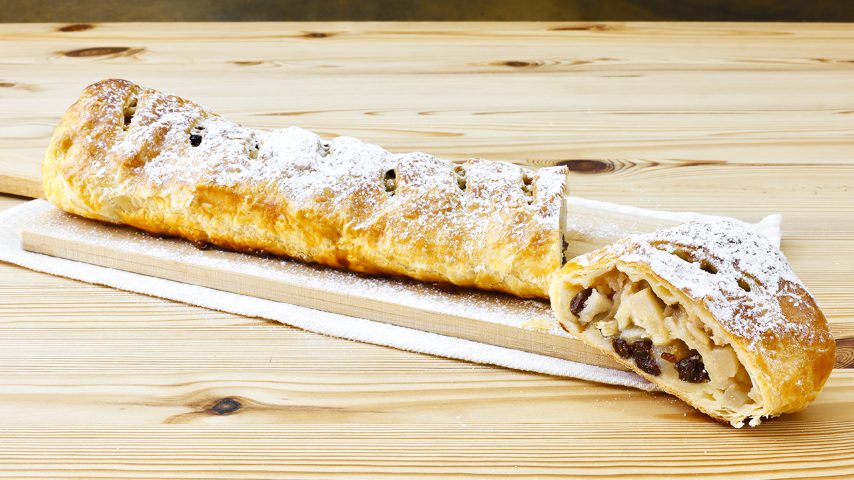
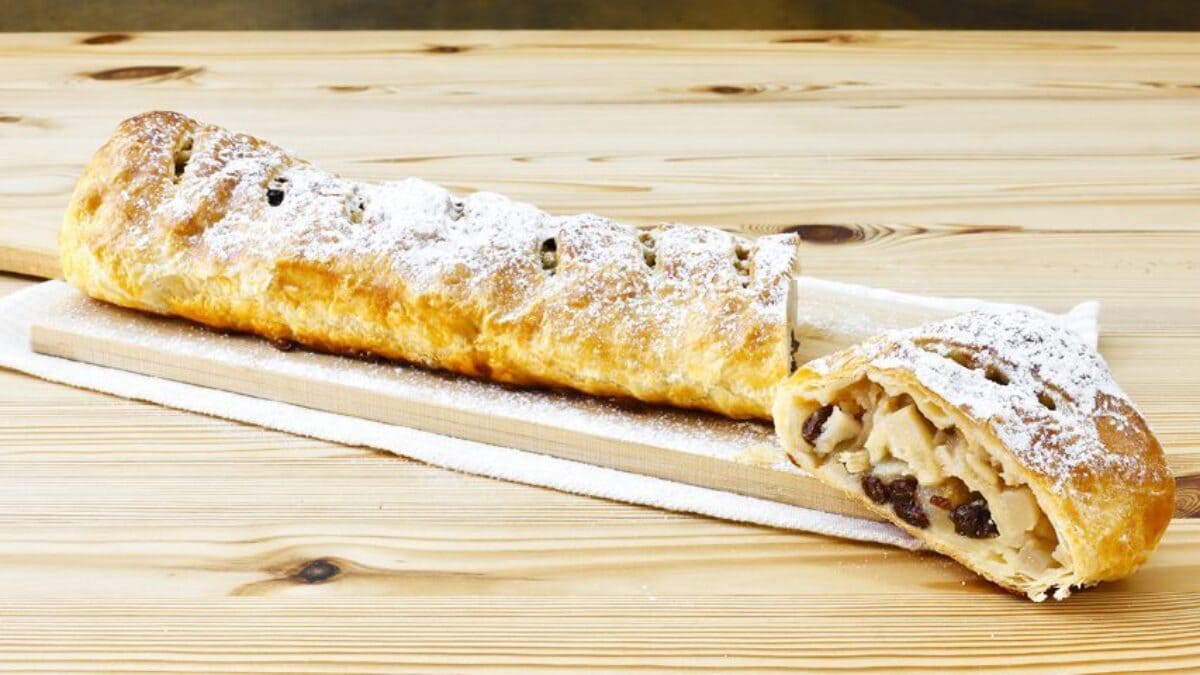
This recipe wraps puff pastry around a sweet, fruity filling of pears, raisins, pine nuts, sugar, and breadcrumbs. No complicated pastry-making session here, no rolling dough until your arms start filing complaints, and no long list of ingredients. You simply prepare the filling, tuck it into ready-made puff pastry, roll it up, brush it with egg, and let the oven handle the rest.
This recipe is especially good for anyone who enjoys homemade desserts without wanting to spend half the day making them.
What Is Pear Strudel?
Strudel is a classic pastry associated particularly with Central Europe. The word “strudel” comes from a German word meaning “whirlpool,” a fitting name for the rolled pastry shape. Traditional versions are often made with a very thin dough that is stretched almost paper-thin before being filled and rolled.
The best-known member of the strudel family is apple strudel, or “Apfelstrudel”, which became strongly associated with Austria, especially Vienna. Pear strudel follows the same basic idea but swaps apples for pears, giving the dessert a softer, naturally sweet fruit character.
Pro Tips for the Best Pear Strudel
- Very soft pears can release a lot of liquid during baking and make the filling wetter than you want. Choose pears that are sweet and ripe but still firm enough to hold their shape when cut.
- After soaking the raisins, drain them thoroughly before adding them to the bowl. Excess water has no business joining the filling party.
- Resist the urge to spread the filling right to the edges. Leaving some pastry uncovered gives you room to fold the sides inward and roll everything neatly without the filling escaping.
- Once rolled, place the strudel seam-side down on the baking tray. This helps keep the roll closed while it bakes.
Frequently Asked Questions
Do I need to peel the pears?
Removing the skin gives the filling a softer and more uniform texture, allowing the cooked pears to blend nicely with the raisins and pine nuts. The peeled pieces also make the finished strudel easier to slice and eat.
Can I leave out the raisins?
Yes, you can leave out the raisins if you don't enjoy them. The strudel will still have plenty of flavor from the pears, sugar, pine nuts, and pastry. If you want to replace them, chopped dried cranberries or another dried fruit can work nicely.
What do the breadcrumbs do in the filling?
Breadcrumbs help absorb some of the moisture released by the pears as they bake. Without them, the fruit juices can collect inside the pastry and make the bottom softer than intended. They also help give the filling a more cohesive texture.
How to Store Any Leftovers
Keep the strudel refrigerated if you plan to store it for more than a short period. When you're ready to serve it again, gently reheat individual portions in the oven. Avoid leaving the finished strudel sitting uncovered for long periods because the pastry can gradually dry out.
Ingredients
How to Make Pear Strudel
;Resize,width=712;)
Place the raisins in a small bowl, cover them with cold water, and let them soak so they soften.
Place the raisins in a small bowl, cover them with cold water, and let them soak so they soften.
;Resize,width=712;)
Add the chopped pears to a large bowl. Add the sugar, drained raisins, pine nuts, and breadcrumbs, and mix.
Add the chopped pears to a large bowl. Add the sugar, drained raisins, pine nuts, and breadcrumbs, and mix.
;Resize,width=712;)
Unroll the puff pastry onto a baking tray, keeping the parchment paper that comes with it underneath.
Unroll the puff pastry onto a baking tray, keeping the parchment paper that comes with it underneath.
;Resize,width=712;)
Spoon the pear mixture over the pastry, spread it evenly across the surface, but leave a border around the pastry.
Spoon the pear mixture over the pastry, spread it evenly across the surface, but leave a border around the pastry.
;Resize,width=712;)
Fold the side edges of the pastry inward over the filling.
Fold the side edges of the pastry inward over the filling.
;Resize,width=712;)
Now roll the pastry carefully to form the strudel.
Now roll the pastry carefully to form the strudel.
;Resize,width=712;)
Use a knife to make several small cuts across the surface of the rolled pastry to allow steam to escape during baking.
Use a knife to make several small cuts across the surface of the rolled pastry to allow steam to escape during baking.
;Resize,width=712;)
Brush beaten egg over the surface of the strudel.
Brush beaten egg over the surface of the strudel.
;Resize,width=712;)
Bake at 180°C (350°F) for 30 minutes. Dust with powdered sugar and serve. Enjoy!
Bake at 180°C (350°F) for 30 minutes. Dust with powdered sugar and serve. Enjoy!
;Resize,width=767;)
