
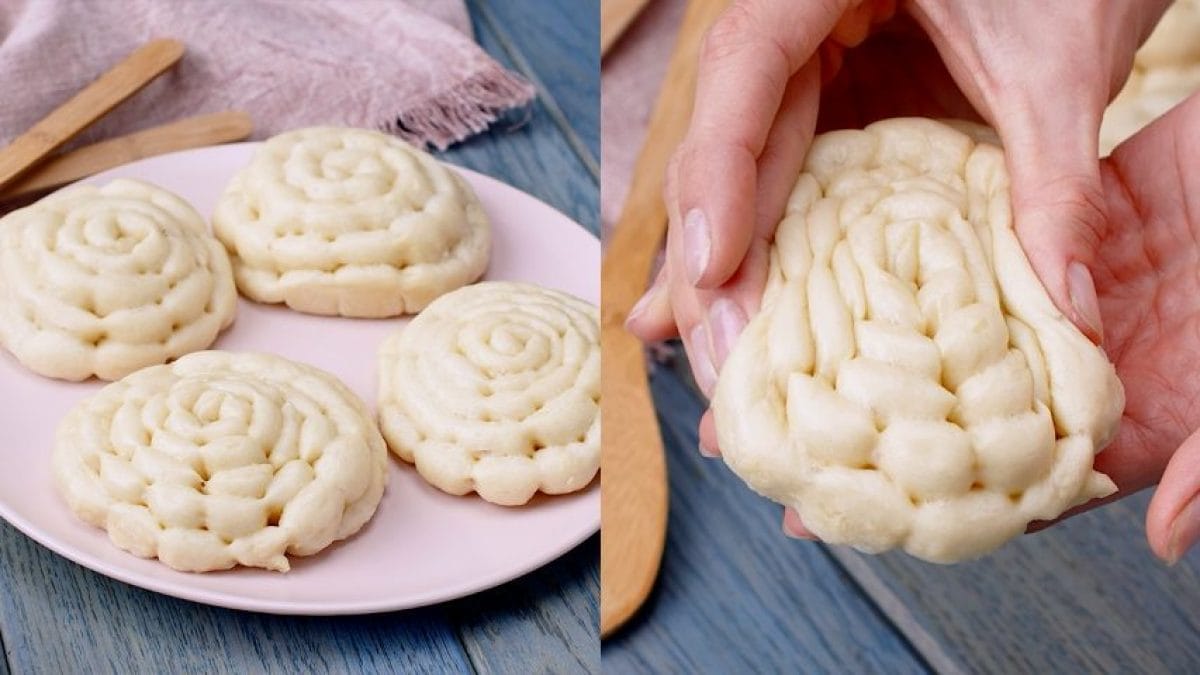
Steam buns are made from just flour, yeast, sugar, and water, and rely on technique rather than excess. A quick mix, a patient rise, a playful twist of the dough, and a gentle steam transform simple ingredients into something irresistibly tender. They’re the kind of food that fits anywhere: alongside a saucy main, tucked into a lunch spread, or served as a warm snack.
What Are Steam Buns?
Steam buns have deep roots in Chinese cuisine, often associated with mantou, which dates back over a thousand years. Traditionally made with wheat flour and leavened with yeast, these buns were designed to be filling, practical, and easy to pair with a wide variety of dishes.
What makes them stand out is their cooking method. Instead of baking, the dough is steamed, which keeps the texture incredibly soft and slightly springy.
Pro Tips for the Best Steam Buns
- Warm water should feel comfortable to the touch, not hot. Too much heat can stop the yeast before it even gets started.
- A well-kneaded dough leads to that signature soft texture. If it feels rough, keep going.
- Dry dough is the enemy of soft buns. Always cover it with a cloth while resting.
- When rolling and twisting, aim for consistent thickness so everything cooks evenly.
- Line your steamer by using parchment or cabbage leaves to prevent sticking.
Frequently Asked Questions
Can I Use Instant Yeast Instead of Dry Yeast?
Yes, instant yeast works just fine and can even speed things up slightly. You can mix it directly with the flour without activating it separately. Keep an eye on the dough, though, it may rise faster than expected.
Why Didn’t My Dough Rise Properly?
This usually comes down to yeast activity or temperature. Old or expired yeast can also be the culprit, so always check freshness.
Can I Add Fillings to These Buns?
Absolutely, though this version is designed to be simple and plain. You can flatten the dough slightly and add savory or sweet fillings before shaping. Just make sure to seal the edges well so nothing leaks during steaming.
Why Are My Buns Dense Instead of Soft?
Dense buns are often the result of under-kneading or insufficient rising time. If the dough hasn’t developed enough structure, it won’t trap air properly. Another cause could be too much flour, making the dough heavy.
Do I Need a Special Steamer?
Not necessarily. A traditional bamboo steamer works beautifully, but any steaming setup will do. You can use a metal steamer basket over a pot of simmering water. Just make sure the lid traps steam effectively.
How to Store Leftovers
Once cooled, store the buns in an airtight container at room temperature for up to a day. For longer storage, keep them in the refrigerator for up to three days. If freezing, place them in a single layer first, then transfer to a freezer bag.
Ingredients
How to Make 4-Ingredient Steam Buns

In a bowl, combine the flour, dry yeast, sugar, and warm water. Stir until everything comes together into a soft dough. Cover the bowl with a cloth and let the dough rest for about 1 hour.
In a bowl, combine the flour, dry yeast, sugar, and warm water. Stir until everything comes together into a soft dough. Cover the bowl with a cloth and let the dough rest for about 1 hour.

Transfer the dough onto a clean surface and roll it into a long rope. Use your fingers or a knife to create notches along the length, then twist the rope into a round, coiled shape.
Transfer the dough onto a clean surface and roll it into a long rope. Use your fingers or a knife to create notches along the length, then twist the rope into a round, coiled shape.

Place the dough in a lined steamer and steam for 15 minutes. Once done, remove carefully and let them cool slightly before serving.
Place the dough in a lined steamer and steam for 15 minutes. Once done, remove carefully and let them cool slightly before serving.
;Resize,width=767;)
