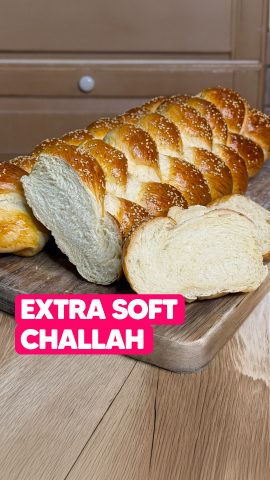
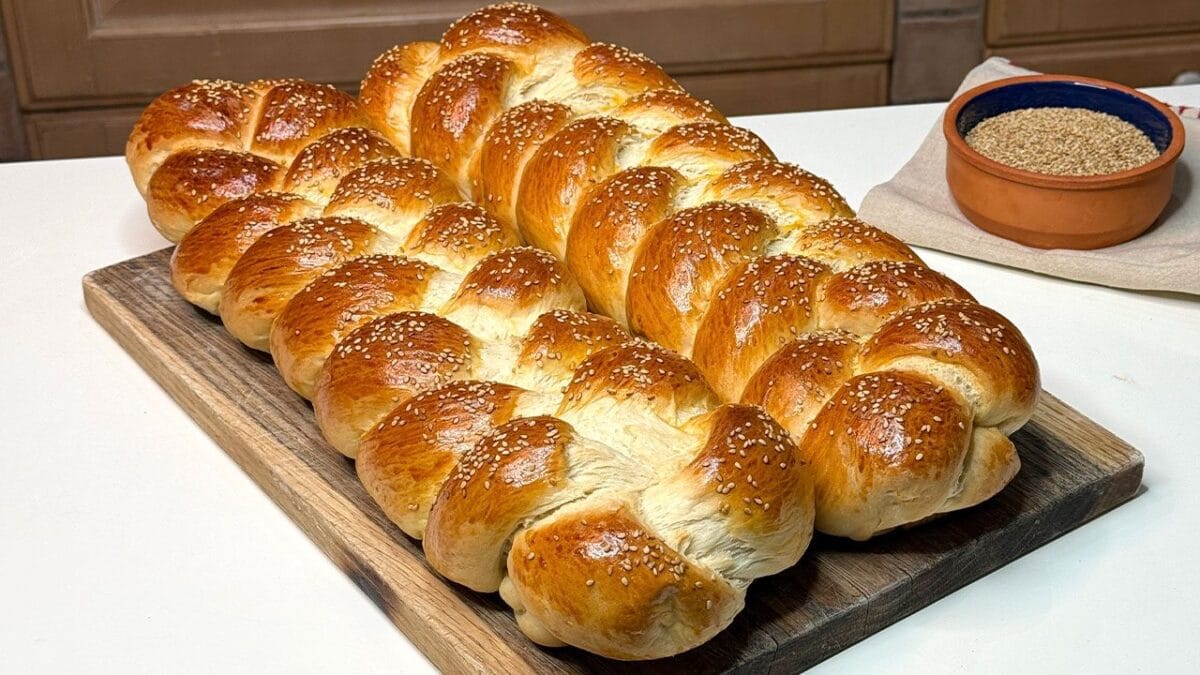
Golden on the outside, incredibly soft inside, and beautifully braided, this challah bread recipe makes two delicious homemade loaves with a delicate, slightly sweet flavor.
Made with flour, fresh yeast, eggs, sugar, and oil, challah has a tender, airy crumb that resembles brioche but doesn't require butter or milk.
The dough is easy to prepare, and the classic three-strand braid gives each loaf its distinctive appearance. After a second rise, the bread is brushed with beaten egg, sprinkled with sesame seeds, and baked until golden brown.
Perfect for sharing, this homemade braided bread is delicious on its own, served with jam or honey, or transformed into French toast the next morning.
What Is Challah Bread?
Challah is a traditional Jewish braided bread closely associated with Shabbat and Jewish holidays.
It is typically made from an enriched yeast dough containing flour, water, eggs, sugar, yeast, and oil. Unlike brioche, which is made with butter, challah traditionally uses oil, allowing it to be served with meat meals in accordance with kosher dietary practices.
Challah can be shaped in several ways, including three-strand, four-strand, and six-strand braids. Round challah is also traditionally prepared for Rosh Hashanah, the Jewish New Year.
Its slightly sweet flavor and soft texture make it delicious both as a table bread and as the base for recipes such as French toast and bread pudding.
This version uses Manitoba flour, a strong wheat flour with a high protein content that helps develop an elastic dough capable of rising into tall, fluffy loaves.
Why Everyone Will Love This Recipe
The texture is what makes this bread special. The combination of eggs, oil, and a well-kneaded yeast dough creates a soft, fluffy interior with a beautifully golden crust.
Despite its impressive appearance, the braiding technique is surprisingly simple. Each loaf is made from just three strands, braided exactly like a traditional three-strand plait.
The recipe also makes two large challah loaves, ideal for family meals, special occasions, or preparing one loaf to enjoy later.
And because the dough contains oil rather than butter, it stays tender while maintaining the traditional dairy-free character of challah.
Tips for Perfect Homemade Challah
- Use warm, not hot, water. Water that's too hot can damage the yeast and prevent the dough from rising properly.
- Knead until smooth and elastic. Proper gluten development helps the challah hold its braided shape and gives the bread its fluffy texture.
- Allow both rises to finish. The first rise develops the dough, while the second helps the braided loaves become light and airy.
- Watch the color during baking. The egg wash encourages browning, so loosely cover the loaves with foil if the tops become too dark before the centers finish baking.
Frequently Asked Questions
What Is the Difference Between Challah and Brioche?
Both are enriched yeast breads with a soft, tender crumb. However, brioche typically contains butter and often more eggs, while traditional challah uses oil instead of butter or milk.
Challah is also commonly braided and has a distinctive golden crust created by an egg wash.
What Is the Best Flour for Challah Bread?
Strong bread flour is an excellent choice because it contains enough protein to develop an elastic dough.
This recipe uses Manitoba flour, a high-protein flour commonly used in Italian baking. American bread flour is a practical substitute, although the amount of water needed may vary slightly.
Why Is My Challah Bread Dense?
Dense challah can result from insufficient kneading, inactive yeast, or dough that hasn't risen enough.
Make sure the yeast is fresh, knead the dough until elastic, and allow it to rise until properly expanded before baking.
Can Instant Yeast Be Used Instead of Fresh Yeast?
Yes. The 25g of fresh yeast can be replaced with approximately 8g of instant yeast.
Instant yeast can usually be mixed directly with the flour rather than dissolved in water first.
How Do You Know When Challah Is Fully Baked?
The crust should be deeply golden, and the bread should feel light for its size.
For a more reliable check, insert an instant-read thermometer into the center of the loaf. The internal temperature should be approximately 190–200°F (88–93°C).
What Can You Serve With Challah Bread?
Challah is delicious with honey, jam, or other sweet spreads. It also pairs well with savory dishes, soups, and roasted vegetables.
Leftover challah is especially good for French toast because its soft, enriched crumb absorbs the egg mixture beautifully.
How to Store
Allow the homemade challah bread to cool completely before storing it.
Keep the loaves in an airtight bag or bread container at room temperature for approximately 2 to 3 days.
Avoid refrigerating challah, as refrigeration tends to make bread become stale more quickly.
If the bread begins to dry out, it can be lightly toasted or used to make French toast, bread pudding, or homemade croutons.
How to Freeze
Challah freezes very well, making this two-loaf recipe particularly convenient.
Once the bread has cooled completely, wrap each loaf tightly in plastic wrap and place it in a freezer-safe bag. Alternatively, slice the challah before freezing so individual portions can be removed as needed.
Freeze for up to 3 months for the best quality.
Thaw at room temperature while still wrapped to help prevent the bread from drying out. For a freshly baked texture, warm the thawed loaf briefly in a low oven before serving.
Ingredients
How to make Soft and Fluffy Challah Bread

Begin by pouring the warm water into a large mixing bowl. Crumble in the fresh yeast and stir until completely dissolved.
Begin by pouring the warm water into a large mixing bowl. Crumble in the fresh yeast and stir until completely dissolved.

Add the granulated sugar, peanut oil, salt, and room-temperature egg. Mix thoroughly until the ingredients are evenly combined.
Add the granulated sugar, peanut oil, salt, and room-temperature egg. Mix thoroughly until the ingredients are evenly combined.

Gradually add the Manitoba flour, mixing as you go. Once the dough begins to come together, transfer it to a lightly floured work surface or continue kneading in a stand mixer fitted with a dough hook.
Gradually add the Manitoba flour, mixing as you go. Once the dough begins to come together, transfer it to a lightly floured work surface or continue kneading in a stand mixer fitted with a dough hook.

Knead until the dough becomes smooth, elastic, and homogeneous. It should feel soft and supple without being excessively sticky.
Knead until the dough becomes smooth, elastic, and homogeneous. It should feel soft and supple without being excessively sticky.

Lightly grease a large bowl with oil and place the dough inside. Cover with a clean, damp kitchen towel and leave it in a warm, draft-free place until doubled in size. Depending on room temperature and yeast activity, this may take approximately 1–2 hours.
Lightly grease a large bowl with oil and place the dough inside. Cover with a clean, damp kitchen towel and leave it in a warm, draft-free place until doubled in size. Depending on room temperature and yeast activity, this may take approximately 1–2 hours.

Once risen, gently transfer the dough to a work surface and divide it into two equal portions, one for each challah loaf.
Once risen, gently transfer the dough to a work surface and divide it into two equal portions, one for each challah loaf.

Divide the first portion into three equal pieces. Roll each piece into a long, even strand, keeping the strands approximately the same length.
Divide the first portion into three equal pieces. Roll each piece into a long, even strand, keeping the strands approximately the same length.

Arrange the three strands side by side and pinch them together at one end. Braid them by alternating the outer strands over the center strand, continuing until the entire loaf is braided. Pinch the ends together and tuck them neatly underneath. Repeat the process with the remaining dough to create the second braided loaf.
Arrange the three strands side by side and pinch them together at one end. Braid them by alternating the outer strands over the center strand, continuing until the entire loaf is braided. Pinch the ends together and tuck them neatly underneath. Repeat the process with the remaining dough to create the second braided loaf.

Place both challah loaves on a baking sheet lined with parchment paper, leaving enough space between them for expansion.
Cover loosely with a clean kitchen towel and allow the braids to rise again until noticeably puffy, approximately 30–60 minutes, depending on the temperature of the room.
Place both challah loaves on a baking sheet lined with parchment paper, leaving enough space between them for expansion.
Cover loosely with a clean kitchen towel and allow the braids to rise again until noticeably puffy, approximately 30–60 minutes, depending on the temperature of the room.

Once the loaves have completed their second rise, gently brush the surfaces with the beaten egg, making sure to coat the braided sections evenly.
Sprinkle sesame seeds over the top of each loaf. Transfer the challah to the preheated oven and bake at 390°F (200°C) for 10 minutes.
Then reduce the oven temperature to 355°F (180°C) and continue baking for approximately 20 minutes, or until the loaves are beautifully golden brown and cooked through.

Remove the soft and fluffy challah bread from the oven and transfer the loaves to a wire rack. Serve the homemade braided challah with sweet spreads, alongside a meal, or lightly toasted for breakfast.
Remove the soft and fluffy challah bread from the oven and transfer the loaves to a wire rack. Serve the homemade braided challah with sweet spreads, alongside a meal, or lightly toasted for breakfast.


