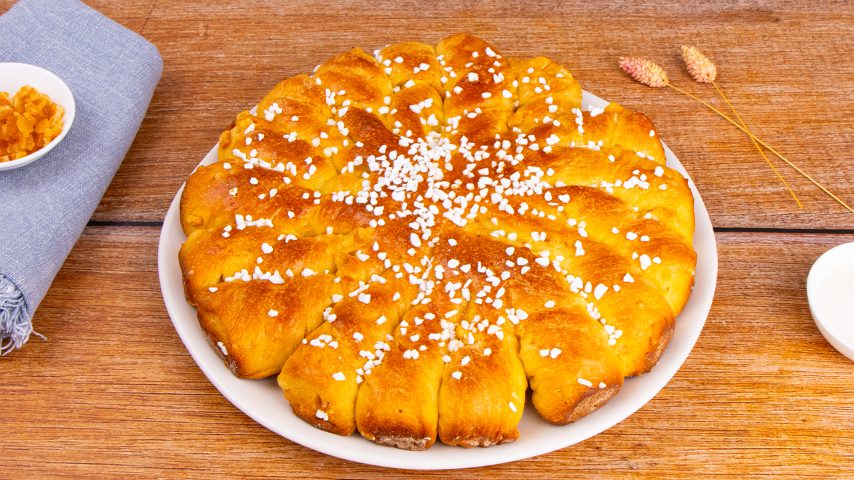
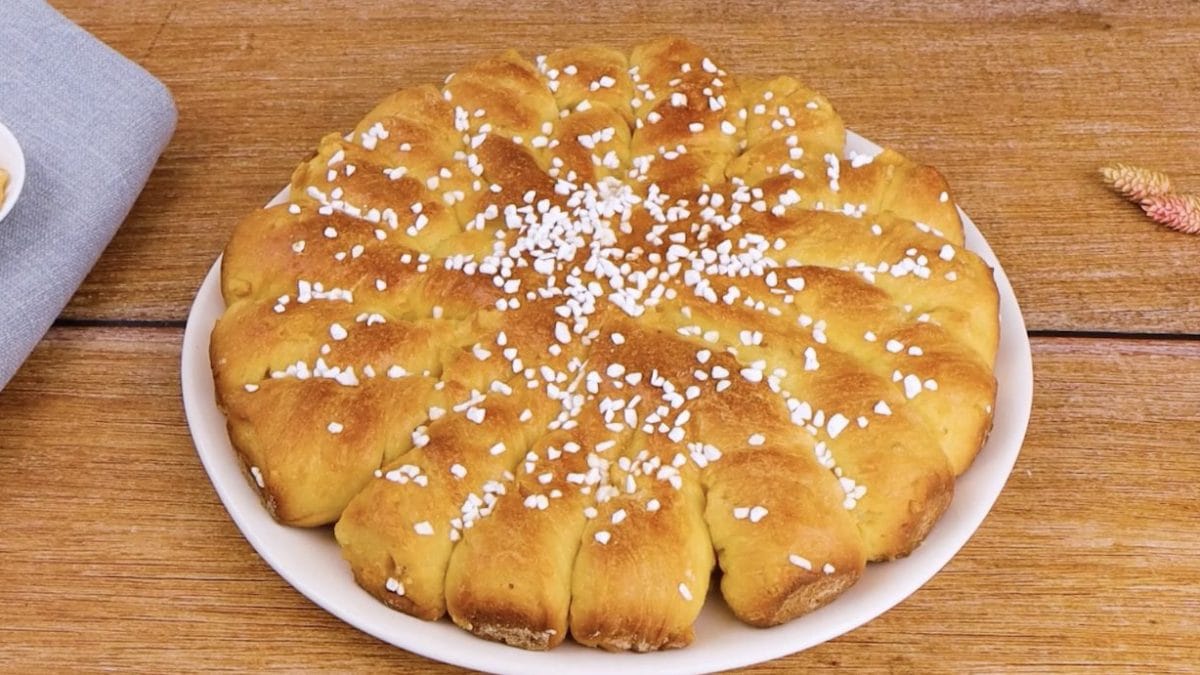
January 6th arrives with a sense of quiet celebration, and Epiphany focaccia fits that mood perfectly with its gentle sweetness. This sweet bread sits somewhere between a soft brioche and a holiday cake, enriched with butter, eggs, and bright pieces of candied orange. It’s the kind of bake that fills the kitchen with a comforting aroma and invites everyone to gather around the table. It is ideal for breakfast, afternoon coffee, or as a dessert, and Epiphany focaccia turns an ordinary winter day into a small occasion.
What Is Epiphany Focaccia?
Epiphany focaccia is a sweet Italian yeast bread traditionally prepared to celebrate the Feast of the Epiphany on January 6th. Unlike savory focaccia, this version is enriched with eggs, butter, sugar, and candied citrus, giving it a tender crumb. In many Italian households, it marks the final celebration of the Christmas season.
Pro Tips for the Best Epiphany Focaccia
- Use room-temperature ingredients to help the dough come together smoothly and rise evenly.
- Knead patiently, especially after adding butter, as this helps develop the structure while keeping the dough soft and elastic.
- Give the dough enough time to rise fully, and the long fermentation is what creates its signature light texture.
- When shaping the spirals, don’t rush because gentle handling keeps the focaccia airy rather than dense.
Frequently Asked Questions
Can I use dry yeast instead of fresh yeast?
Yes, dry yeast can be used if fresh yeast isn’t available. Substitute the 17g of fresh yeast with about 6g of active dry yeast or 5g of instant yeast. Ensure that you activate the active dry yeast in warm milk before adding it to the dough. The rise time may vary slightly, so rely on volume rather than the clock.
Why does my focaccia feel dense after baking?
Dense focaccia is often the result of under-proofing or overworking the dough. If the dough hasn’t risen enough, it won’t develop the light structure needed for a soft crumb. Over-kneading after adding butter can also tighten the dough.
Can I change the candied orange to another ingredient?
Candied lemon, citron, or even dried fruit like raisins work well, and chocolate chips can also be used for a more dessert-like version. Just make sure the add-ins are evenly distributed so every slice has a balanced flavor. Also, avoid overly moist fillings, as they can affect the dough texture.
Is Epiphany focaccia meant to be eaten warm or cold?
Epiphany focaccia is delicious both ways, depending on preference. Slightly warm, it feels extra soft and aromatic, especially just after baking. At room temperature, the flavors become more pronounced and balanced.
How to Store Epiphany Focaccia
Store leftover focaccia at room temperature in an airtight container or wrapped in foil, and it will stay soft for up to 2 days without refrigeration. For longer storage, keep it in the fridge for up to 4 days, though the texture may firm up slightly. A quick warm-up restores much of its softness.
Ingredients
How to Make Epiphany Focaccia
;Resize,width=712;)
Combine the flour and sugar in a bowl.
Combine the flour and sugar in a bowl.
;Resize,width=712;)
In a small bowl, mix the milk with the fresh yeast until it dissolves completely.
In a small bowl, mix the milk with the fresh yeast until it dissolves completely.
;Resize,width=712;)
Once it comes together, knead by hand until the dough feels compact. Add the salt and softened butter, kneading until fully incorporated.
Pour the milk and yeast mixture into the flour, add the eggs, and start mixing until a rough dough forms.
;Resize,width=712;)
Gently fold in the candied orange, making sure it’s evenly spread throughout the dough.
Once it comes together, knead by hand until the dough feels compact. Add the salt and softened butter, kneading until fully incorporated.
;Resize,width=712;)
Lightly oil the dough and bowl, cover with cling film, and let it rise for 4 hours.
Gently fold in the candied orange, making sure it’s evenly spread throughout the dough.
;Resize,width=712;)
Transfer the risen dough onto a floured surface and roll it into a circle about 25 cm wide.
Lightly oil the dough and bowl, cover with cling film, and let it rise for 4 hours.
;Resize,width=712;)
Cut the circle into 4 sections without cutting through the center, then divide each section into 4 smaller strips.
Transfer the risen dough onto a floured surface and roll it into a circle about 25 cm wide.
;Resize,width=712;)
Roll each strip into a spiral and arrange them carefully in the baking mold.
Cut the circle into 4 sections without cutting through the center, then divide each section into 4 smaller strips.
;Resize,width=712;)
Cover the mold and let it rise for another 90 minutes.
Roll each strip into a spiral and arrange them carefully in the baking mold.
;Resize,width=712;)
Brush the surface gently with egg white, and sprinkle generously with sugar granules.
Cover the mold and let it rise for another 90 minutes.
;Resize,width=712;)
Bake at 180°C (360°F) for 30 minutes until golden.
Brush the surface gently with egg white, and sprinkle generously with sugar granules.
;Resize,width=712;)
Remove from the oven, transfer to a serving dish, and let it cool slightly before slicing.
Bake at 180°C (360°F) for 30 minutes until golden.
;Resize,width=712;)
Remove from the oven, transfer to a serving dish, and let it cool slightly before slicing.
;Resize,width=767;)
